



Introduction
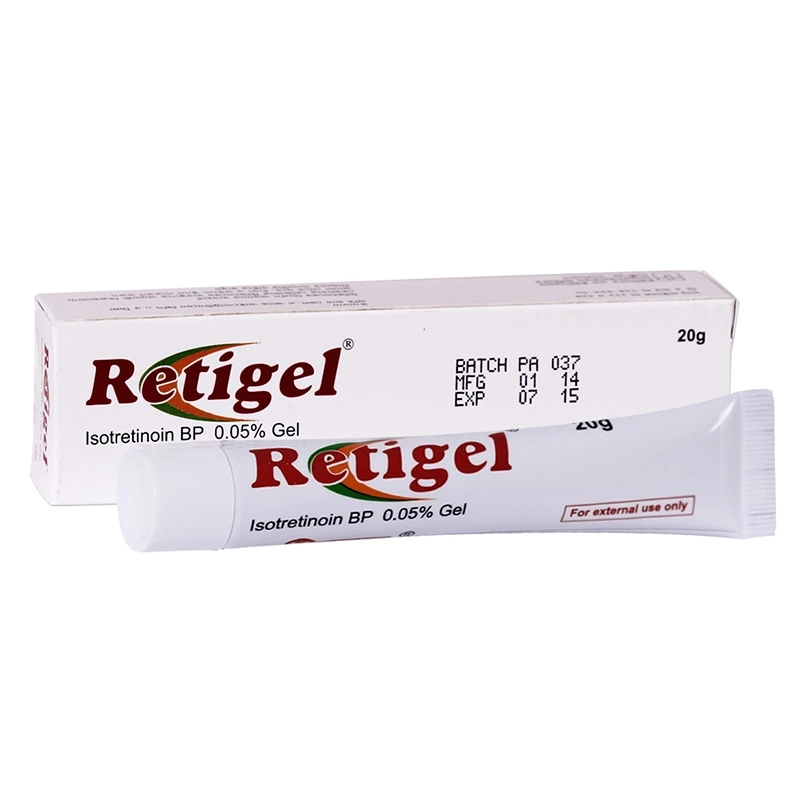
Retigel belongs to a group of medicines known as retinoids that are used to treat severe acne, which occur as pimples, in adults and adolescents from 12 years of age only after puberty. This medicine is for patients whose acne has not responded to other treatments. Retigel reduces excessive oil production of the skin. Ideally, a pinpoint application at night time is recommended for a duration as prescribed by the doctor. The amount you need, and how long you take it will depend on what you are being treated for. You should normally wash and dry the affected area before applying a thin layer of gel or cream usually once a day at bedtime. Follow your doctor’s instructions. You should not apply it to damaged or broken skin and avoid contact with your mouth, eyes and nose. It may take several weeks for your symptoms to improve but keep using it regularly to get the most benefit. If you notice no improvement after a few weeks, see your doctor again. Using more medicine or applying it more often than prescribed will not make it work any faster and may increase side effects. The most common side effects include itching, stinging, peeling and redness of the skin. They are not usually serious and often disappear after getting used to the cream but, if they bother you or do not go away, tell your doctor. You may need to apply smaller amounts or use it less often. Serious side effects are rare. Retigel may make you more sensitive to sunlight so you should limit exposure to the sun if possible. Drink plenty of water and use moisturizer as it may lead to dryness of the mouth, lips and eyes. It may make your skin more fragile. It is advised, not to have any waxing (hair removal), or laser treatments during treatment. This medicine may lead to birth defects, do consult your doctor if you are pregnant or planning to get pregnant.
_
Uses of Retigel
Acne
Side effects of Retigel
Common
Application site reactions (burning, irritation, itching and redness)
Dry skin
Cracked lips
How to use Retigel
This medicine is for external use only. Use it in the dose and duration as advised by your doctor. Check the label for directions before use. Clean and dry the affected area and apply the gel. Wash your hands after applying, unless hands are the affected area.
How Retigel works
Retigel is a derivative of vitamin A. It acts on glands (sebaceous) on your skin to reduce the production of a natural substance (sebum) that causes acne. Also, the controlled sebum production kills acne-causing bacteria. It also works as an anti-inflammatory to decrease inflammation (redness and swelling).
What if you forget to take Retigel?
If you miss a dose of Retigel, take it as soon as possible. However, if it is almost time for your next dose, skip the missed dose and go back to your regular schedule. Do not double the dose.
Quick Tips
You have been prescribed Retigel for the treatment of acne.
Clean the area to be treated with water and a non-medicated soap, and let it dry for 20-30 minutes before applying Retigel.
It may increase the severity of the lesions in the first few weeks of use. Continue using it as prescribed by your doctor.
It may cause stinging sensation or a feeling of warmth when you first start using it. Inform your doctor if this persists.
Avoid exposure to sunlight while using it as it increases the sensitivity of your skin. Use protective measures such as sun-cream or protective clothing.
Avoid face waxing and laser treatment while using this medicine as it makes your skin more fragile.
Do not use Retigel if you are pregnant or breastfeeding.
Inform your doctor if excessive skin dryness or skin sensitivity take place.
Brief Description
Indication
Acne
Adult Dose
Topical/Cutaneous Acne Adult: As 0.05% gel: Apply sparingly once or twice daily. Effect is observed w/in 6-8 wk of treatment.
_
Contraindication
Pregnancy, lactation.
Mode of Action
Isotretinoin is a synthetic retinoid which reduces sebaceous gland size and sebum production. It also regulates cell proliferation and differentiation.
Precaution
Preexisting or predisposition to hypertriglyceridaemia (e.g. DM, obesity or increased alcohol intake). Monitor triglyceride levels. Monitor blood lipids and LFTs at wkly or bi-wkly intervals. Monitor blood glucose in known or suspected DM patients. Genetic predisposition for age-related osteoporosis, history of childhood osteoporosis, osteomalacia or other bone metabolism disorders. Anorexia nervosa. History of psychiatric disorder. May impair night vision. Avoid wax epilation and skin resurfacing procedures for at least 6 mth. Avoid prolonged exposure to UV light or sunlight. Discontinue if hearing impairment, abdominal pain, rectal bleeding, severe diarrhoea or adverse ocular effects occur. Patient should not donate blood during therapy and for at least 1 mth following drug discontinuation.
_
Side Effect
Dryness of mucous membranes, dryness of skin with scaling, fragility, erythema, cheilitis, pruritus, epistaxis, conjunctivitis, dry sore mouth and palmo-plantar exfoliation. Corneal opacities, dry eyes, visual disturbances, skeletal hyperostosis and musculoskeletal symptoms. Elevation of serum triglycerides, LFTs, ESR and blood glucose. Hair thinning, photosensitivity, changes in skin pigmentation, paronychia. GI disturbances, hepatitis. Headache, drowsiness, sweating, mood changes, psychotic symptoms, depression, suicidal tendencies, benign intracranial hypertension, seizures. Vasculitis, hypersensitivity reactions, IBS. Potentially Fatal: Anaphylaxis. Haemorrhagic pancreatitis.
_
Interaction
Additive toxicity with vitamin A or its derivatives. Decreased efficacy of microdosed progesterone (use 2 forms of contraception). May increase risk of bone loss with phenytoin. May increase risk of osteoporosis with systemic corticosteroids. Reduces plasma levels of carbamazepine. Potentially Fatal: Increased risk of pseudotumor cerebri with tetracyclines.
_



Reviews
Clear filtersThere are no reviews yet.