





Introduction
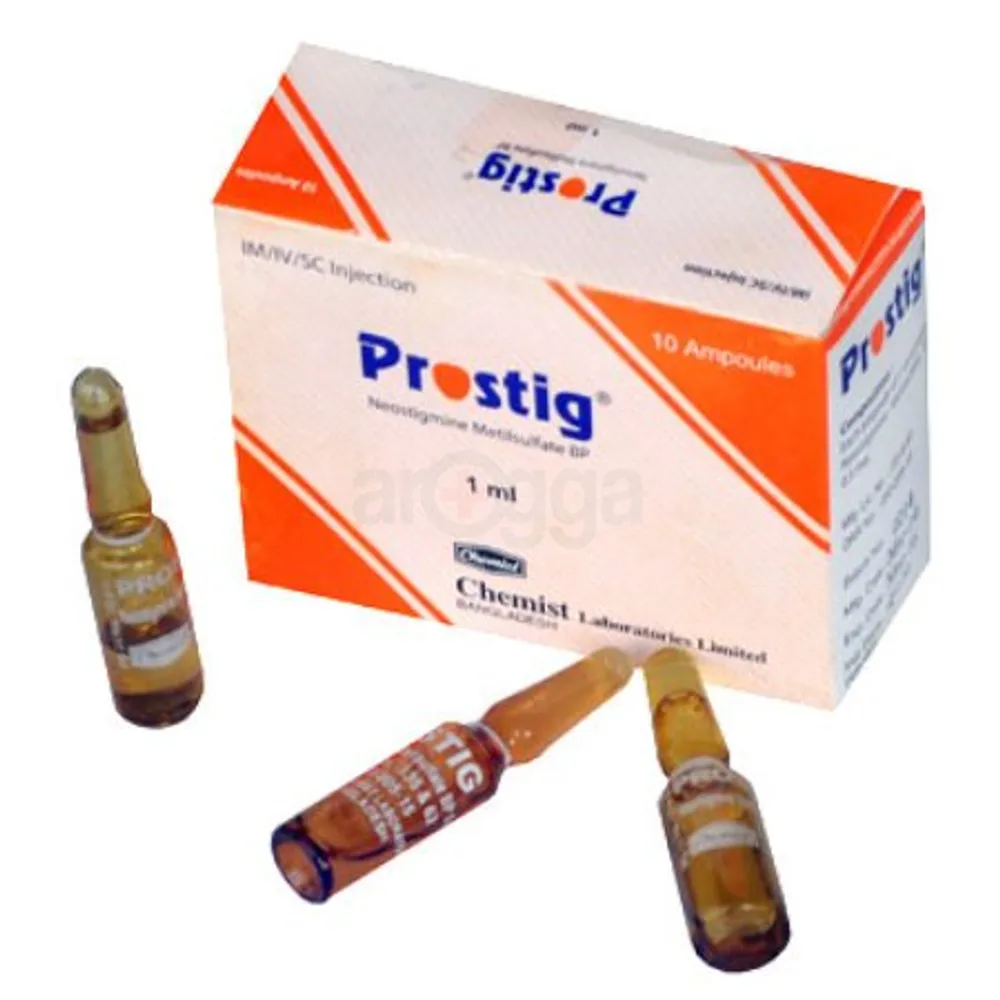
G-Neostigmine is a prescription medicine used in the treatment of myasthenia gravis (a disease causing muscle weakness and tiredness), paralytic ileus (paralysis of intestinal muscles), post-operative urinary retention and reversal of effect of skeletal muscle relaxants after surgery. G-Neostigmine works by reducing and improving muscle weakness. It may be taken with or without food, preferably at the same time each day. Take this medicine in the dose and duration as advised by your doctor. If you have missed a dose, take it as soon as you remember. Do not skip any doses and finish the full course of treatment. You should never stop this medicine suddenly without talking to your doctor. Some common side effects of using this medication are nausea, vomiting, abdominal cramps, increased production of saliva and diarrhea. It usually does not cause dizziness and sleepiness. But, if you feel ill, avoid doing any such work that requires focus and attention, such as driving or operating any machinery. Before taking G-Neostigmine, it is better to inform your doctor if you are suffering from any kidney problems, parkinson’s disease, asthma, or stomach disorders. Your blood pressure may decrease after taking this medicine, so it is better to monitor it and consult your doctor if it bothers you. This medicine may cause diarrhea, so drink plenty of fluids to keep yourself hydrated while taking this medicine. Inform your doctor if you are pregnant, planning to conceive or breastfeeding, before taking this medicine.
_
Uses of G-Neostigmine
Myasthenia gravis
Paralytic ileus
Post-operative urinary retention
Reversal of effect of skeletal muscle relaxant after surgery
Side effects of G-Neostigmine
Common
Nausea
Vomiting
Abdominal cramp
Diarrhea
How to use G-Neostigmine
Take this medicine in the dose and duration as advised by your doctor. Swallow it as a whole. Do not chew, crush or break it. G-Neostigmine may be taken with or without food, but it is better to take it at a fixed time.
How G-Neostigmine works
G-Neostigmine is a reversible cholinesterase inhibitor. When taken by mouth it increases the level of acetylcholine, a chemical messenger in the brain, by suppressing acetylcholinesterase (enzyme). This acetylcholine further triggers muscle contracting receptors which helps in muscle contraction.
What if you forget to take G-Neostigmine?
If you miss a dose of G-Neostigmine, take it as soon as possible. However, if it is almost time for your next dose, skip the missed dose and go back to your regular schedule. Do not double the dose.
Quick Tips
Do not drink alcohol while taking this medicine as it may worsen the side effects.
Inform your doctor if you have an existing kidney problem, parkinson’s disease, asthma, or stomach disorders.
Brief Description
Indication
Myasthenia gravis, Paralytic ileus, Post-op urinary retention, Reversal of nondepolarising neuromuscular blockade
_
Adult Dose
Parenteral Myasthenia gravis Adult: 0.5-2.5 mg by IM or SC inj, doses are given at intervals according to response up to a total daily dose of 5-20 mg. Paralytic ileus and postoperative urinary retention Adult: 0.5-2.5 mg by SC or IM inj, as required. Reversal of neuromuscular blockade Adult: 0.03-0.07 mg/kg by inj over 60 sec, as required. Not to exceed 0.07 mg/kg or a cumulative total of 5 mg, whichever dose is less Inject by slow IV over at least 1 minute
_
Child Dose
Parenteral Myasthenia gravis Child: <12 yr 0.2-0.5 mg, repeated at suitable intervals throughout the day. Paralytic ileus and postoperative urinary retention Child: 0.125-1 mg by SC or IM inj. Intravenous Reversal of neuromuscular blockade Child: 0.05-0.07 mg/kg by inj over 60 sec, as required. Intramuscular Neonatal myasthenia gravis Child: Initially, 0.1 mg, followed by 0.05-0.25 mg or 0.03 mg/kg 2-4 hrly.
_
Renal Dose
Renal impairment: Dose adjustment may be required.
Contraindication
Mechanical GI or urinary tract obstruction, peritonitis.
Mode of Action
Neostigmine reversibly inhibits acetylcholinesterase and thus potentiates the nicotinic and muscarinic effects of acetylcholine. This facilitates the transmission of impulses across myoneural junction.
Precaution
Patient w/ bronchial asthma, CV disorders (e.g. bradycardia, recent MI, hypotension), peptic ulcer disease, vagotonia, epilepsy, parkinsonism, hyperthyroidism. Patient who underwent recent intestinal or bladder surgery. Renal impairment. Childn. Pregnancy and lactation. Monitoring Parameters Monitor ECG, BP and heart rate esp w/ IV use. Lactation: Unknown if distributed in human breast milk; use caution
_
Side Effect
Allergic: Allergic reactions and anaphylaxis Neurologic: Dizziness, convulsions, loss of consciousness, drowsiness, headache, dysarthria, miosis and visual changes Cardiovascular: Cardiac arrhythmias (including bradycardia, tachycardia, A-V block and nodal rhythm) and nonspecific EKG changes have been reported, as well as cardiac arrest, syncope and hypotension (predominantly with parenteral dosage form) Respiratory: Increased oral, pharyngeal and bronchial secretions, and dyspnea; respiratory depression, respiratory arrest and bronchospasm have been reported following the use of the injectable form Dermatologic: Rash and urticaria Gastrointestinal: Nausea, emesis, flatulence, and increased peristalsis and salivation Genitourinary: Urinary frequency Musculoskeletal: Muscle cramps and spasms, arthralgia Miscellaneous: Diaphoresis, flushing and weaknes Potentially Fatal: Anaphylaxis.
_
Interaction
May reduce effects of anticholinergics. May increase effects of cholinergic agonists. Increased risk of bradycardia with digoxin, diltiazem, verapamil or beta-blockers without intrinsic sympathomimetic activity. Increased muscle weakness and decreased response to anticholinesterases with corticosteroids. May increase effects of depolarising neuromuscular blockers. Effects may be antagonised by drugs with neuromuscular blocking activity e.g. aminoglycosides, clindamycin, colistin, cyclopropane, halogenated inhalational anaesthetics. Effects may be reduced by quinine, chloroquine, hydroxychloroquine, quinidine, procainamide, propafenone, lithium, beta-blockers. Possible additive toxicity with ophthalmic use of anticholinesterases e.g. ecothiopate.



Reviews
Clear filtersThere are no reviews yet.