




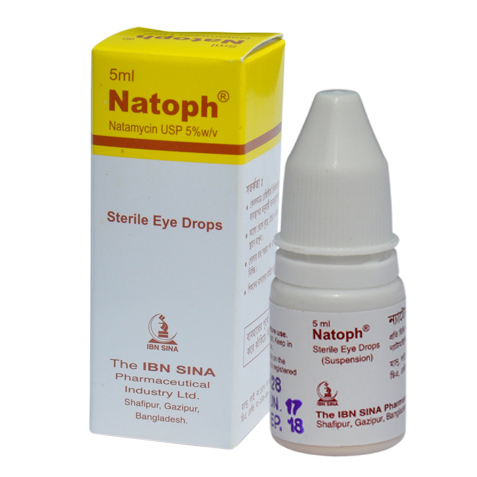
Medicine Overview of N-Mycin 5% Eye Drop
N-Mycin is an antifungal medication. It is used in the treatment of fungal infections of the eyes. It kills the fungi that cause eye infections and thus treats the infection.
N-Mycin is for external use only. Take it in the dose and duration as advised by your doctor. Hold the dropper close to the eye without touching it. Gently squeeze the dropper and place the medicine inside the lower eyelid. Wipe off extra liquid.
This medicine is generally well tolerated but it may cause some eye irritation that usually subsides on its own in some time. Please consult your doctor if it does not get better or persists for a longer duration.
- Fungal infections of eye
- Eye irritation
-
N-Mycin should be used as per dose and duration suggested by the doctor.
-
Apply pressure on the corner of the eye (close to the nose) for about 1 minute immediately after instilling the drop.
-
Wait for at least 5-10 minutes before delivering the next medication in the same eye to avoid dilution.
-
Remove contact lenses before using N-Mycin and allow at least 15 minutes before re-inserting them.
-
It may cause short term blurring of vision when first used. Use caution before driving or using machines.
-
Consult your doctor if the symptoms get worse or do not get better within 2 weeks of treatment.
Ophthalmic
For fungal keratitis: The preferred initial dosage is 1 drop instilled in the conjuntival sac (s) at 1-2 hours interval. The frequency of application can usually be reduced to 1 drop 6-8 times daily after the first 3-4 days.
Therapy should generally be continued for 14 to 21 days or until there is resolution of active fungal keratitis. In many cases, it may be helpful to reduce the dosage gradually at 4 to 7 days intervals to assure the replicating fungus has been eliminated.
For fungal blepharitis & conjunctivitis:
Less frequent initial dosage, 1 drop 4-6 times daily may be sufficient.
Safety & efficacy not established
Natamycin sterile ophthalmic suspension is contraindicated in individuals with a known hypersensitivity to any of its components.
Local irritation, conjunctival chemosis, hyperemia, etc.




Reviews
Clear filtersThere are no reviews yet.