


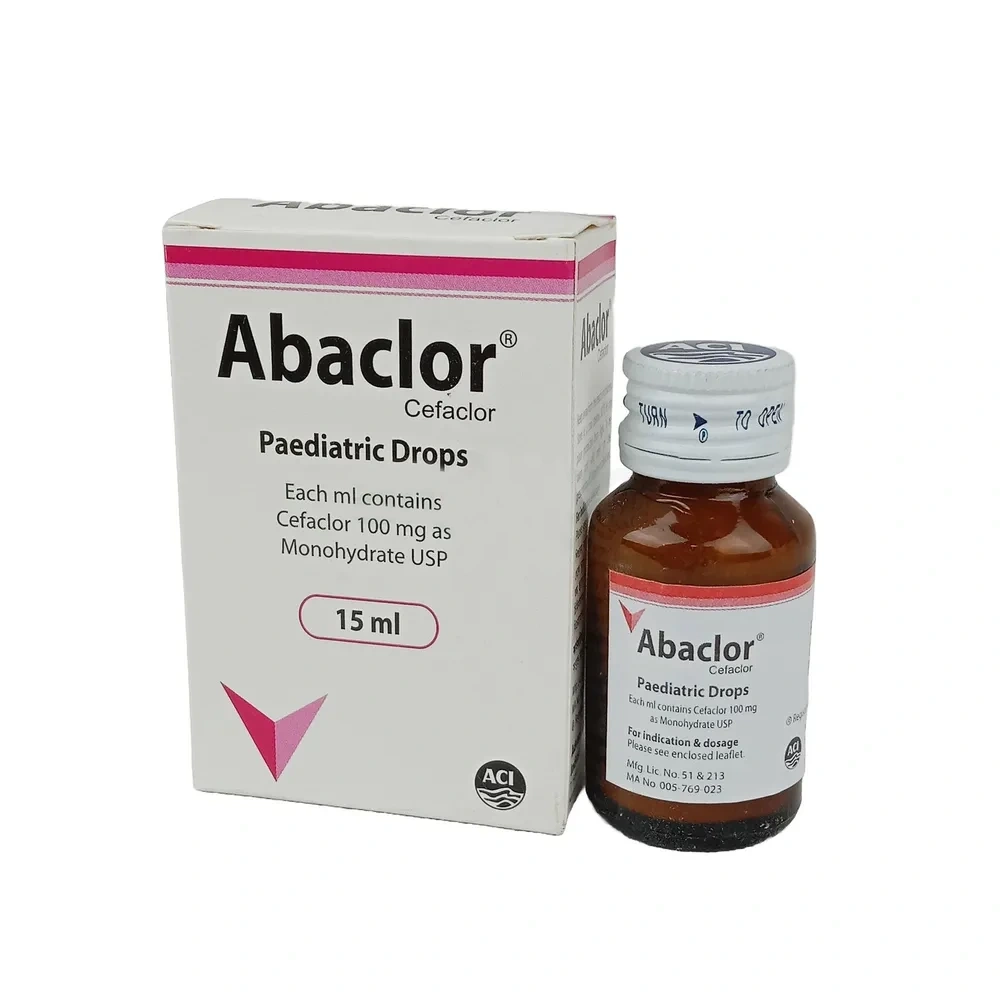

Medicine Overview of Abaclor PD Paediatric Drops
Abaclor PD is an antibiotic medicine used to treat bacterial infections in your body. It is effective in infections of the lungs (e.g. pneumonia), ear, throat, nasal sinus, urinary tract, skin, soft tissues, bones, and joints. It is also used to prevent infections during surgery.
Abaclor PD may be taken with or without food. You should take it regularly at evenly spaced intervals as per the schedule prescribed by your doctor. Taking it at the same time every day will help you to remember to take it. The dose will depend on what you are being treated for, but you should always complete a full course of this antibiotic as prescribed by your doctor. Do not stop taking it until you have finished, even when you feel better. If you stop taking it early, some bacteria may survive and the infection may come back. It will not work for viral infections such as flu or the common cold. Using any antibiotic when you do not need it can make it less effective for future infections.
The most common side effects of this medicine include rash, vomiting, nausea, diarrhea, and changes in liver function tests. These are usually mild but let your doctor know if they bother you or last more than a few days.
Before using it, you should tell your doctor if you are allergic to any antibiotics or have any kidney or liver problems. You should also let your doctor know all other medicines you are taking as they may affect, or be affected by this medicine. Pregnant and breastfeeding mothers should consult their doctor before using it. Avoid consuming alcohol while taking this medicine as it may cause unpleasant side effects like nausea, vomiting, sweating, anxiety, and palpitations.
Show less
- Bacterial infections
- Rash
- Vomiting
- Allergic reaction
- Nausea
- Injection site reaction
- Increased liver enzymes
- Diarrhea
-
Your doctor has prescribed Uniclor 375mg Tablet MR to cure your infection and improve your symptoms.
-
Do not skip any doses and finish the full course of treatment even if you feel better. Stopping it early may make the infection come back and harder to treat.
-
Discontinue Uniclor 375mg Tablet MR and inform your doctor immediately if you get a rash, itchy skin, swelling of face and mouth, or have difficulty in breathing.
-
Diarrhea may occur as a side effect but should stop when your course is complete. Inform your doctor if it does not stop or if you find blood in your stools.
-
Take it with food to avoid an upset stomach.
-
Avoid consuming alcohol while taking Uniclor 375mg Tablet MR as it may cause increased side effects.
Oral
Urinary tract infections, Upper and lower respiratory tract infections, Skin infections, Otitis media
Adult: As monohydrate: 250-500 mg every 8 hr. Max: 4 g daily.
Show less
Oral
Urinary tract infections, Upper and lower respiratory tract infections, Skin infections, Otitis media
Child: PO 20–40 mg/kg/day, max 1 g/day q12h
1-5 yr: 125 mg tid,
>5 yr: 250 mg tid.
Suspension & Paediatric Drops:
1 month – 1 year 2.5 ml t.i.d. 0.625 ml t.i.d
1 year – 5 year 5 ml t.i.d. 1.25 ml t.i.d
over 5 years 10 ml t.i.d 2.5 ml t.i.d
Show less
Renal Impairment
CrCl: 10-50 mL/min: Half to full dose
CrCl: <10 mL/min: Half dose
Show less
Severe renal impairment; history of allergy to penicillin; pregnancy, lactation.
Lactation: enters breast milk; use with caution
Show less
1-10%
Diarrhea (3%),Increased transaminases (3%),Eosinophilia (2%),Moniliasis (2%),Vaginitis (2%),Rash (maculopapular, erythematous, or morbiliform) (1-2%)
<1%
Stevens-Johnson syndrome,Pseudomembranous colitis,Nausea,Vomiting,Anemia,Neutropenia,Jaundice
Potentially Fatal: Anaphylactic reaction; pseudomembranous colitis.
Show less
Pregnancy
No adequate and well-controlled studies in pregnant women
Because animal reproduction studies are not always predictive of human response, cefaclor should be used during pregnancy only if necessary
Lactation
Effect on nursing infants is unknown; exercise caution when cefaclor is administered to a nursing woman
Extended-release tablets
No studies in lactating women performed; small amounts of cefaclor (?0.21 mcg/mL) detected in human milk following administration (single 500-mg dose of cefaclor extended-release tablets)
Show less


Reviews
Clear filtersThere are no reviews yet.