



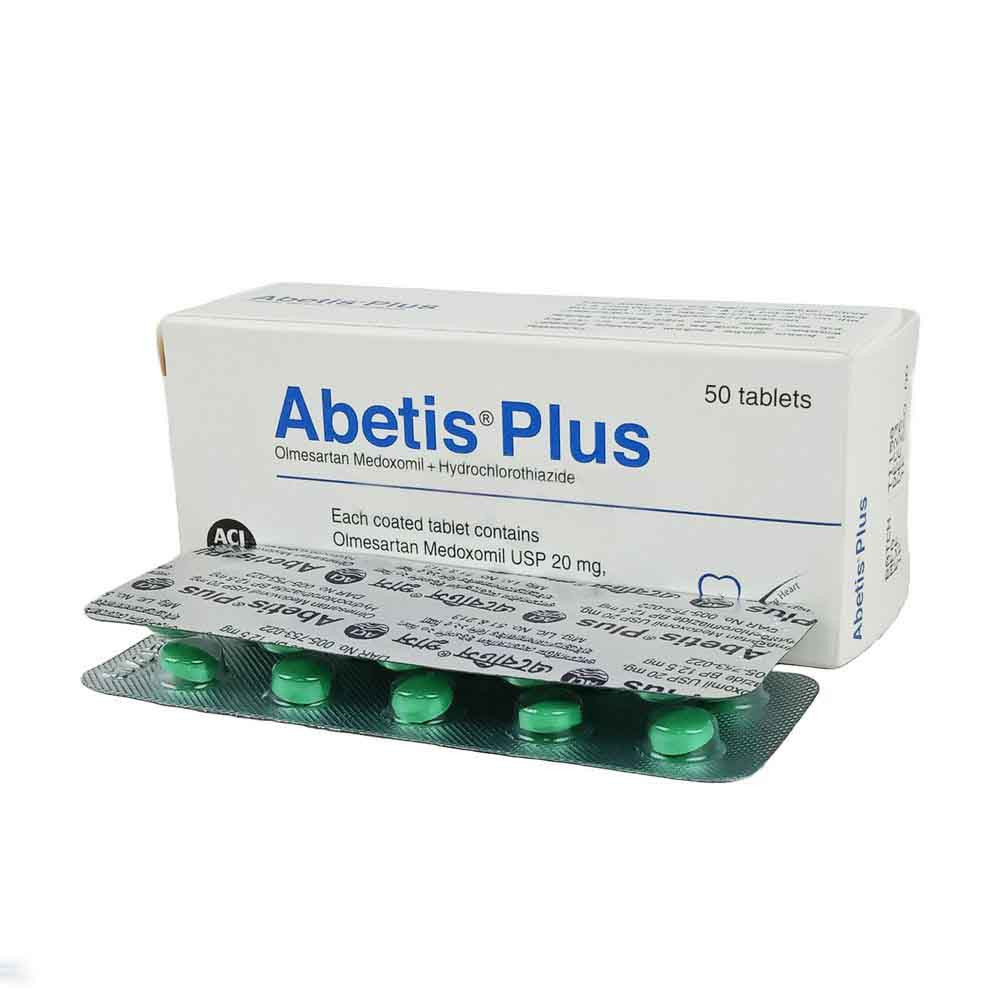

Medicine Overview of Abetis Plus 20 12.5mg+20mg Tablet
Abetis Plus 20 is a combination of two medicines. It helps to control high blood pressure in different ways. If high blood pressure is not treated it can lead to heart attacks, strokes and kidney failure.
Abetis Plus 20 is a medicine used to treat hypertension (high blood pressure). It is a combination of some medicines that helps to control blood pressure when a single medication is not effective. It helps to reduce high blood pressure, thus lowering the chances of any future heart attack and stroke. It is taken with or without food, preferably in the morning to avoid frequent urination at night. Regular monitoring of kidney function and electrolytes is important while using this medicine. This medicine may cause dehydration, so it is better to take plenty of fluids. Dizziness and dry mouth are some other common side effects of this medicine.
Show less
- Hypertension (high blood pressure)
- Nausea
- Taste change
- Upset stomach
- Diarrhea
- Headache
- Dizziness
- Weakness
- Electrolyte imbalance
- Glucose intolerance
- Increased blood lipid level
- Increased blood uric acid
- Decreased blood pressure
-
You have been prescribed Abetis Plus 20 for the treatment of high blood pressure.
-
It can be taken with or without food.
-
Abetis Plus 20 may cause dehydration. Drink plenty of fluids and inform your doctor if you develop extreme thirst, very dry mouth or muscle weakness.
-
It may cause dizziness. Get up slowly when rising from a sitting or lying position.
-
Use of Abetis Plus 20 during pregnancy or breastfeeding is unsafe.
-
It may also decrease the risk of stroke and heart attacks.
Hypertension
Initial: 20 mg/12.5 mg PO qDay
May increase to 40 mg/25 mg after 2 weeks
Hepatic Impairment
Dose adjustment not necessary
Show less
Renal Impairment
CrCl <30 mL/min: Not recommended
Show less
Hypersensitivity to olmesartan medoxomil, hydrochlorothiazide or to other sulfonamide-derived drugs. Severe hepatic & renal impairment (CrCl <30 mL/min); cholestasis & biliary obstructive disorders; refractory hypokalemia; hypercalcemia; hyponatraemia, symptomatic hyperuricaemia; anuria. Concomitant use w/ aliskiren in patients w/ DM or renal impairment (GFR <60 mL/min/1.73 m2). Pregnancy (2nd & 3rd trimester) & lactation.
Show less
Hydrochlorothiazide inhibits the reabsorption of Na and chloride in the distal tubules causing increased excretion of Na and water K and hydrogen ions.
Olmesartan is a selective and competitive angiotensin II Type 1 (AT1) receptor antagonist that blocks the vasoconstrictor and aldosterone-secreting effects of angiotensin II. As a result, olmesartan relaxes blood vessels, hence lowering BP and increases blood supply and oxygen to the heart.
Show less
Drugs that act on renin-angiotensin system can cause fetal injury and death when used in 2nd and 3rd trimesters of pregnancy. Olmesartan medoxomil should be discontinued as soon as possible once pregnancy is detected. Symptomatic hypotension may occur in patients who are volume- and/or salt-depleted. May be associated with oliguria, progressive azotaemia, and acute renal failure (rare). Patients with bilateral or unilateral renal artery stenosis may have increased risk of severe hypotension and renal insufficiency.
Caution in renal impairment; monitor serum creatinine and potassium levels periodically. Avoid use in severe renal impairment (CrCl< 20 mL/min) and severe hepatic impairment. Caution in patients with aortic or mitral valve stenosis, obstructive hypertrophic cardiomyopathy. Patients with primary aldosteronism may not respond to angiotensin receptor antagonist. Not recommended in lactation.
Lactation: discontinue drug or do not nurse
Show less
1-10%
Olmesartan
Dizziness (3%),Headache (1%),Fatigue,Diarrhea (1%),Hyperglycemia (1%),Hypertriglyceridemia (1%),Back pain (1%),Bronchitis (1%),Flu-like symptoms (1%),Pharyngitis (1%),Rhinitis (1%),Sinusitis (1%),URI (1%)
Frequency Not Defined
Chest pain,Peripheral edema,Rash,Hyperuricemia,Dizziness,Hyperlipidemia,Diarrhea,Hyperuricemia,Hematuria,Hyperglycemia,Upper respiratory infections,Increased transaminases,Gastroenteritis,Dyspepsia,Arthralgia,Arthritis,Myalgia,Back pain,Increased CPK,Hydrochlorothiazide,Anorexia,Epigastric distress,Hypotension,Orthostatic hypotension,Photosensitivity,Anaphylaxis,Anemia,Confusion,Erythema multiforme,Stevens-Johnson syndrome,Exfoliative dermatitis including toxic epidermal necrolysis,Dizziness,Hypokalemia and/or hypomagnesemia,Hyperuricemia,Headache
Potentially Fatal: Acute renal failure.
Show less
Pregnancy Category: C (1st trimester); D (2nd & 3rd trimesters)
Show less
Olmesartan medoxomil: Increased risk of hypotension, hyperkalemia & changes in renal function w/ aliskiren. May result in deterioration of renal function w/ NSAIDs. May attenuate the antihypertensive effect of angiotensin II receptor antagonists. Reduces systemic exposure & peak plasma conc w/ colosevelam HCl.
Hydrochlorothiazide: Potentiation of orthostatic hypotension w/ alcohol, barbiturates or narcotics. Antidiabetic drugs. Potentiation effect w/ other antihypertensives. Reduced absorption w/ cholestyramine & colestipol resins. Intensified electrolyte depletion w/ corticosteroid, ACTH. Decreased response to pressor amines (eg norepinephrine). Increased responsiveness to skeletal muscle relaxants (eg tubocurarine). Reduce the renal clearance of lithium.
Show less








Reviews
Clear filtersThere are no reviews yet.