


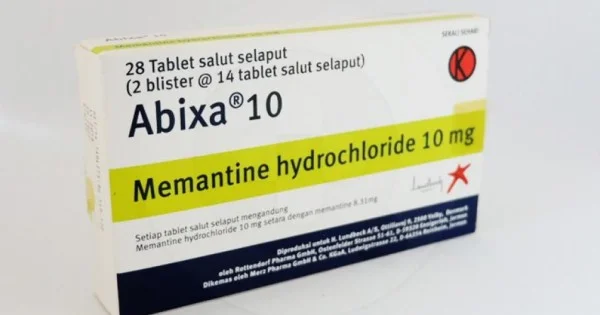

Medicine Overview of Abixa 10mg Tablet
Abixa 10 is a medicine used in the treatment of Alzheimer’s disease. It helps to slow down the progression of moderate to severe Alzheimer’s by improving memory and thinking. This medicine works by blocking a chemical messenger involved in the transmission of nerve signals.
Abixa 10 is taken by mouth with or without food. However, it is advised to take it at the same time each day to maintain a consistent level of medicine in the blood. If you have missed a dose, take it as soon as you remember. Do not skip any doses and finish the full course of treatment even if you feel better. It is important that this medication is not stopped suddenly without talking to your doctor. Remember to inform the doctor if you have a history of seizures, kidney disease, heart disease, or liver disease.
Some common side effects of this medicine include headache, confusion, sleepiness, abnormal liver function tests, balance disorder and shortness of breath. It may also cause dizziness and sleepiness, so do not drive or do anything that requires mental focus until you know how this medicine affects you. This medicine may cause diarrhea, so drink plenty of fluids to keep yourself hydrated.
Show less
- Alzheimer's disease
- Dizziness
- Headache
- Confusion
- Sleepiness
- Diarrhea
- Abnormal liver function tests
- Balance disorder (loss of balance)
- Breathlessness
- Pulmonary hypertension (high blood pressure)
- Hypersensitivity
-
You have been prescribed Abixa 10 to slow down the progression of Alzheimer’s disease.
-
It is well tolerated and has lesser side effects as compared to other similar medicines.
-
Be cautious while driving or doing anything that requires concentration until you know how Abixa 10 affects you.
-
Inform your doctor if you have a history of seizures, kidney disease, heart disease, or liver disease.
-
Inform your doctor if you are pregnant, planning to conceive, or breastfeeding.
Oral
Moderate to severe dementia in Alzheimer’s disease
Adult: As hydrochloride: Initially, 5 mg daily in the morning for the 1st wk; increase dose wkly in steps of 5 mg. Max: 20 mg daily. Wait for at least 1 wk between dose changes. Doses >10 mg/day should be given in 2 divided doses.
Suggested titration: 5 mg daily for >1 wk; 5 mg bid for >1 wk; 15 mg daily given in 5- and 10-mg separated doses for >1 wk; then 10 mg bid.
Hepatic impairment
Mild or moderate (Child Pugh A/B): No dosage adjustment required
Severe (Child Pugh C): Caution
Show less
Renal impairment:
CrCl (ml/min) Dosage Recommendation
5-29 Max: 10 mg daily.
30-49 10 mg daily (after initial dose of 5 mg daily), if well tolerated for at least 7 days, may increase to 20 mg daily.
Show less
Renal impairment; epilepsy. Pregnancy and lactation. Closely monitor patients with recent MI, uncompensated CHF, uncontrolled hypertension. Predisposition to convulsions; conditions that increase urinary pH.
Lactation: Unknown whether drug is excreted into breast milk; use with caution
Show less
1-10%
Dizziness (7%),Confusion (6%),Headache (6%),Constipation (5%),Cough (4%),Hypertension (4%),Backache (3%),Pain (3%),Somnolence (3%),Syncope (3%),Vomiting (3%),Dyspnea (2%),Fatigue (2%)
<1%
Acute renal failure,Cerebral infarction,Cerebrovascular accident,Deep venous thrombosis,Hepatitis, liver failure,Intracranial hemorrhage,Neuroleptic malignant syndrome,Seizure (including grand mal),Stevens-Johnson syndrome,Transient ischemic attack
Show less
May increase effects of antimuscarinics and dopaminergics. May reduce effects of antipsychotics and barbiturates. May alter effects of dantrolene, baclofen. Reduced clearance with carbonic anhydrase inhibitors and sodium bicarbonate.
Potentially Fatal: Increased risk of adverse effects with amantadine, dextromethorphan or ketamine.
Show less




Reviews
Clear filtersThere are no reviews yet.