




Introduction
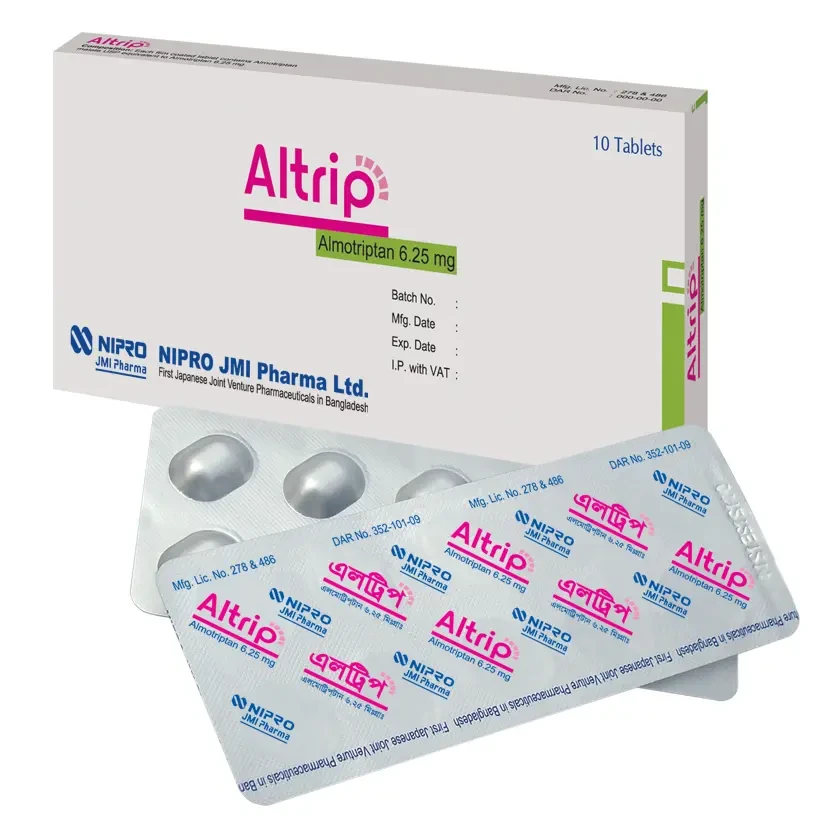
Altrip is a prescription medicine used in the treatment of acute attack of migraine. It relieves the symptoms of migraine and prevents the attack from becoming worse. This medicine helps by narrowing the blood vessels, thereby relieving migraine headaches. Altrip may be taken with or without food. However, it is advised to take it at the same time each day as this helps to maintain a consistent level of medicine in the body. Do not skip any doses and finish the full course of treatment even if you feel better and if you have missed a dose, take it as soon as you remember. You should continue to take this medicine for as long as doctor advises and do not stop taking it suddenly. Side effects associated with the use of this medicine include neck pain, sensation of heaviness, weakness, throat pain, dry mouth, jaw pain, nausea and paresthesia (tingling or pricking sensation). However, these are usually temporary and usually resolve on their own. Please consult your doctor if these do not subside or worry you. It may also cause sleepiness in the beginning of your treatment, so do not drive, operate machinery, until you know how this medicine affects you. This medicine may cause changes in your mood and you may feel depressed, therefore, regular monitoring of behavior is important. Pregnant or breastfeeding mothers should consult their doctor before taking this medicine. Inform your doctor if you are suffering from any heart problems, as the use of Altrip is contraindicated in some heart diseases. Regular monitoring of blood pressure is required while taking this medicine. Consult your doctor and stop this medicine if you develop severe chest or stomach pain, bloody diarrhea, or significantly high blood pressure, after taking this medicine.
_
Uses of Altrip
Migraine
Side effects of Altrip
Common
Dizziness
Dryness in mouth
Flushing (sense of warmth in the face, ears, neck and trunk)
Jaw pain
Nausea
Neck pain
Sleepiness
Throat pain
Weakness
How to use Altrip
Take this medicine in the dose and duration as advised by your doctor. Swallow it as a whole. Do not chew, crush or break it. Altrip may be taken with or without food, but it is better to take it at a fixed time.
How Altrip works
Migraine headaches are thought to result from the dilatation of blood vessels in the brain and release of vasoactive and pro-inflammatory peptides (chemical messenger) from sensory nerve endings. Altrip is a selective serotonin receptor agonist. It works by constricting (narrowing) these blood vessels and prevents the release of the chemical messenger in the nerve endings, thereby relieving the migraine headaches.
Quick Tips
You have been prescribed Altrip for treatment of migraine headaches.
Some tips that may help avoid a migraine attack:
It may cause sleepiness. Don’t drive or do anything that requires mental focus until you know how it affects you.
Notify your doctor if your migraine occurs more often after starting the medication.
Notify your doctor if you have stomach pain, headache, bloody diarrhoea or worsening high blood pressure.
Inform your doctor if you have a history of heart disease or stroke.
This medication does not prevent migraine attacks from happening.
Brief Description
Indication
Oral Acute migraine attacks Adult: Initially, 6.25-12.5 mg. May repeat 2 hr later if needed. Max: 2 doses/24 hr. Hepatic Impairment Initially, 6.25 mg as a single dose. Max: 12.5 mg/24 hr. Avoid in severe impairment.
_
Administration
Increased risk of serotonin syndrome when used with SSRIs or serotonin norepinephrine reuptake inhibitors. Increased plasma concentrations when used with verapamil, ketoconazole or other potent CYP450 inhibitors. Potentially Fatal: Severe vasospastic reactions may occur when given within 24 hr of treatment with another 5-HT1 agonist, or an ergotamine-containing or ergot-like medication. Avoid usage with or within 2 wk of stopping treatment with a MAOI.
_
Adult Dose
Hypersensitivity to sulfonamides. Hepatic or moderate-severe renal impairment. Caution when used in patients with a history of seizures. May significantly increase BP. May cause drowsiness. Children <18 yr. Pregnancy, lactation. Lactation: excretion in milk unknown; use with caution
_
Renal Dose
Almotriptan is a selective serotonin agonist which acts mainly on the 5-HT1 receptors and produces cranial vasodilation. It is used for the acute treatment of migraine.
Contraindication
Oral Child: Migraine Indicated for acute treatment of migraine headache pain in adolescents with a history of migraine attacks with or without aura usually lasting >4 hr (when untreated) <12 years: Safety and efficacy not established >12 years: 6.25-12.5 mg PO at onset of headache; may repeat once after 2 hr Not to exceed 25 mg/day
_
Mode of Action
May be taken with or without food.
Precaution
Migraine headache, Acute migraine attacks
Side Effect
Renal Impairment Initially, 6.25 mg as a single dose. Max: 12.5 mg/24 hr.
Pregnancy Category Note
1-10% Somnolence (1-5%),Dizziness (3-4%),Nausea (1-3%),Vomiting (2%),Dry mouth (1-2%),Headache (1-2%),Nausea (1-2%),Paresthesia (1-2%),Paresthesia (1%),Somnolence (>1%) <1% Infrequent (0.01-0.001%) Anxiety, asthenia, chills, CNS stimulation, fatigue, hypesthesia, tremor, Pruitus, rash, Diaphoresis, dysmenorrhea, hyperglycemia, increased thirst, Abdominal cramp, gastroenteritis Back pain, myalgia, neck pain, rigid neck, Increased CPK, Bronchitis, chest pain, dyspnea, pharyngitis, rhinitis, sinusitis, Conjunctivitis, tinnitis, vertigo Potentially Fatal: Serious cardiac events.
_
Interaction
Underlying CV disease e.g. ischaemic heart disease or coronary artery vasospasm. Uncontrolled hypertension. Severe hepatic or renal impairment. Prophylaxis of migraine, hemiplegic or basilar migraine; cluster headache. Use within 24 hr of another 5-HT1 agonist; use within 24 hr of ergotamine derivative; concurrent use or within 2 wk of discontinuing an MAOI.



Reviews
Clear filtersThere are no reviews yet.