


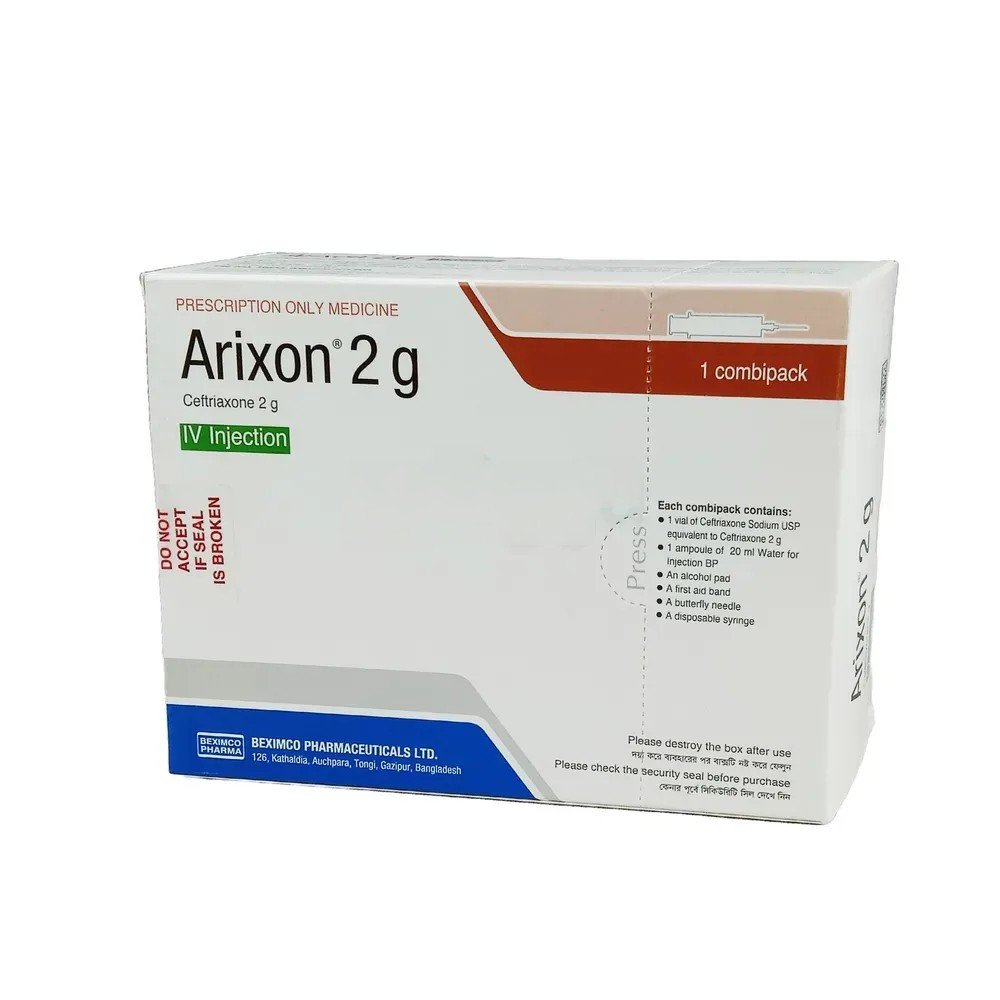

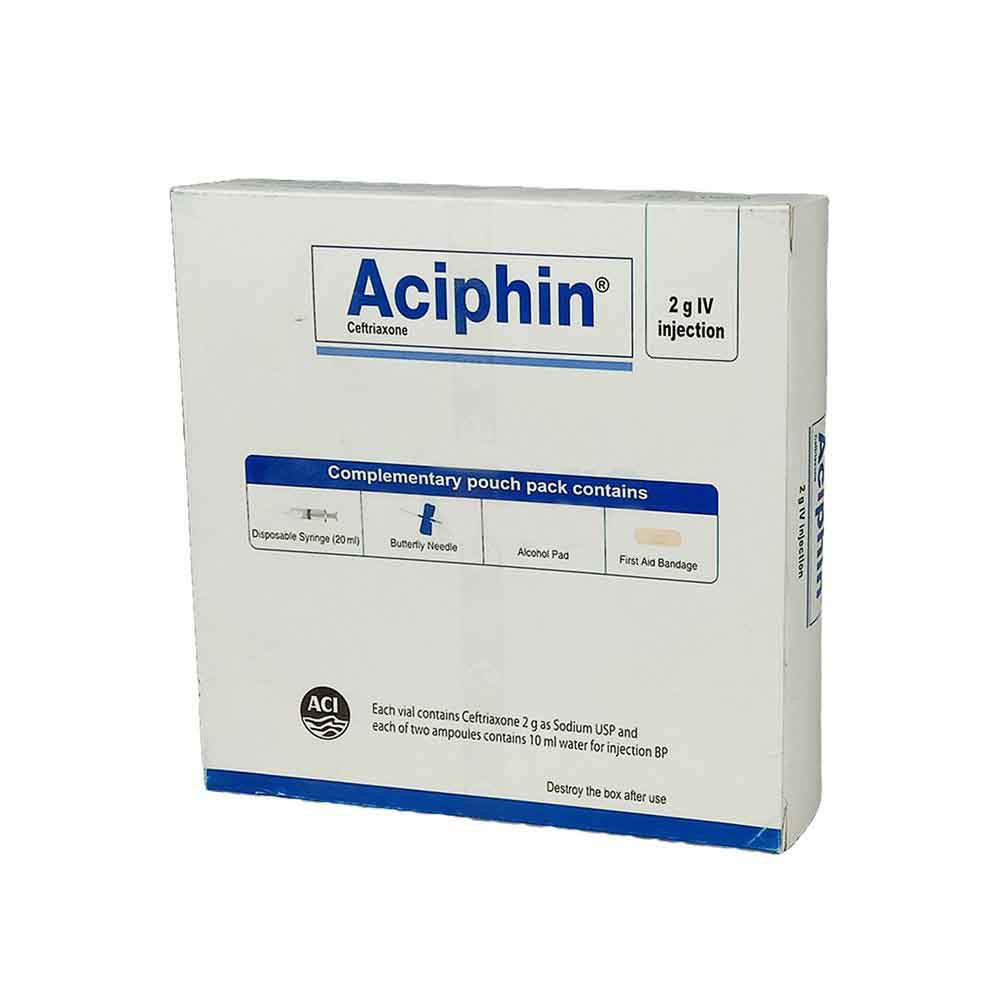
Medicine Overview of Arixon 2gm IV 2gm/vial Injection
Arixon 2gm IV is an antibiotic belonging to the cephalosporin group, which is used to treat bacterial infections in your body. It is effective in infections of the brain (e.g., meningitis), lungs (e.g., pneumonia), ear, urinary tract, skin & soft tissues, bones & joints, blood and heart.
Arixon 2gm IV is also used to prevent infections during surgery. It fights the infection by killing the bacteria. This helps to improve your symptoms and cure the underlying infection. It is given as a drip (intravenous infusion) or as an injection directly into a vein or a muscle under the supervision of a healthcare professional. Your doctor will decide the correct dose for you. This medicine will be given to you regularly at evenly spaced intervals as per the schedule prescribed by your doctor. Do not skip any doses and finish the full course of treatment even if you feel better. Stopping the medicine too early may lead to the returning or worsening of infection.
The most common side effects of this medicine include diarrhea, rash, and changes in liver function tests and blood cell counts. Some people may develop temporary redness or pain at the site of injection. These side effects are usually mild but let your doctor know if they bother you or do not go away.
Before taking it, you should let your doctor know if you are allergic to any antibiotics or have any kidney or liver problems. You should also let your healthcare team know all other medicines you are taking as they may affect, or be affected by this medicine. Pregnant and breastfeeding women should consult their doctor before using it.
- Bacterial infections
- Abnormal liver function tests
- Diarrhea
- Rash
-
Your doctor has prescribed Arixon 2gm IV to cure your infection and improve your symptoms.
-
Do not skip any doses and finish the full course of treatment even if you feel better. Stopping it early may make the infection harder to treat.
-
Discontinue Arixon 2gm IV and inform your doctor immediately if you get a rash, itchy skin, swelling of face and mouth, or have difficulty in breathing.
-
Diarrhea may occur as a side effect but should stop when your course is complete. Inform your doctor if it does not stop or if you find blood in your stools.
IV/IM Administration
IV: Infuse intermittently over 30 minutes
IM: Inject deep into large muscle mass
Susceptible infections IV/IM 1-2 g/day, up to 4 g/day for severe infections.
Intra-abdominal Infections
Complicated, mild-to-moderate, community acquired: 1-2 g/day IV in single daily dose or divided q12hr for 4-7 days, in combination with metronidazole
Meningitis
2 g IV q12hr for 7-14 days
Acute Uncomplicated Pyelonephritis
1-2 g IV qDay
Typhoid fever
2 g IV once daily for 14 days.
Surgical Prophylaxis
Prophylaxis of surgical infection
1 g IV 0.5-2 hours before procedure
Uncomplicated Gonococcal Infections
Uncomplicated gonococcal infection of pharynx, cervix, urethra, or rectum: ceftriaxone 250 mg IM once plus azithromycin 1 g PO once (preferred) or alternatively, doxycycline 100 mg PO q12hr for 7 days
Pelvic Inflammatory Disease
250 mg IM as single dose with doxycycline, with or without metonidazole for 14 days
Children: IV, IM: 50–75 mg/kg/day, max 2 g/day q24h
50 mg/kg, max 1 g, 1–3 doses IM for AOM q24h
100 mg/kg/day for meningitis, max 4 g/day q12h
Renal impairment:
CrCl (ml/min)
<10 Max: 2 g daily.
History of penicillin allergy; severe renal impairment; pregnancy and lactation; superinfection.
Lactation: Drug enters breast milk in low concentrations; use with caution
>10%
Induration after IM injection (5-17%)
1-10%
Eosinophilia (6%),Thrombocytosis (5%),Diarrhea (3%),Elevated hepatic transaminases (3%),Leukopenia (2%),Rash (2%),Increased blood urea nitrogen (BUN) (1%),Induration at IV site (1%),Pain (1%)
<1%
Agranulocytosis,Anaphylaxis,Anemia,Basophilia,Bronchospasm,Candidiasis,Chills,Diaphoresis,Dizziness,Dysgeusia,Flushing,Gallstones,Glycosuria,Headache,Hematuria,Hemolytic anemia,Increased alkaline phosphatase or bilirubin,Increased creatinine,Jaundice,Leukocytosis,Lymphocytosis,Lymphopenia,Monocytosis,Nausea,Neutropenia,Phlebitis,Prolonged or decreased prothrombin time (PT),Pruritus,Renal stones,Serum sickness,Thrombocytopenia,Urinary casts,Vaginitis,Vomiting
Pregnancy category: B
Lactation: Drug enters breast milk in low concentrations; use with caution
May increase nephrotoxicity of aminoglycosides. May diminish therapeutic effect of BCG, typhoid vaccine, Na picosulfate. May increase anticoagulant effect of vit K antagonists (e.g. warfarin). May increase serum level w/ probenecid.
Potentially Fatal: Admin w/ Ca-containing IV soln may cause precipitation of a crystalline material in the lungs and kidneys.






Reviews
Clear filtersThere are no reviews yet.