


Introduction
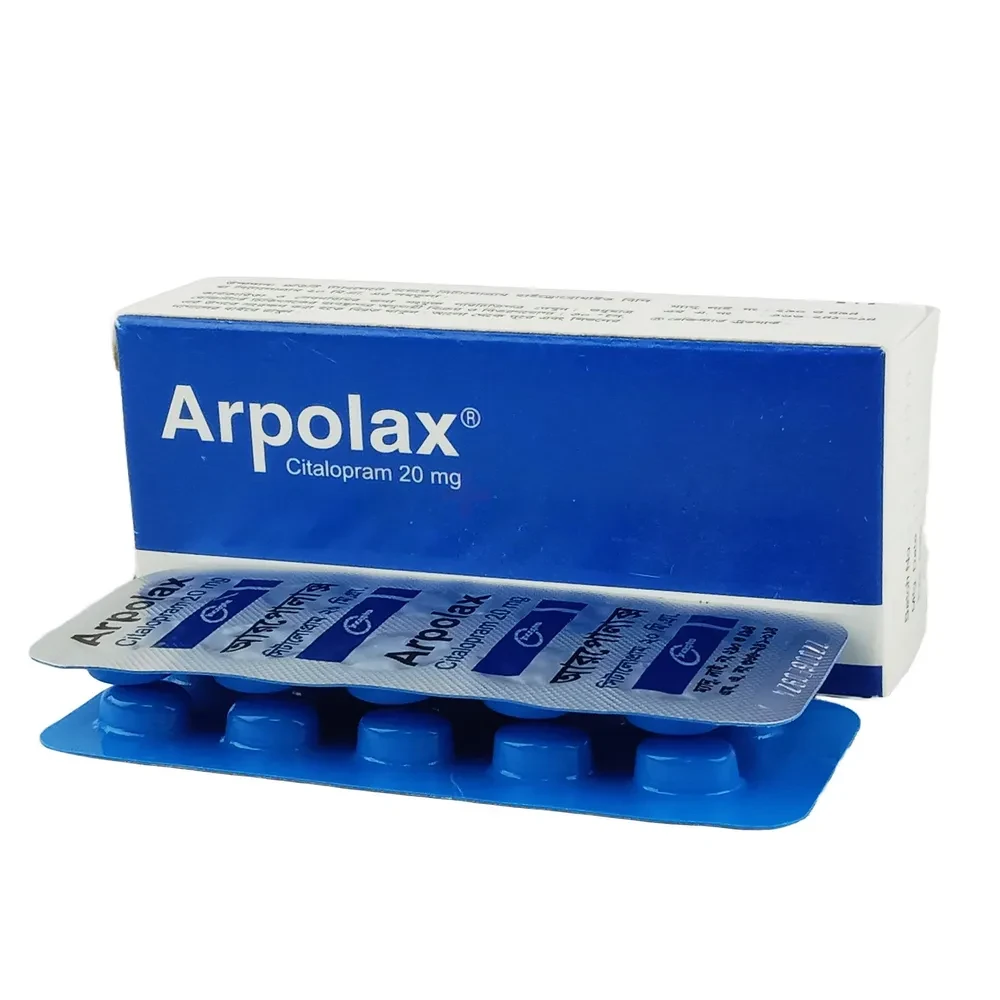
Arpolax 20 is a type of antidepressant belonging to the selective serotonin reuptake inhibitor (SSRI) group of medicines. It is prescribed to treat depression, where it helps to make you feel better and prevent new episodes of depression. This medicine is also used to treat panic disorder. Arpolax 20 can be taken with or without food. The dose and how often you need it will be decided by your doctor so that you get the right amount to control your symptoms. Your doctor may start you on a lower dose and increase it gradually. Do not change the dose or stop taking it without talking to your doctor, even if you feel well. Doing so may make your condition worse or you may suffer from unpleasant withdrawal symptoms (anxiety, restlessness, palpitations, dizziness, sleep disturbances etc). To get the most benefit, take this medicine regularly at the same time each day. Your doctor may advise you to take it in the morning if you have trouble sleeping. It may take a few weeks before you start feeling better. Let your doctor know if you do not see any improvement even after 4 weeks. Some common side effects of this medicine include nausea, vomiting, fatigue, dry mouth, increased sweating, insomnia (difficulty in sleeping), decreased sexual drive, delayed ejaculation, and erectile dysfunction. Some people may experience sleepiness after taking this medicine. Let your doctor know straight away if you develop any sudden worsening of mood or any thoughts about harming yourself. Before taking Arpolax 20, you should tell your doctor if you have epilepsy (seizure disorder or fits), diabetes, liver or kidney disease, any heart problems, or are currently taking medicines for depression known as MAO inhibitors. These may affect your treatment. Please tell your doctor about all the medicines you are taking to make sure you are safe.
_
Uses of Arpolax 20
Depression
Panic disorder
Side effects of Arpolax 20
Common
Erectile dysfunction
Insomnia (difficulty in sleeping)
Low sexual desire
Nausea
Restlessness
Upset stomach
Vomiting
How to use Arpolax 20
Take this medicine in the dose and duration as advised by your doctor. Swallow it as a whole. Do not chew, crush or break it. Arpolax 20 may be taken with or without food, but it is better to take it at a fixed time.
How Arpolax 20 works
Arpolax 20 is one of a group of antidepressants called selective serotonin reuptake inhibitors, or SSRIs. It is thought to be work by enhancing the level of mood-enhancing neurotransmitters called serotonin in the brain. This may help you to improve your energy level and feelings of well-being.
What if you forget to take Arpolax 20?
If you miss a dose of Arpolax 20, take it as soon as possible. However, if it is almost time for your next dose, skip the missed dose and go back to your regular schedule. Do not double the dose.
Quick Tips
It can take up to 8 to 12 weeks to see the medicine full effects on your mood.
Take it with food to avoid stomach upset.
It causes less drowsiness as compared to other antidepressant medications.
Don’t drive or do anything requiring concentration until you know how Arpolax 20 affects you.
Talk to your doctor if you notice sudden mood changes or develop suicidal thoughts.
Inform your doctor if you experience decreased sex drive or difficulty having an orgasm.
Do not stop taking the medication suddenly without talking to your doctor.
Brief Description
Indication
Depressive illness, Bipolar disorder, Panic disorder, Substance abuse disorders, Alcohol dependence, Anxiety disorders including obsessive-compulsive disorder and social phobia, Post-traumatic stress disorder, Premenstrual syndrome, Idiopathic Parkinson’s disease and Eating disorder.
Administration
May be taken with or without food.
Adult Dose
Oral Depression; Depressive phase of bipolar disorder Adult: Initially, 20 mg/day, increased to max 40 mg/day after at least 1 wk. Elderly: 10 mg/day. Max: 20 mg/day. Hepatic impairment: Mild to moderate: 10 mg/day for the 1st 2 wk. Max: 20 mg/day. Panic disorder with or without agoraphobia Adult: Initially, 10 mg/day, increased to 20 mg/day after 1 wk. Elderly: 10 mg/day. Max: 20 mg/day. Hepatic impairment: Mild to moderate: 10 mg/day for the 1st 2 wk. Max: 20 mg/day.
_
Child Dose
Child: Contraindicated.
_
Renal Dose
Renal impairment: No dosage adjustment needed.
Contraindication
Hypersensitivity, concomitant admin with MAOIs or within 14 days of discontinuing MAOI treatment; children and adolescents <18 yr; treatment of depressive illness; lactation.
_
Mode of Action
Citalopram is bicyclic phthalane derivative and a selective serotonin re-uptake inhibitor, w/ little or no effect on noradrenaline, dopamine and GABA re-uptake. The inhibitory activity explains the antidepressant property of citalopram. It has no or very low affinity for 5-HT1AA, 5-HT2A, D1 and D2 receptors, alpha 1, alpha2, beta-adrenergic, histamine H1, muscarinic, cholinergic, benzodiazepine and opioid receptors.
Precaution
Caution should be taken in patients with epilepsy, concurrent electroconvulsive therapy, history of mania, cardiac disease, diabetes mellitus, angle-closure glaucoma, history of bleeding disorders, hepatic and renal impairment. Abrupt withdrawal of Citalopram should be avoided. Gradual discontinuation of treatment if patient enters into manic phase; pregnancy. Increased risk of hyponatraemia and SIADH. May reduce convulsant threshold thus, citalopram should be used with care in epileptic patients. Lactation: Excreted in breast milk; use caution
_
Side Effect
>10% Dry mouth (20%),Nausea (21%),Somnolence (18%),Insomnia (15%),Xerostomia (20%),Increased sweating (11%) 1-10% Tremor (8%),Diarrhea (8%),Ejaculation disorder (6%),Rhinitis (5%),Upper respiratory infection (5%),Dyspepsia (5%),Fatigue (5%),Vomiting (4%),Anxiety (4%),Anorexia (4%),Abdominal pain (3%),Agitation (3%),Impotence (3%),Sinusitis (3%),Dysmenorrhea (3%),Decreased libido (2%),Yawning (2%),Arthralgia (2%),Myalgia (2%),Amenorrhea (>1%),Confusion (>1%),Cough (>1%),Flatulence (>1%),Increased saliva (>1%),Migraine (>1%),Orthostatic hypotension (>1%),Paresthesia (>1%),Polyuria (>1%),Pruritus (>1%),Rash (>1%),Tachycardia (>1%),Weight change (>1%) Potentially Fatal: Increased risk of suicidal thinking and behaviour especially in child and adolescents. Monitor closely for signs of clinical worsening, suicidality or unusual changes in behaviour.
_
Pregnancy Category Note
Pregnancy Pregnancy category: C Use late in the third trimester associated with complications in newborns and may require prolonged hospitalization, respiratory support, and tube feeding Lactation Excreted in breast milk; use caution
_
Interaction
May increase anticoagulant effect w/ drugs affecting haemostatis (e.g. warfarin). Increased risk of hypomania w/ sibutramine. Increased lowering seizure threshold w/ TCAs and other SSRIs. Potentially Fatal: Increased risk of severe adverse effects (e.g. serotonin syndrome) w/ MAOI. QT interval prolongation w/ subsequent risk of torsade de pointes w/ QT-prolonging drugs (e.g. pimozide, quinidine, procainamide, chlorpromazine, thioridazine, amiodarone, sotalol, moxifloxacin, pentamidine, levomethadyl, methadone).
_



Reviews
Clear filtersThere are no reviews yet.