

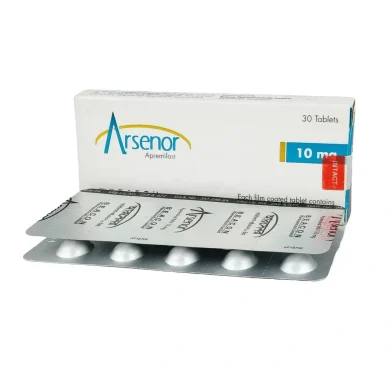
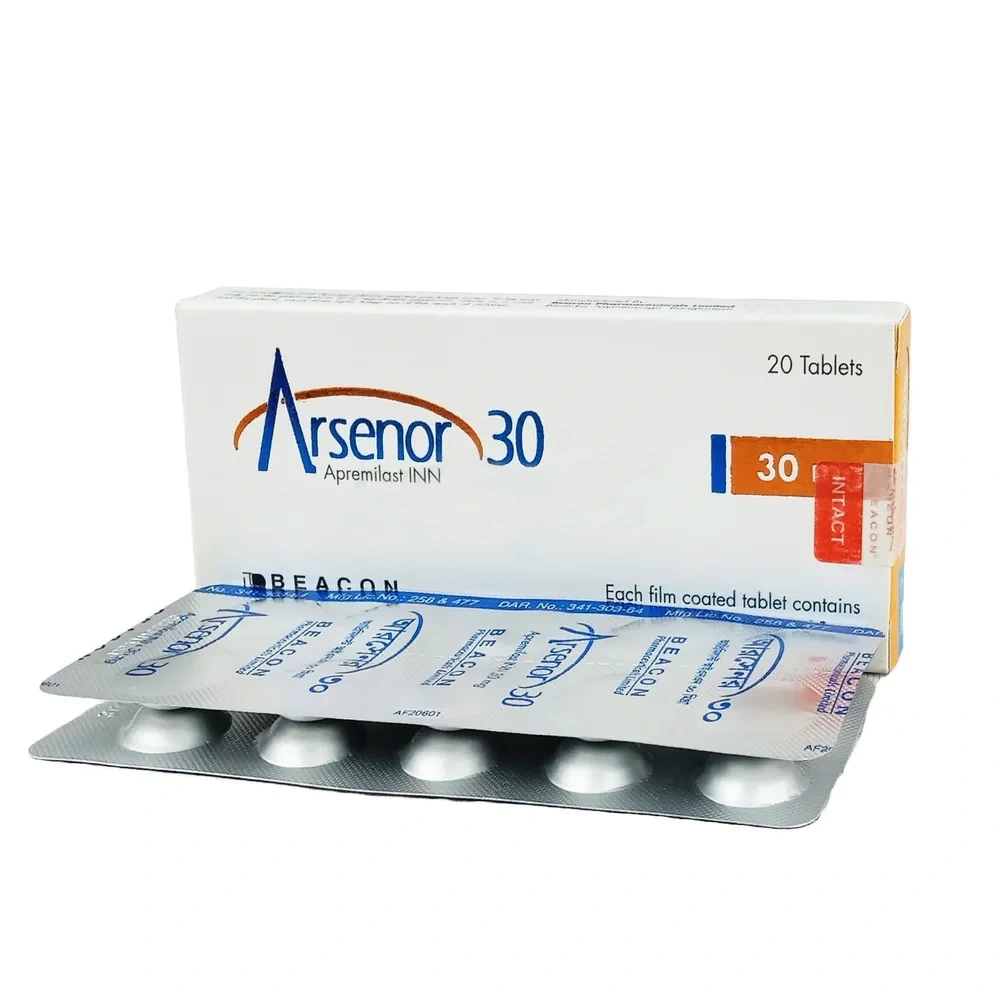

Medicine Overview of Arsenor 30 30gm Tablet
Arsenor 30 is used in the treatment of moderate to severe plaque psoriasis which is a type of skin condition. This medicine is used when other conventional treatments cannot be used or if the patient is not responsive or intolerant to any of these treatments.
Arsenor 30 can be taken with or without food. Take it regularly and do not stop taking the medicine even if you get better until that doctor tells you it is alright to stop. You may need to monitor your weight regularly while taking the medicine as it may cause weight loss.
Using this medicine may cause few common side effects such as nausea, diarrhea, and vomiting. If these side effects persist or get worse, let your doctor know. Your doctor may help with ways to reduce or prevent these symptoms by prescribing you an alternative medicine or by adjusting the dose.
To make sure the medicine is safe for you, before taking this medicine, let your doctor know all the other medicines you are taking. If you are pregnant or breastfeeding, consult your doctor first before taking this medicine.
- Plaque psoriasis
- Diarrhea
- Nausea
- Vomiting
-
Arsenor 30 is a well-tolerated medicine. Mild stomach upset may occur early during the treatment.
-
Monitor your weight regularly as Arsenor 30 may cause weight loss.
-
Your doctor will gradually increase the dose from day 1 to day 6 of treatment, after which it may be kept constant.
-
Tell your doctor immediately if you experience new or worsened depression, suicidal thoughts, other mood changes or unexplained weight loss.
To reduce risk of GI symptoms associated with initial therapy, titrate to recommended dose (30 mg PO BID) according to the dosage schedules listed above
Can be administered without regard to meals
Swallow tablet whole; do not crush, split, or chew
Active psoriatic arthritis, moderate to severe plaque psoriasis for whom phototherapy or systemic therapy is appropriate.
To reduce risk of gastrointestinal symptoms, titrate to recommended dose of 30 mg twice daily according to the following schedule:
Day 1: 10 mg in morning
Day 2: 10 mg in morning and 10 mg in evening
Day 3: 10 mg in morning and 20 mg in evening
Day 4: 20 mg in morning and 20 mg in evening
Day 5: 20 mg in morning and 30 mg in evening
Day 6 and thereafter: 30 mg twice daily
Hepatic impairment: No dosage adjustment required
Severe renal impairment (CrCl <30 mL/min): Reduce dose to 30 mg PO qDay
Mild-to-moderate renal impairment: No dosage adjustment required
Apremilast is associated with an increase in adverse reactions of depression. Before using, evaluate patient for history of depression and/or suicidal thoughts or behavior.
Weight decrease of 5-10% of body weight. Monitor weight regularly. If unexplained or clinically significant weight loss occurs, evaluate weight loss and consider discontinuation of Apremilast.
Lactation: Unknown if distributed in human breast milk; caution required
1-10%
Diarrhea (7.7-9.3%),Nausea (7.4-8.9%),Headache (4.8-5.9%),Upper respiratory tract infection (0.6-3.9%),Vomiting (0.8-3.2%),Nasopharyngitis (0.2-2.6%),Upper abdominal pain (0.6-2%)
Pregnancy
Available pharmacovigilance data use in pregnant women have not established a drug-associated risk of major birth defects, miscarriage or adverse maternal or fetal outcomes, but data are extremely limited
Based on findings from animal reproduction studies, may increase the risk for fetal loss
Lactation
There are no data on the presence of apremilast in human milk, the effects on the breastfed infant, or the effects on milk production
Detected in the milk of lactating mice
Consider developmental and health benefits of breastfeeding along with the mother’s clinical need and any potential adverse effects on the breastfed infant or from the underlying maternal condition


Reviews
Clear filtersThere are no reviews yet.