

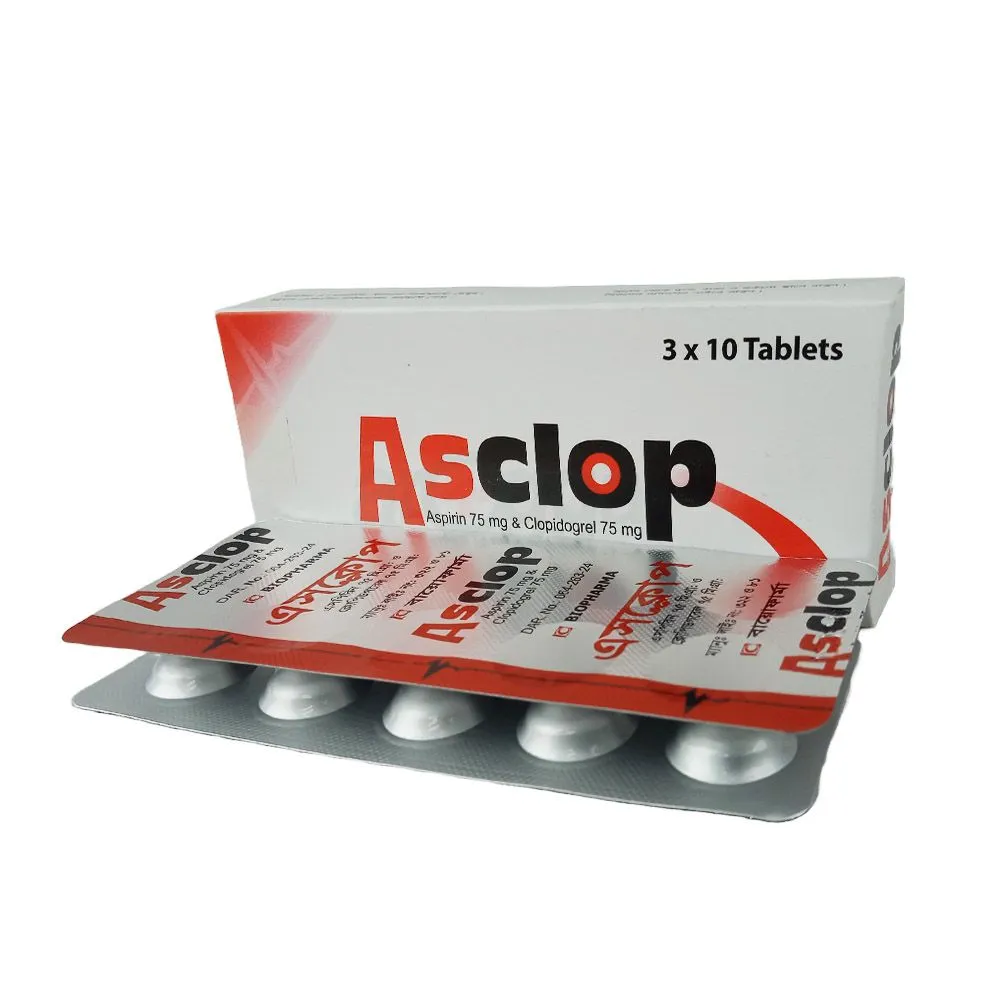

Medicine Overview of Asclop 75mg+75mg Tablet
Asclop is a combination of two antiplatelet medicines or blood thinner used to reduce the formation of harmful blood clots in blood vessels. This helps to prevent a heart attack or stroke in people with heart disease.
Asclop should be taken with food regularly at a fixed time each day. You should take it regularly at evenly spaced intervals as per the schedule prescribed by your doctor. Taking it at the same time every day will help you remember to take it. The dose and duration of treatment will depend on what you are being treated for. Do not stop taking it until you have finished the complete course, even when you feel better. Lifestyle changes like low-fat diet, exercise and not smoking may help this medicine to work better.
Abdominal pain, indigestion, bruising, and nosebleeds are some common side effects of this medicine. This medicine increases your risk of bleeding, so it is important to be careful while shaving, cutting nails and using sharp objects. Usually, it is advisable to avoid alcohol intake while taking this medicine.
Before taking this medicine, tell your doctor if you have any liver or kidney disease. You must tell your doctor if you are pregnant, planning pregnancy or breastfeeding. You should also let your healthcare team know all other medicines you are taking as they may affect, or be affected by this medicine.
- Heart attack prevention
- Stroke prevention
- Abdominal pain
- Bruise
- Diarrhea
- Gastrointestinal bleeding
- Increased bleeding tendency
- Nosebleeds
-
You have been prescribed Asclop to lower your risk of heart attack and stroke.
-
Take it with food to avoid an upset stomach.
-
It increases your risk of bleeding. Be careful while shaving, cutting fingernails or toenails or using sharp objects.
-
Let your doctor know you are taking Asclop before undergoing any surgical procedure.
Adult: PO Prevention of ischaemic events Per tab contains clopidogrel 75 mg and aspirin 75 mg: 1 tab once daily. Acute coronary syndrome Per tab contains clopidogrel 75 mg and aspirin 75 mg: Loading dose: 4 tab; maintenance: 1 tab/day.
Hepatic impairment: Severe hepatic impairment: Avoid use.
Aspirin: Corticosteroids, phenylbutazone and oxyphenbutazone may increase risk of GI ulceration. Use with coumarins, anagrelide, agatroban, LMWH, bivalirudin, dasatinib, iloprost, lepirudin and tenecteplase may increase the risk of bleeding. Clopidogrel: Co-administration of clopidogrel with NSAIDs may increase the risk of stomach and intestinal bleeding. There is an increased risk of bleeding with coumarins, agatroban, dasatinib, heparin, LMWH, gingko biloba and iloprost. Increased risk of bleeding if clopidogrel and drotrecogin alfa are given within 7 days. May increase bupropion level and side effects (lightheadedness , GI discomfort).
Potentially Fatal: Aspirin and clopidogrel: Increased risk of bleeding with dabigatran.
Renal impairment:
CrCl (ml/min)
<10 Avoid use.
Aspirin: GI disturbances, epigastric discomfort, prolonged bleeding time, rhinitis, urticaria; angioedema, salicylism, tinnitus. Clopidogrel: Dyspepsia, abdominal pain, nausea, vomiting, flatulence, constipation, gastritis, gastric and duodenal ulcers. Serious events include bleeding and GI haemorrhage. GI upset, diarrhoea, paraesthesia, vertigo, headache, dizziness, leucopaenia, eosinophilia, rash and pruritus.
Potentially Fatal: Aspirin: Gastric erosion, ulceration and bleeding; severe, occasionally fatal exacerbation of airway obstruction in asthma; Reye’s syndrome (childn <12 yrs). Hepatotoxicity; CNS depression, which may lead to coma; CV collapse, resp failure; paroxysmal bronchospasm and dyspnoea. Clopidogrel: Bleeding disorders including GI intracranial haemorrhage and thrombotic thrombocytopenic purpura.
Hypersensitivity to aspirin, NSAIDs or clopidogrel; active peptic ulceration; children <12 yr; patients with haemophilia or haemorrhagic disorders; gout; severe renal or hepatic impairment; lactation.








Reviews
Clear filtersThere are no reviews yet.