


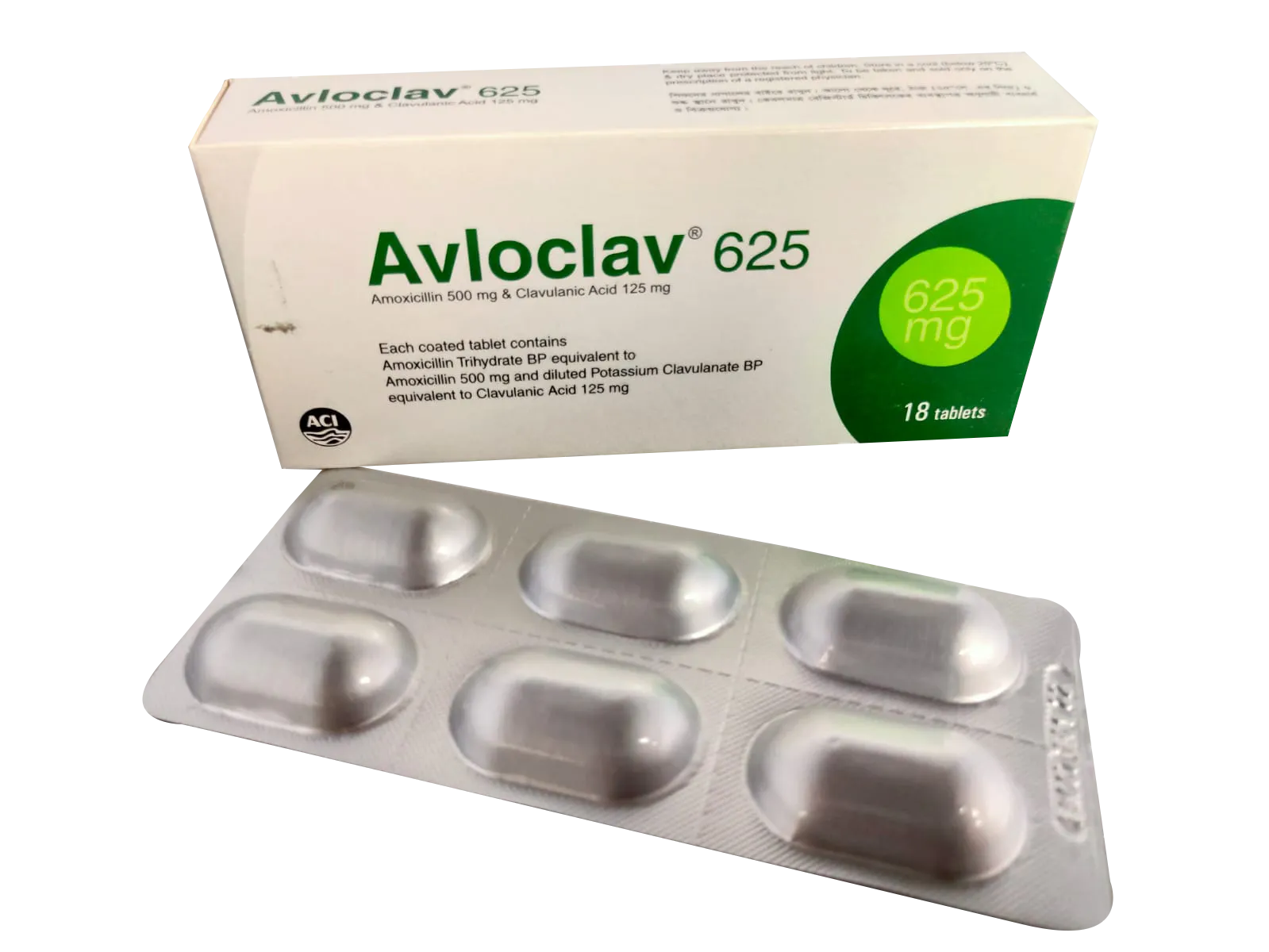

Medicine Overview of Avloclav 625 500mg+125mg Tablet
Avloclav 625 is a penicillin-type of antibiotic that helps your body fight infections caused by bacteria. It is used to treat infections of the lungs (e.g., pneumonia), ear, nasal sinus, urinary tract, skin and soft tissue. It will not work for viral infections such as the common cold.
Avloclav 625 is best taken with a meal to reduce the chance of a stomach upset. You should take it regularly at evenly spaced intervals as per the schedule prescribed by your doctor. Taking it at the same time every day will help you to remember to take it. The dose will depend on what you are being treated for, but you should always complete a full course of this antibiotic as prescribed by your doctor. Do not stop taking it until you have finished, even when you feel better. If you stop taking it early, some bacteria may survive and the infection may come back or worsen.
The most common side effects of this medicine include vomiting, nausea, and diarrhea. These are usually mild but let your doctor know if they bother you or will not go away.
Before taking it, let your doctor know if you are allergic to any antibiotics or have any kidney or liver problems. You should also let your healthcare team know about all other medicines you are taking as they may affect, or be affected by, this medicine. This medicine is generally regarded as safe to use during pregnancy and breastfeeding if prescribed by a doctor.
Show less
- Bacterial infections
- Vomiting
- Nausea
- Diarrhea
-
You have been prescribed this combination medicine to treat bacterial infections even if they have developed resistance.
-
Finish the prescribed course, even if you start to feel better. Stopping it early may make the infection come back and harder to treat.
-
Diarrhea may occur as a side effect. Taking probiotics along with Avloclav 625 may help. Talk to your doctor if you notice bloody stools or develop abdominal cramps.
-
Take it with food and plenty of fluids to avoid an upset stomach.
-
Stop taking Avloclav 625 and inform your doctor immediately if you develop an itchy rash, swelling of the face, throat or tongue or breathing difficulties while taking it.
-
Do not use leftover medicine for treating any infection in the future. Always consult your doctor before taking any antibiotic.
Adults: PO: One 375 mg tablet 3 times a day. In severe infection one 625mg tablet 3 times a day or one 1gm tablet two times a day.
IV Injection: 1.2 g every 6-8 hours
Hepatic impairment: Dose with caution; monitor hepatic function regularly
Show less
History of allergy especially to cephalosporins, infectious mononucleosis, severe renal impairment.
Lactation: Drug excreted in breast milk; use caution
Show less
Children: 125/31.25-, 250/62.5-mg/5-mL susp: 20–40 mg amoxicillin component/kg/day (max 1,500 mg/day) q8h
200/28.5-, 400/57-mg/5-mL susp: 25-45 mg amoxicillin component/kg/day (max 1,750 mg/day) q12h
Children of 6-12 years: 2 teaspoonful Powder for Suspension every 8 hours.
Children of 1-6 years: 1 teaspoonful Powder for Suspension every 8 hours.
Children below 1 year: 25 mg/kg/day in divided doses every 8 hours.
Children over 12 years: IV Injection: 1.2 g every 6-8 hours,
Children up to 3 months: 30 mg/kg every 8 hours (every 12 hours in the perinatal period and in premature infants);
Child 3 months-12 years, 30 mg/kg every 6-8 hours.
Show less
Take with meals to avoid GI upset
Take suspension at start of meal to enhance absorption
Reconstitution: Powd for inj: Dissolve amoxicillin/clavulanic acid 500/100 mg in 10 mL solvent and 1,000/200 mg in 20 mL solvent. May further dilute to infusion soln containing either water for inj or NaCl 0.9%.
Show less
Renal impairment
CrCl <30 mL/min: Do not use 875/125 mg tablet or extended-release tablets
CrCl 10-30 mL/min: 250-500/125 mg PO q12hr
CrCl <10 mL/min: 250-500/125 mg PO q24hr
Hemodialysis: 250-500/125 mg PO q24hr; administer additional dose both during and at end of dialysis
Show less
>10%
Diarrhea (3-34%; varies upon dose and regimen)
1-10%
Diaper rash (3.5%),Mycosis (3.3%),Nausea (2-3%),Rash (1-3%),Vomiting (1-2.2%),Loose stool (1.6%),Candidiasis (1.4%),Vaginitis (1%)
<1%
Hypersensitivity reactions,Anaphylaxis,Anemia,Thrombocytopenia,Leukopenia,Agranulocytosis,Hepatoxicity,AST/ALT elevation,Pseudomembranous colitis,Serum sickness,Abdominal discomfort,Cholestatic jaundice,Flatulence
Potentially Fatal: Anaphylactic reaction with CV collapse esp with parenteral use.
Show less


Reviews
Clear filtersThere are no reviews yet.