


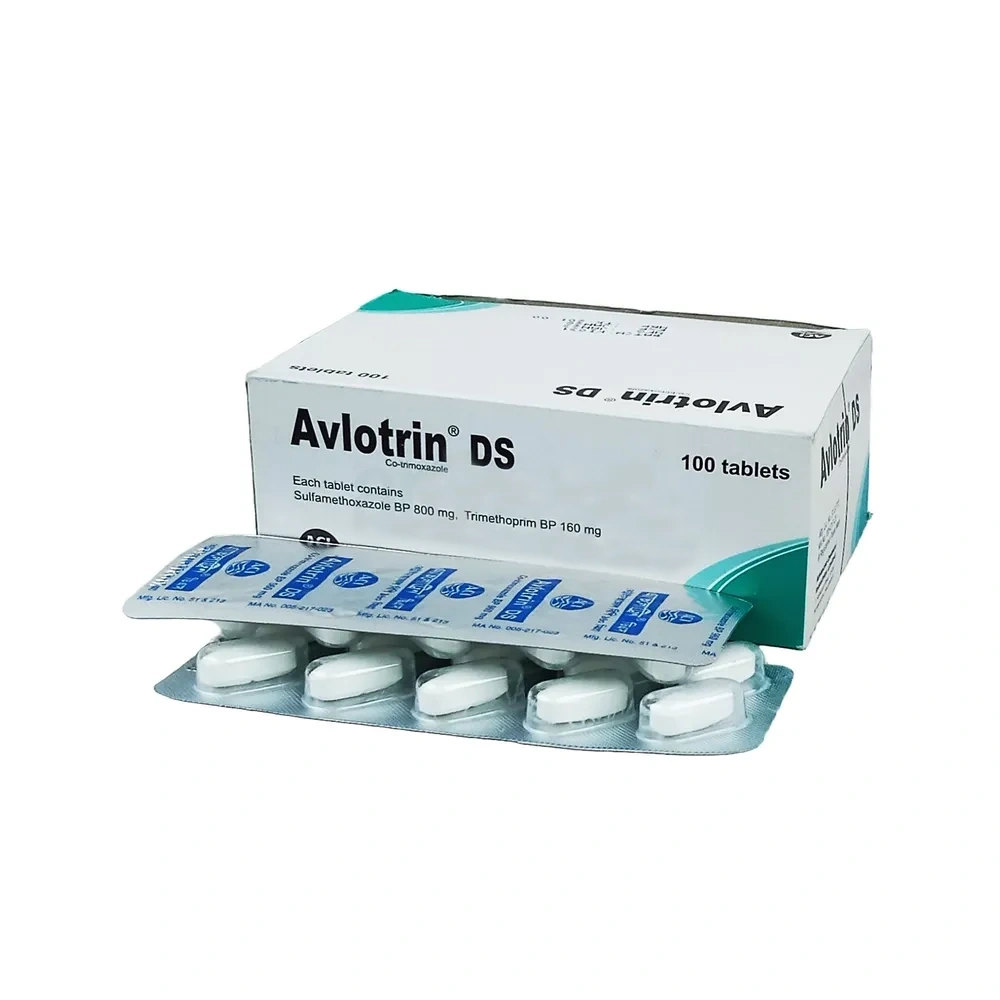

Medicine Overview of Avlotrin DS 800mg+160mg Tablet
Avlotrin DS is a combination medicine that is used to treat various types of bacterial infections such as pneumonia, bronchitis, infections of urinary tract, ear, and abdomen. It prevents the growth of microorganisms to cure the infection.
Avlotrin DS is a prescription medicine that is advised to be taken as suggested by the doctor. It should be taken with food and it must be taken at a fixed time to ensure better efficacy. Do not consume more than the recommended dose, as an overdose of it may have harmful effects on your body. If you miss a dose, take it as soon as you remember. The treatment must be completed even if you feel better to ensure a complete recovery.
Avlotrin DS may lead to some side effects such as nausea, vomiting, stomach pain, loss of appetite, headache, etc. To overcome any such side effects, it is advised to eat a healthy balanced diet and drink plenty of fluid. If any of the side effects get aggravated, contact your doctor immediately. If you experience any allergic reaction (rashes, itching, swelling, shortness of breath, etc.), you must consult your doctor immediately.
Before taking this medicine, you should tell your doctor if you have any problems with your liver or kidneys. Also, tell your doctor if you are on any medication for any health condition. Pregnant or breastfeeding women should also consult with the doctors before taking it. Avoid drinking alcohol as it can cause excessive dizziness with this medicine. It usually does not impair your ability to drive, but you should not drive if it makes you feel sleepy or dizzy. If you are a known allergic to the medicine, you must refrain from using this medicine and consult your doctor. It is advised to take proper rest during the course of treatment for the medicine to work effectively.
Show less
- Bacterial infections
- Nausea
- Vomiting
- Skin rash
- Allergic reaction
-
You have been prescribed Avlotrin DS for the treatment of many types of bacterial infections.
-
Finish the prescribed course of Avlotrin DS, even if you start to feel better. Stopping it early may make the infection come back and harder to treat.
-
Diarrhea may occur as a side effect but should stop when your course is complete. Inform your doctor if it does not stop or if you find blood in your stools.
-
Stop taking Avlotrin DS and inform your doctor if you develop skin rash/blisters or other unexplained skin reaction while taking Avlotrin DS.
-
In case of long-term use, have regular monthly blood tests to monitor your blood cells as suggested by your doctor.
Oral
Acute exacerbations of chronic bronchitis ; Acute otitis media; Urinary tract infections, GI infections; Resp and urinary tract infections; Susceptible infections
Adult:
Tablet : 2 tablet of 480mg twice daily. In severe cases, 3 times/day.
DS Tablet : 1 tablet (960mg) twice daily.
Suspension : 1-2 teaspoonful twice daily.
Pneumocystis (carinii) jiroveci pneumonia
Up to 120 mg/kg/day in 2-4 divided doses for 14-21 days.
Prophylaxis of Pneumocystis (carinii) jiroveci pneumonia
960 mg once daily for 7 days; 960 mg once daily 3 times wkly on alternate days; or 960 mg bid 3 times wkly on alternate days.
Infection prophylaxis in AIDS patients
960 mg/day.
Hepatic impairment: Severe: Contraindicated.
Show less
Child:
Oral
8–10 mg TMP/kg/day q12h
2 mg TMP/kg/day for UTI prophylaxis q24h
15–20 mg TMP/kg/day for Pneumocystis (carinii) jiroveci pneumonia treatment q6–8h
150 mg TMP/m2/day, OR 5 mg TMP/kg/day for Pneumocystis (carinii) jiroveci pneumonia prophylaxis q12h, 3 times a week OR q24h
Show less
Renal impairment:
CrCl (ml/min) Dosage Recommendation
<15 Not recommended.
15-30 Half the standard dose.
Show less
Known hypersensitivity to trimethoprim or sulfonamides; severe hepatic failure or marked liver parenchymal damage, jaundice; serious haematological disorders and porphyria; severe renal insufficiency where repeated measurements of the plasma concentration cannot be performed; history of drug-induced immune thrombocytopenia w/ use of trimethoprim and/or sulfonamides; megaloblastic anaemia due to folate deficiency. Neonates <6 wk, except for the treatment/prophylaxis of P. jiroveci in infants >4 wk. Treatment of Group A β-haemolytic streptococcia. Pregnancy, esp in the period prior to birth. Concomitant use w/ clozapine. Concomitant use w/ leucovorin for the treatment of P. jiroveci in HIV positive patients.
Show less
Allergic myocarditis, erythema multiforme, exfoliative dermatitis, angioedema, drug fever, chills, Henoch-Schoenlein purpura, serum sickness-like syndrome, generalised allergic reactions, generalised skin eruptions, photosensitivity, conjunctival and scleral inj, pruritus, urticaria, rash, periarteritis nodosa, SLE; elevated serum transaminase and bilirubin, pseudomembranous enterocolitis, pancreatitis, stomatitis, glossitis, nausea, emesis, abdominal pain, diarrhoea, anorexia; renal failure, interstitial nephritis, elevated BUN and serum creatinine, toxic nephrosis w/ oliguria and anuria; hyperkalaemia; aseptic meningitis, convulsions, peripheral neuritis, ataxia, vertigo, tinnitus, headache; hallucinations, depression, apathy, nervousness; dieresis, hypoglycaemia; arthralgia, myalgia; rhabdomyolysis; cough, shortness of breath, pulmonary infiltrates; weakness, fatigue, insomnia; QT prolongation, haemolysis, impaired phenylalanine metabolism.
Potentially Fatal: Severe skin, hepatic and blood disorders, aplastic anaemia, hypersensitivity of the resp tract; Stevens-Johnson syndrome, toxic epidermal necrolysis; Clostridium difficile-associated diarrhoea; severe and symptomatic hyponatraemia.
Show less
Reduced ciclosporin concentrations in blood when used concurrently. Increases toxicity of methotrexate. Inhibits phenytoin clearance. Potentiates warfarin and oral hypoglycaemics.
Potentially Fatal: Co-admin with pyrimethamine causes megaloblastic anaemia. Enhancement of renal damage by ciclosporin.
Show less

Reviews
Clear filtersThere are no reviews yet.