


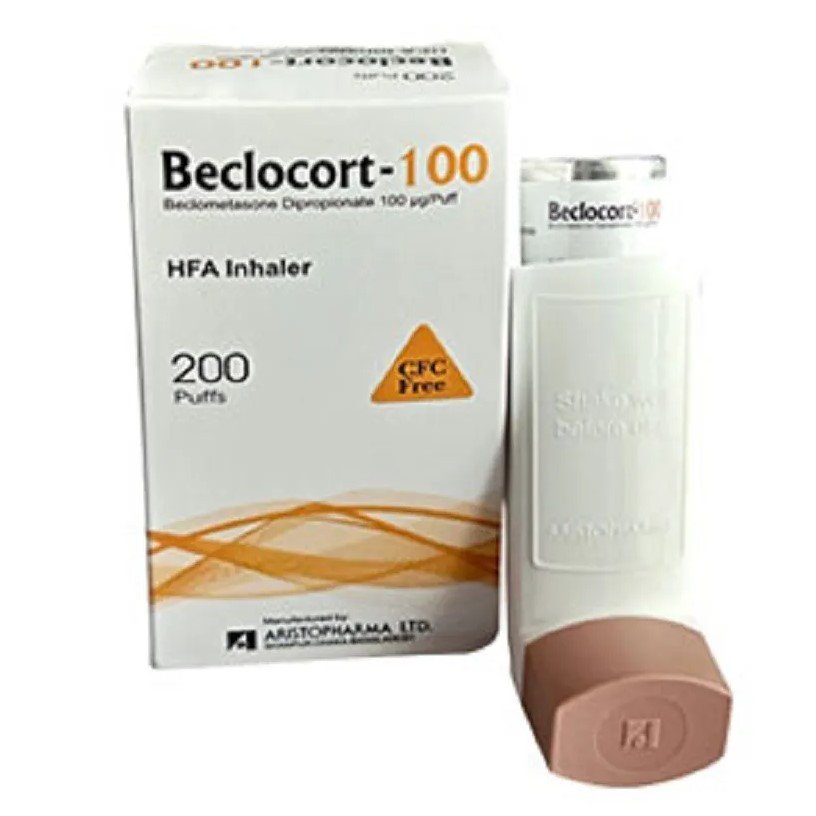

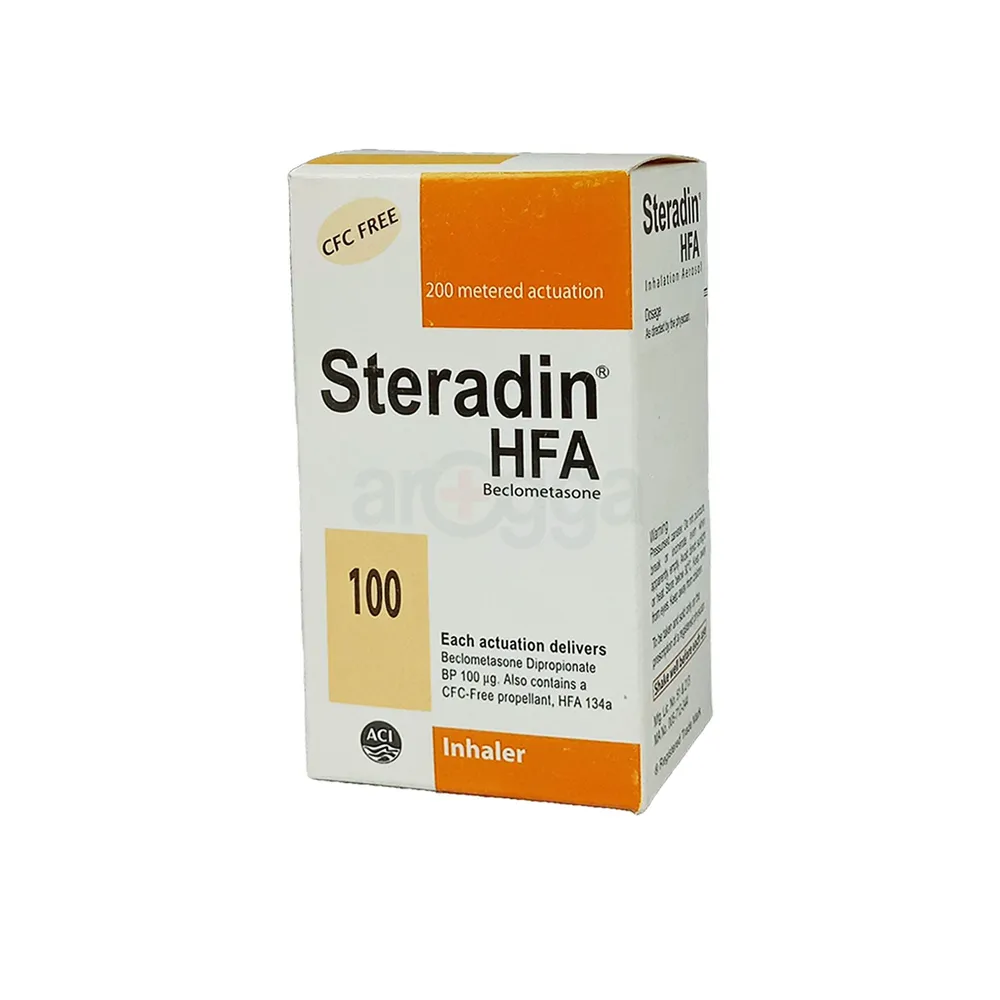
Medicine Overview of Beclocort 100 HFA 100mcg/puff Inhaler
Adults: 100-400 mcg twice daily.
Prophylaxis of asthma
Adults: 50-200 mcg twice daily. Increased if necessary to maximum 400 mcg twice daily.
When patient’s symptoms remain under satisfactory control, the dose should be titrated to the lowest dose at which effective control of asthma is maintained.
Intranasal corticosteroids may cause a reduction in growth velocity when administered to pediatric patients.
Beclometasone dipropionate is not suitable for the treatment of an acute asthma attack.
Lactation: Potential for excretion into milk; use only if benefits greatly outweigh risks
Pharyngitis (5-27%),Headache (8-25%),URI (5-11%)
1-10%
Rhinitis (3-7%),Pain (1-5%),Increased asthma symptoms (2-4%),Dysphonia (1-4%),Sinusitis (3%),Oral symptoms (2-3%),Nausea (1-2%)
Inducers of CYP3A4: potential pharmacokinetic interaction (decreased plasma beclomethasone dipropionate concentrations).
Antidiabetic agents
May increase blood glucose concentrations in patients with diabetes mellitus.
NSAIDs
Possible increased risk of GI ulcerationa
Decreased serum salicylate concentrations. When corticosteroids are discontinued, serum salicylate concentration may increase possibly resulting in salicylate intoxication
Vaccines and Toxoids
May cause a diminished response to toxoids and live or inactivated vaccines.
May potentiate replication of some organisms contained in live, attenuated vaccines.
Can aggravate neurologic reactions to some vaccines (supraphysiologic dosages).




Reviews
Clear filtersThere are no reviews yet.