



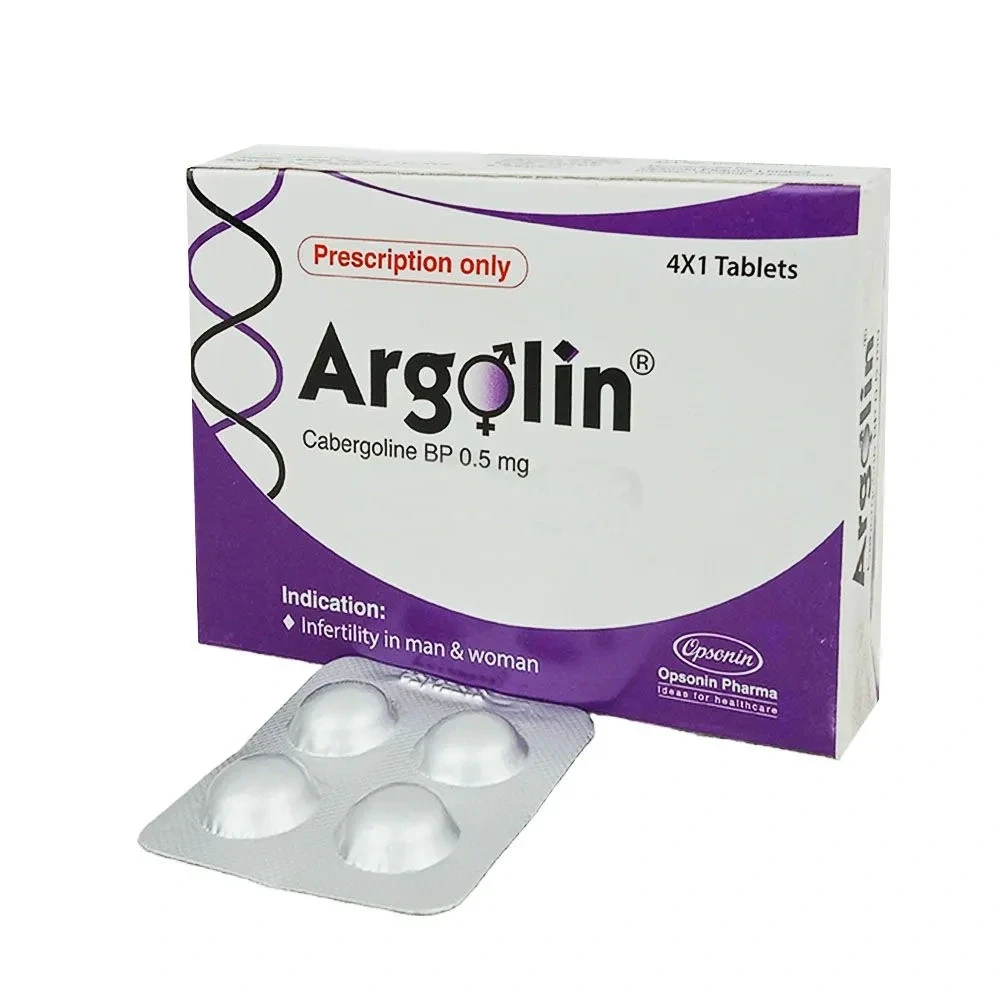
Medicine Overview of Caber 0.5 0.5mg Tablet
Caber 0.5 is a dopamine agonist. It is used for the treatment of a high level of prolactin. It is also helpful in stopping breast milk production in cases of stillbirth, abortion or miscarriage.
Caber 0.5 should be taken with food, but take it at the same time to get the most benefit. It should be taken as your doctor’s advice. The dose and how often you take it depends on what you are taking it for. Your doctor will decide how much you need to improve your symptoms. Swallow the tablets whole with a drink of water. You should take this medicine for as long as it is prescribed for you.
The most common side effects of this medicine include nausea, headache, dizziness, and low blood pressure. If these bother you or appear serious, let your doctor know. There may be ways of reducing or preventing them. To overcome dizziness, you must avoid driving or rise slowly from sitting or lying position.
Before taking this medicine, tell your doctor if you have ever had high blood pressure after birth, or had heart disease. Tell your doctor if you are pregnant, planning pregnancy or breastfeeding. Your doctor should also know about all other medicines you are taking as many of these may make this medicine less effective or change the way it works. Your doctor may check blood pressure regularly while taking this medicine.
Show less
- High levels of prolactin
- Blurred vision
- Drowsiness
- Hot flashes
- Indigestion
- Nausea
- Constipation
- Dizziness
- Fatigue
- Headache
- Vertigo
- Vomiting
-
Caber 0.5 is used to treat conditions such as infertility or abnormal production of breast milk (galactorrhoea) caused due to excess production of a natural hormone called prolactin.
-
To lower the chance of feeling dizzy or passing out, rise slowly if you have been sitting or lying down.
-
Do not take Caber 0.5 if you are breastfeeding.
-
Take it with or after food to avoid side effects such as nausea or indigestion.
-
Be cautious while driving or doing anything that requires concentration as Caber 0.5 can cause dizziness and sleepiness.
-
Regular monitoring of blood pressure may be advised during treatment with Caber 0.5.
Hyperprolactinemia, prolactinomas, parkinson’s disease, uterine fibroids, acromegaly, cushing’s disease, pituitary adenomas, lactation suppression
Show less
Oral
Inhibition of physiological lactation
Adult: 1 mg as a single dose on the 1st day postpartum.
Suppression of lactation
Adult: 250 mcg every 12 hr for 2 days.
Hyperprolactinaemia-associated disorders
Adult: Initially, 500 mcg/wk then increased at mthly intervals by 500 mcg/wk according to response. Wkly dose may be admin on a single occasion or in 2 divided doses on separate days; doses >1 mg should be given as divided doses. Usual dose: 1 mg (up to 4.5 mg)/wk.
As monotherapy in Parkinson’s disease; Adjunct to levodopa treatment in Parkinson’s disease
Adult: Initially, 0.5 mg daily in monotherapy and 1 mg daily as adjunct, may increase in increments of 0.5-1 mg at 7- or 14-day intervals. Max: 3 mg daily.
Elderly: Start with lower doses.
Hepatic impairment: Dosage adjustments may be needed.
Show less
CV disease, Raynaud’s syndrome, renal or hepatic impairment, peptic ulcer, GI bleeding, history of psychosis, hypertension. May affect ability to drive or operate machinery. Pregnancy, lactation. Prolonged use and/or usage of high doses may lead to psychiatric disorders, pleural/retroperitoneal fibrosis or cardiac valvular fibrosis. Monitor serum prolactin level mthly until normalisation. Monitor hepatic function regularly in patients with hepatic impairment.
Lactation: excretion in milk unknown; use with caution
Show less
>10%
Nausea (27%),Headache (26%),Dizziness (15%),Constipation (10%)
1-10%
Asthenia (9%),Fatigue (7%),Abdominal pain (5%),Somnolence (5%),Postural hypotension (4%),Depression (3%),Dyspepsia (2%),Nervousness (2%),Abnormal vision (1%),Breast pain (1%),Dysmenorrhea (1%),Hot flashes (1%),Paresthesia (1%)
Potentially Fatal: Risk of serotinin syndrome with sibutramine; avoid combination.
Show less
Pregnancy Category: B
Lactation: excretion in milk unknown; not recommended
Show less
Increased risk of orthostatic hypotension when used with antihypertensives. May increase vasoconstriction effect of dopamine. May reduce vasodilation effect of nitroglycerin. Concurrent use with SSRIs or TCAs may increase the risk of serotonin syndrome.
Potentially Fatal: Risk of serotonin syndrome with sibutramine.
Show less






Reviews
Clear filtersThere are no reviews yet.