


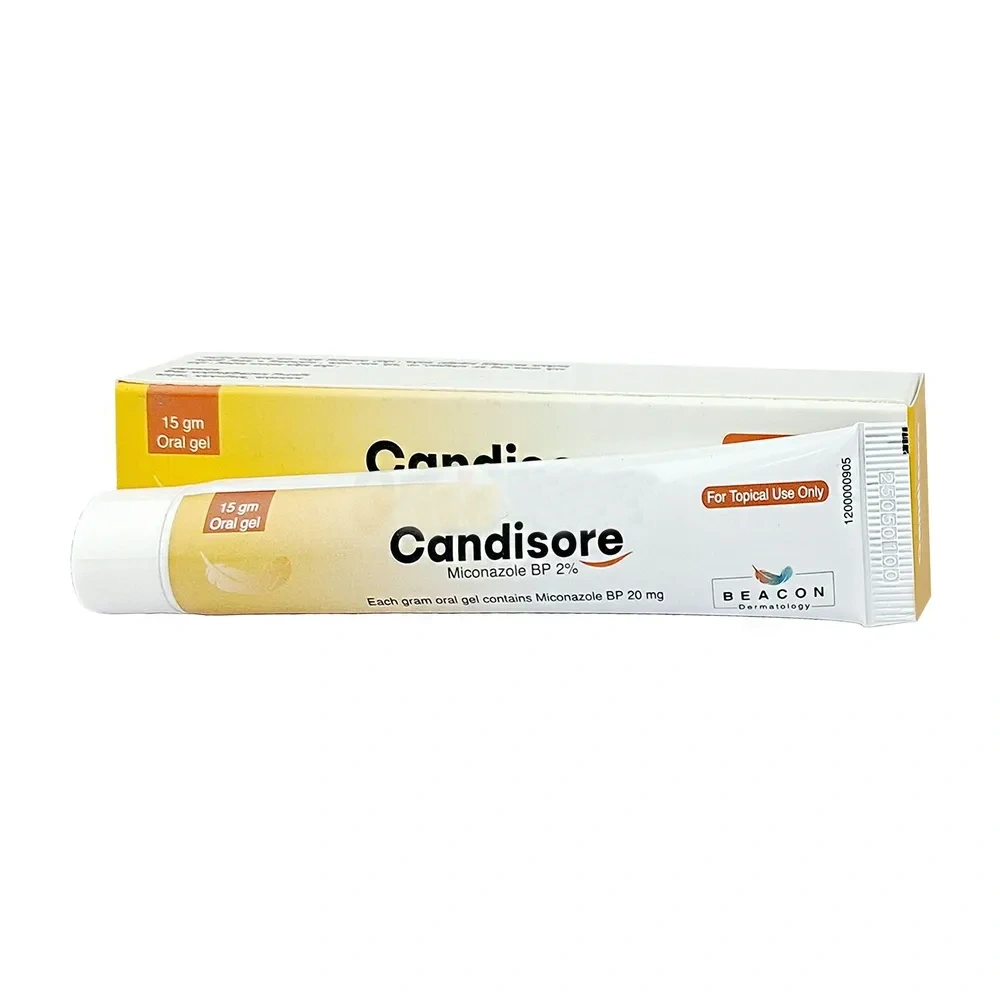

Medicine Overview of Candisore Oral Gel 2% oral_gel
Candisore Oral Gel is an antifungal medicine used to treat fungal infections of the skin. It works by killing the fungus that causes infections such as athlete’s foot, Dhobie Itch, thrush, ringworm and dry, flaky skin.
Candisore Oral Gel should be used in the dose and duration as prescribed by your doctor. This medicine should be used regularly to get the most benefit from it. Do not use more than you needed, it will not clear your condition faster and may only increase the side effects. Skin infections will usually get better after 2 to 6 weeks. Do not use the medicine for longer than your doctor has told you to and let him or her know if your condition does not improve after 2 to 6 weeks of treatment. The effects of medicine can be increased by keeping the affected area clean and dry, and washing hands before and after treating the infection. If you have athlete’s foot, wash your socks or tights thoroughly and change your shoes daily if possible.
The most common side effects of using this medicine include a burning sensation and irritation, dryness, peeling or blistering of the skin. These are not usually serious, but you should call your doctor if you think you might have a severe allergic reaction. Signs of this include rash, swelling of the lips, throat or face, swallowing or breathing problems, feeling dizzy or faint and nausea. Get emergency help if this happens. Avoid direct contact of the medicine with your eyes. In case of direct contact, wash your eyes with water and seek immediate medical attention.
It is not likely that other medicines you take by mouth or injection will affect the way this medicine works, but talk to your doctor before using it if you have recently used another medicine that contains a steroid or had an allergic reaction to another antifungal medicine. This medicine should only be used if it is clearly needed if you are pregnant or breastfeeding. Ask your doctor if it is safe.
- Fungal skin infections
- Application site reactions (burning, irritation, itching and redness)
-
Your doctor has prescribed Candisore Oral Gel to cure your infection and improve symptoms.
-
Some tips for personal hygiene:
-
Apply an amount sufficient to cover the affected area and 1 inch of the immediate surrounding skin.
-
Treatment may be needed for 2 to 6 weeks for skin infections and 6 weeks to 6 months for nail infections.
-
Do not skip any doses and finish the full course of treatment even if you feel better.
-
Avoid getting it in the eyes, nose, or mouth. If accidental exposure occurs, rinse immediately with plenty of water.
-
Inform your doctor if you are pregnant, planning pregnancy or breastfeeding.
Mouth/Throat
Oropharyngeal candidiasis, Intestinal candidiasis
Adult: The usual dose is 15 mg/kg/day in divided doses.
One or two tea spoonfuls (5-10 ml) of gel four times daily.
Continue treatment for at least 1 wk after symptoms have disappeared.
Localised lesions of mouth: Smear small amount on affected area with clean finger 4 times daily for 5-7 days.
Mouth/Throat
Oropharyngeal candidiasis
Children aged 6 years and over: One tea-spoonful (5 ml) of gel four times daily.
Children aged 2-6 years: One tea-spoonful (5 ml) of gel twice daily.
Infants under 2 years: Half tea-spoonful (2.5 ml) of gel twice daily.
Continue treatment for at least 1 wk after symptoms have disappeared.
Localised lesions of mouth: Smear small amount on affected area with clean finger 4 times daily for 5-7 days.
Caution is required particularly in infants & young children to ensure that the gel does not obstruct the throat.
Lactation: Unknown whether distributed in breast milk, caution advised
1-10%
Diarrhea (6%),Nausea (4.6%),Headache (5%),Dysgeusia (2.9%),Upper abdominal pain (2.5%),Vomiting (2.5%)
May increase anticoagulant effect of warfarin. May increase or prolong the effect of the following drugs: Oral hypoglycaemics (e.g. sulfonylureas), phenytoin, HIV protease inhibitors (e.g. saquinavir), antineoplastic agents (e.g. vinca alkaloids, busulfan, docetaxel), Ca channel blockers (e.g. dihydropyridines, verapamil), immunosuppressive agents (e.g. ciclosporin, tacrolimus, sirolimus), carbamazepine, cilostazol, buspirone, disopyramide, alfentanil, sildenafil, alprazolam, brotizolam, midazolam IV, rifabutin, methylprednisolone, trimetrexate, ebastine and reboxetine.
Potentially Fatal: Increased risk of cardiac arrhythmia w/ astemizole, cisapride, dofetilide, halofantrine, mizolastine, pimozide, quinidine, sertindole, terfenadine. May increase exposure to ergot alkaloids leading to ergotism. May increase the risk of rhabdomyolysis w/ HMG-CoA reductase inhibitors (e.g. simvastatin and lovastatin). May increase the effect of triazolam and oral midazolam.


Reviews
Clear filtersThere are no reviews yet.