


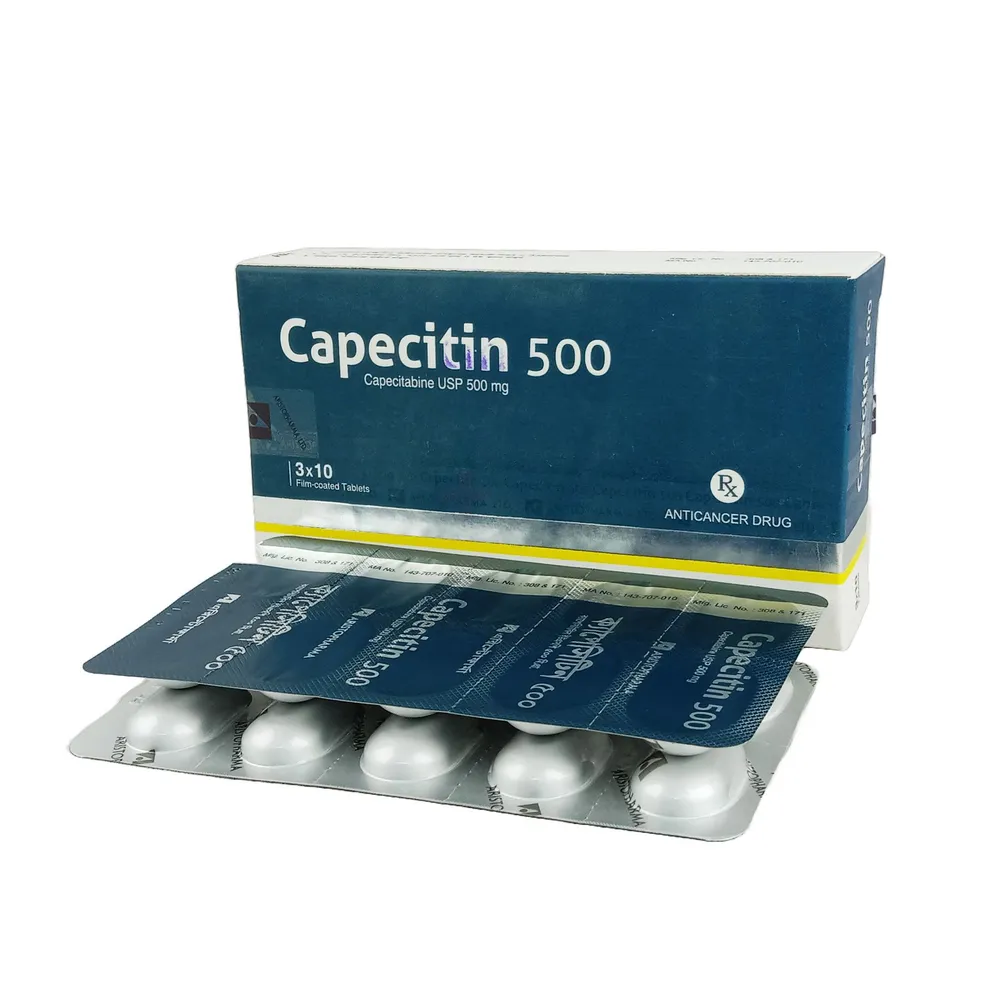

Medicine Overview of Capecitin 500mg Tablet
Capecitin 500 is used in the treatment of cancer of breast, colon, and rectum. It may be also used to treat other conditions, as determined by the doctor. It is used alone or in combination with some other medicine as a part of chemotherapy.
Capecitin 500 should be taken with food within 30 minutes after eating a meal. Your doctor will decide what dose is necessary and how often you need to take it. This will depend on what you are being treated for and may change from time to time. You should take it exactly as your doctor has advised. Taking it in the wrong way or taking too much can cause very serious side effects. It may take several weeks or months for you to see or feel the benefits but do not stop taking it unless your doctor tells you to.
The most common side effects of this medicine include vomiting, weakness, nausea, abdominal pain, and diarrhea. This medicine may reduce the number of blood cells (decrease white blood cells) in your blood, thereby, increasing the susceptibility to infections. Regular blood tests are required to check your blood cells along with heart, liver, and blood uric acid levels.
Before taking it, tell your doctor if you have liver, or kidney problems or are taking any medicines to treat infections. Many other medicines can affect, or be affected by, this medicine so let your doctor know all medications you are using. This medicine is not recommended during pregnancy or while breastfeeding. The use of effective contraception by both males and females during treatment is important to avoid pregnancy.
- Breast cancer
- Cancer of colon and rectum
- Vomiting
- Weakness
- Nausea
- Abdominal pain
- Diarrhea
- Blisters on fingers/feet
-
Capecitin 500 is used alone or in combination with other medicines for the treatment of colon, rectum or breast cancers.
-
It is oral chemotherapy, hence it is preferred by many patients.
-
It should be taken within 30 minutes after eating a meal.
-
The dose and the number of treatment cycles needed will depend on the type and stage of cancer that is being treated.
-
It may cause dizziness and tiredness. Don’t drive or do anything requiring concentration until you know how it affects you.
-
Frequency of hair loss is much less compared to other chemotherapy drugs.
-
Do not take it if you are pregnant or breastfeeding.
-
Your doctor may regularly monitor your blood cells during treatment with this medicine. Inform your doctor immediately if you notice signs of infection such as fever, sore throat, rash or severe diarrhea.
-
Inform your doctor immediately if you start to have side effects such as diarrhea, vomiting, nausea, mouth sores, chest pain or loss of appetite.
Oral
Breast cancer; Colorectal cancer
Adult: 1.25 g/m2 bid for 2 wk followed by a 1 wk rest period; therapy to be given in 3-wk cycles. Recommended treatment duration for colorectal cancer: 6 mth. May be used in combination with docetaxel at 75 mg/m2, given as a 1-hr IV infusion once every 3 wk for the treatment of breast cancer.
Gastric cancer
Adult: Used in combination with a platinum-based compound, 1 g/m2 bid for 14 days, followed by a 7-day rest period. 1st dose is given on the evening of day 1 and the last dose on the morning of day 15.
Renal impairment:
CrCl (ml/min)
51-80 No adjustment needed.
30-50 Reduce dose to 950 mg/m2 bid when starting dose is 1.25 g/m2 bid. No dose adjustment is needed when starting dose is 1 g/m2.
<30 Avoid use.
10%
Diarrhea,Nausea,Anemia,Lymphopenia,Hand and foot syndrome,Edema,Fatigue,Fever,Headache,Pain,Paresthesia,Alopecia,Dermatitis,Abdominal pain,Anorexia,Appetite decreased,Constipation,Dyspepsia,Stomatitis,Vomiting,Neutropenia,Thrombocytopenia,Dyspnea,Bilirubin increased,Eye irritation
1-10%
Chest pain,Dermatitis,Pruritus,Rash,Dizziness,Headache,Weakness,Dehydration,Dry mouth,Dyspepsia,Taste disturbance,Back pain
Potentially Fatal: Cardiotoxicity, bone-marrow depression and hyperbilirubinaemia.
Pregnancy Category: C
Lactation: excretion in milk unknown; use with caution


Reviews
Clear filtersThere are no reviews yet.