


Introduction
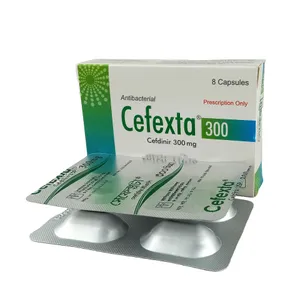
Cefexta 300 is an antibiotic medicine used to treat a variety of bacterial infections. It is effective in infections of the respiratory tract (eg. pneumonia), urinary tract, ear, nasal sinus, throat, and some sexually transmitted diseases. Cefexta 300 may be taken with or without food. You should take it regularly at evenly spaced intervals as per the schedule prescribed by your doctor. Taking it at the same time every day will help you to remember to take it. The dose will depend on what you are being treated for, but you should always complete a full course of this antibiotic as prescribed by your doctor. Do not stop taking it until you have finished, even when you feel better. If you stop taking it early, some bacteria may survive and the infection may come back. It will not work for viral infections such as flu or the common cold. Using any antibiotic when you do not need it can make it less effective for future infections. The most common side effects of this medicine include rash, vomiting, nausea, indigestion, and diarrhea. These are usually mild but let your doctor know if they bother you or last more than a few days. Before using it, you should tell your doctor if you are allergic to any antibiotics or have any kidney or liver problems. You should also let your healthcare team know all other medicines you are taking as they may affect, or be affected by, this medicine. Pregnant and breastfeeding mothers should consult their doctor before using it. Avoid consuming alcohol while taking this medicine as it may cause unpleasant side effects like nausea, vomiting, sweating, anxiety, and palpitations.
_
Uses of Cefexta 300
Bacterial infections
Side effects of Cefexta 300
Common
Rash
Allergic reaction
Nausea
Diarrhea
How to use Cefexta 300
Take this medicine in the dose and duration as advised by your doctor. Do not chew, crush or break it. Cefexta 300 may be taken with or without food, but it is better to take it at a fixed time.
How Cefexta 300 works
Cefexta 300 is an antibiotic. It kills the bacteria by preventing them from forming the bacterial protective covering (cell wall) which is needed for them to survive.
What if you forget to take Cefexta 300?
If you miss a dose of Cefexta 300, take it as soon as possible. However, if it is almost time for your next dose, skip the missed dose and go back to your regular schedule. Do not double the dose.
Quick Tips
Your doctor has prescribed Cefexta 300 to cure your infection and improve your symptoms.
Do not skip any doses and finish the full course of treatment even if you feel better. Stopping it early may make the infection harder to treat.
Discontinue Cefexta 300 and inform your doctor immediately if you get a rash, itchy skin, swelling of face and mouth, or have difficulty in breathing.
Diarrhea may occur as a side effect but should stop when your course is complete. Inform your doctor if it does not stop or if you find blood in your stools.
Take it with food to avoid an upset stomach.
Avoid consuming alcohol while taking Cefexta 300 as it may cause increased side effects.
Brief Description
Indication
Community-acquired pneumonia, Susceptible infections, Sinusitis, Otitis media, Sore throat, Soft tissue infections, Respiratory tract infections, Acute Exacerbations of Chronic bronchitis, Acute Maxillary Sinusitis
Administration
May be taken with or without food.
Adult Dose
Community-Acquired Pneumonia, Skin/Skin Structure Infections 300 mg PO q12hr for 10 days Respiratory Tract Infections, Acute Maxillary Sinusitis 300 mg PO q12hr or 600 mg PO q24hr for 10 days Hepatic impairment No dosage adjustment necessary
_
Child Dose
<6 months: Safety and efficacy not established 6 months-12 years: 7 mg/kg PO q12hr for 5-10 days or 14 mg/kg PO q24hr for 10 days >12 years or >43 kg: 300 mg PO q12hr or 600 mg PO q24hr for 10 days
_
Renal Dose
Renal impairment: CrCl (ml/min) <30 300 mg once daily.
_
Contraindication
Hypersensitivity.
Mode of Action
Cefdinir binds to one or more of the penicillin-binding proteins (PBPs) which inhibits the final transpeptidation step of peptidoglycan synthesis in bacterial cell wall, thus inhibiting biosynthesis and arresting cell wall assembly resulting in bacterial cell death.
Precaution
Penicillin-sensitive patients; superinfection; seizure; pseudomembranous colitis; pregnancy, lactation; renal or hepatic insufficiency. Lactation: Unknown whether drug is excreted in milk
_
Side Effect
>10% Diarrhea (8-15%) 1-10% Vaginal moniliasis (<4%),Nausea (3%),Rash (3%),Headache (2%),Increased urine leukocytes (2%),Increased urine protein (1-2%),Decreased lymphocytes (1%),Glycosuria (1%),Increased alkaline phosphatase (1%),Increased eosinophils (1%),Increased platelets (1%) Potentially Fatal: Anaphylaxis; renal and hepatic failure.
_
Pregnancy Category Note
Pregnancy category: B Lactation: Unknown whether drug is excreted in milk
_
Interaction
Concomitant admin w/ antacids or Fe supplements reduce the rate and extent of absorption. Admin w/ Fe supplements may cause reddish stools. Decreased renal elimination w/ probenecid.


Reviews
Clear filtersThere are no reviews yet.