

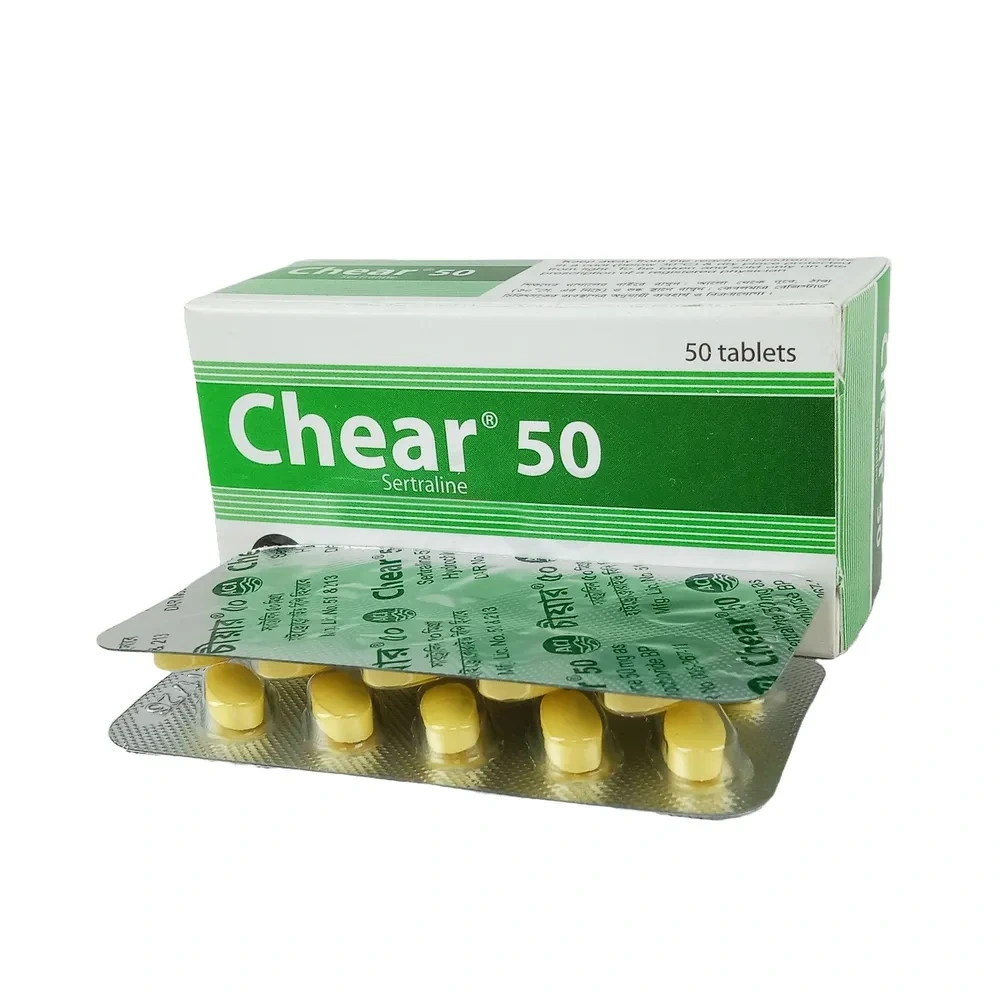

Medicine Overview of Chear 50mg Tablet
Chear 50 is a type of antidepressant belonging to the selective serotonin reuptake inhibitor (SSRI) group of medicines. It is prescribed for depression and anxiety-related conditions like panic disorder, obsessive-compulsive disorder, and post-traumatic stress disorder (PTSD).
Chear 50 is also used to treat premenstrual dysphoric disorder (depression and irritability before menstrual period in women). It can be taken with or without food. The dose and how often you need it will be decided by your doctor so that you get the right amount to control your symptoms.
Your doctor may start you on a lower dose and increase it gradually. Do not change the dose or stop taking it without talking to your doctor, even if you feel well. Doing so may make your condition worse or you may suffer from unpleasant withdrawal symptoms (anxiety, restlessness, palpitations, dizziness, sleep disturbances, etc).
To get the most benefit, take this medicine regularly at the same time each day. Your doctor may advise you to take it in the morning if you have trouble sleeping. It may take a few weeks before you start feeling better. Let your doctor know if you do not see any improvement even after 4 weeks.
Some common side effects of Chear 50 include nausea, indigestion, loss of appetite, increased sweating, tremors, insomnia (difficulty in sleeping), and diarrhea. Sexual side effects like decreased sexual drive, delayed ejaculation, and erectile dysfunction may also be seen. Let your doctor know straight away if you develop any sudden worsening of mood or any thoughts about harming yourself.
Before taking this medicine, you should tell your doctor if you have epilepsy (seizure disorder or fits), diabetes, liver or kidney disease, heart problems, or glaucoma. These may affect your treatment. Pregnant or breastfeeding women should also consult their doctor before taking it. Some other medicines may affect the way it works, especially other antidepressants and medicines called MAO inhibitors. Please tell your doctor about all the medicines you are taking to make sure you are safe.
Show less
- Depression
- Post traumatic stress disorder
- Obsessive-compulsive disorder
- Panic disorder
- Premenstrual dysphoric disorder
- Anxiety
- Delayed ejaculation
- Erectile dysfunction
- Indigestion
- Insomnia (difficulty in sleeping)
- Low sexual desire
- Nausea
- Tremor
- Diarrhea
- Increased sweating
- Loss of appetite
-
Do not drive or do anything requiring concentration until you know how Chear 50 affects you.
-
Talk to your doctor if you notice sudden mood changes or develop suicidal thoughts.
-
The addiction/dependence potential of Chear 50 is very less.
-
Inform your doctor if you experience decreased sex drive or difficulty having an orgasm.
-
Do not stop taking the medication suddenly without talking to your doctor.
Oral
Major Depressive Disorder; Obsessive compulsive disorder
Adult: Initially, 50 mg daily, may increase in increments of 50 mg at wkly intervals. Max: 200 mg daily.
Panic disorder with or without agoraphobia; Posttraumatic stress disorder; Social anxiety disorder
Adult: Initially, 25 mg daily, increased to 50 mg daily after a wk. May increase in increments of 50 mg at wkly intervals. Max: 200 mg daily.
Premenstrual dysphoric disorder
Adult: Initially, 50 mg daily, either throughout the menstrual cycle or during the luteal phase only. May increase in increments of 50 mg per menstrual cycle. Max: 150 mg daily (for continuous dosing) or 100 mg daily (during luteal phase).
Patient who require 100 mg daily during luteal phase-only: Initially, 50 mg daily for the first 3 days of each luteal phase period.
Hepatic impairment: Reduce dose.
Show less
Oral
Obsessive compulsive disorder
Child: 6-12 yr Initially, 25 mg once daily;
13-17 yr Initially, 50 mg once daily. May increase at intervals of at least 1 wk.
Max: 200 mg daily.
Show less
Patient w/ family history of bipolar disorder, mania or hypomania; previous seizure disorder or condition predisposing to seizures (e.g. alcoholism, brain damage); angle-closure glaucoma or history of glaucoma; risk factors for uric acid nephropathy, QTc prolongation. Patient w/ concurrent systemic illness (e.g. conditions that affect metabolism or haemodynamic process). Avoid abrupt withdrawal. Renal and hepatic impairment. Childn. Pregnancy and lactation. Monitoring Parameters Monitor BMI (longitudinal monitoring), height, wt, unusual behavioural changes, signs and symptoms of serotonin syndrome.
Lactation
Distributed into milk; use caution (AAP states effect on nursing infants is unknown but may be of concern)
Show less
>10%
Diarrhea (13-24%),Nausea (13-30%),Headache (20-25%),Insomnia (12-28%),Ejaculation disorder (7-19%),Dizziness (6-17%),Dry mouth (6-16%),Fatigue (10-16%),Drowsiness (2-15%)
1-10%
Agitation (1-6%),Anorexia (5-10%),Anxiety (4%),Constipation (5-8%),Paresthesia (2%),Impotence (5-10%),Sweating (< 1%),Malaise (7-9%),Vomiting (4%),Pain (3-6%)
Frequency Not Defined
Asthenia,Back pain,Chest pain,Hypoesthesia,Increased appetite,Myalgia,Palpitations,Rhinitis,Tinnitus,Weight gain,Yawning
Show less
May increase risk of delirium when used with antimuscarinics. Increased risk of extrapyramidal symptoms and neuroleptic malignant syndrome when used with aripiprazole. Serum levels may be reduced by carbamazepine. Concurrent use with dihydroergotamine or linezolid may lead to serotonin syndrome. May increase serum levels of lamotrigine and risk of toxicity. May increase serum levels of olanzapine, pimozide, risperidone, methadone, clozapine and amiodarone. Plasma levels may be increased by cimetidine and ritonavir. May increase the anticoagulant activity of warfarin and acenocoumarol.
Potentially Fatal: Concomitant admin with MAOIs can result in serious serotonin syndrome.
Show less





Reviews
Clear filtersThere are no reviews yet.