




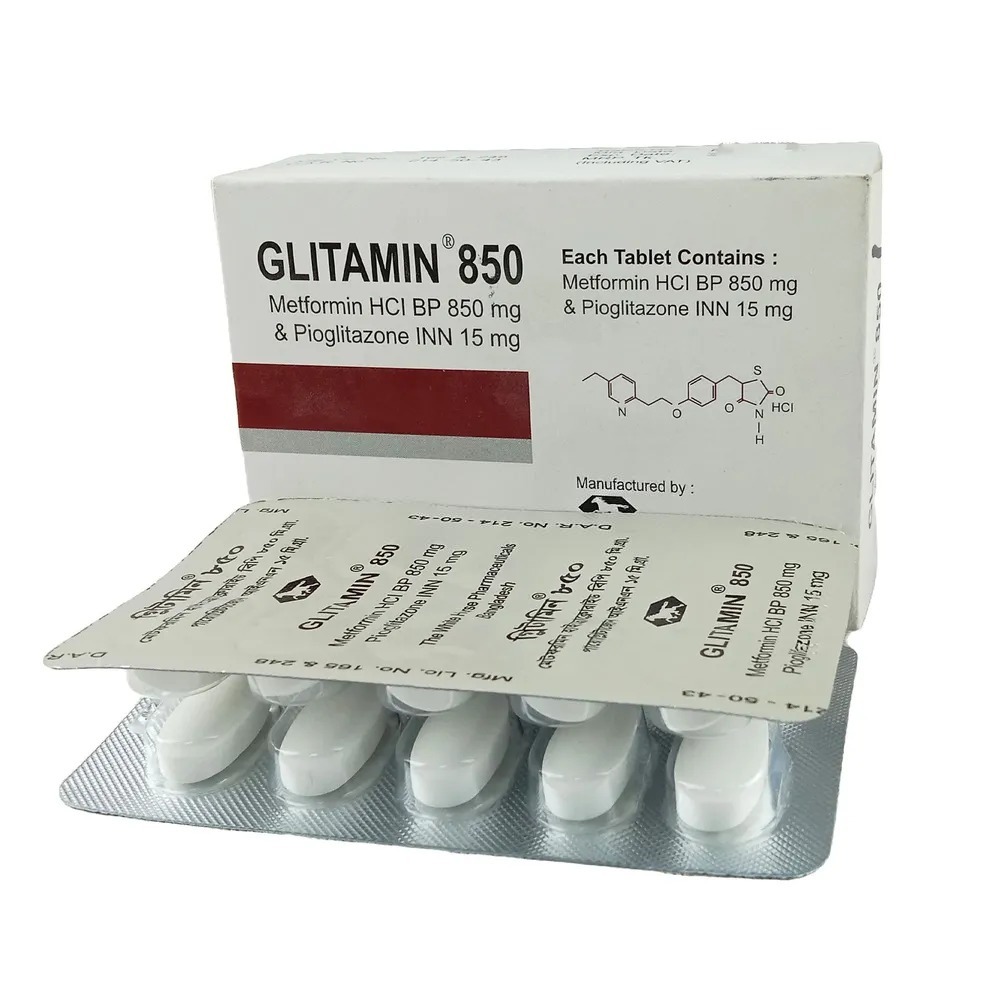
Medicine Overview of CoDiaglit 850mg+15mg Tablet
CoDiaglit 850 is a combination medicine that helps control blood sugar levels. This medicine is used together with diet and exercise to improve blood sugar control in adults with type 2 diabetes mellitus. It helps in proper utilisation of insulin, thereby lowering the blood sugar level.
CoDiaglit 850 should be taken in the dose and duration as advised by your doctor. It must be taken with food to avoid stomach upset. If you miss a dose, take it as soon as possible. However, if it is almost time for your next dose, skip the missed dose and go back to your regular schedule. Do not double the dose. Overdose may lead to low blood sugar (hypoglycemia).
Some people may develop common side effects like nausea, loss of appetite, taste changes, stomach pain, diarrhea, edema (swelling) and blurred vision. However, these are usually not bothersome. If these do not resolve or worry you, please consult your doctor.
Before taking this medicine, inform your doctor if you have any kidney, liver or heart problems. Pregnant or breastfeeding women should also consult their doctor before taking it. Your doctor will check your kidney function tests before starting treatment with it. Avoid excessive alcohol intake while taking it as this may increase the risk of developing some side effects.
- Type 2 diabetes mellitus
- Nausea
- Loss of appetite
- Taste change
- Stomach pain
- Diarrhea
- Edema (swelling)
- Weight gain
- Respiratory tract infection
- Bone fracture
- Blurred vision
-
Take it as per the dose and duration prescribed by your doctor.
-
Monitor your blood sugar level regularly while you are taking this medicine.
-
It can cause hypoglycemia (low blood sugar level) when used with other antidiabetic medicines, alcohol or if you delay or miss a meal.
-
Always carry some sugary food or fruit juice with you in case you experience hypoglycemic symptoms such as cold sweats, cool pale skin, tremor, and anxiety.
-
Your doctor may check your liver function regularly. Inform your doctor if you develop symptoms such as abdominal pain, loss of appetite, or yellowing of the eyes or skin (jaundice).
-
Inform your doctor if you notice weight gain, shortness of breath, irregular heartbeat, or any abnormal swelling.
Oral
Type 2 diabetes mellitus
Adult: Tab contains pioglitazone 15 mg and metformin 500 mg or 850 mg:
Initially, 15 mg/500 mg bid or 15 mg/850 mg once daily.
Patients inadequately controlled on metformin monotherapy: Initially, 15 mg/500 mg bid or 15 mg/850 mg 1-2 times daily, depending on current metformin dose.
Patients inadequately controlled on pioglitazone monotherapy: Initially, 15 mg/500 mg bid or 15 mg/850 mg once daily.
Max: Pioglitazone 45 mg and metformin 2,550 mg daily.
Hepatic impairment: Contraindicated.
Safety and efficacy not established
Renal impairment
Obtain eGFR before starting metformin
eGFR <30 mL/min/1.73 m²: Contraindicated
eGFR 30-45 mL/min/1.73 m²: Not recommended to initiate treatment
Monitor eGFR at least annually or more often for those at risk for renal impairment (eg, elderly)
If eGFR falls below 45mL/min/1.73 m² while taking metformin, risks and benefits of continuing therapy should be evaluated
If eGFR falls below 30 mL/min/1.73 m²: while taking metformin, discontinue the drug
Renal disease or renal dysfunction (e.g. as suggested by serum creatinine levels >1.5 mg/dl in male, >1.4 mg/dl in females or abnormal creatinine clearance), which may also result from conditions such as cardiovascular collapse (shock), acute myocardial infarction and septicemia.Current or history of cardiac failure, active or history of bladder cancer,
Known hypersensitivity to Pioglitazone, Metformin or any other component of this combination.
Acute or chronic metabolic acidosis including diabetic ketoacidosis with or without coma.
Pioglitazone is as a potent and highly selective agonist for the peroxisome proliferator activated receptor-gamma. Activation of these receptors promotes the production of gene products involved in lipid and glucose metabolism. It also improves insulin response to target cells witho increasing the pancreatic secretion of insulin.
Metformin decreases hepatic gluconeogenesis, decreases intestinal absorption of glucose and improves insulin sensitivity (increases peripheral glucose uptake and utilisation).
Patient w/ oedema, anaemia. Premenopausal, anovulatory women. Pregnancy. Patient Counselling This drug may cause visual disturbance, if affected, do not drive or operate machinery. Monitoring Parameters Monitor HbA1c, serum glucose; signs and symptoms of oedema or heart failure, bladder cancer; liver enzymes, haematologic parameters, renal function; vit B12 and folate if anaemia is present. Routine ophth examination.
Lactation: not known if crosses into breast milk, avoid using in nursing women
>10%
Lower limb edema (2.9-11.3%),Upper respiratory infection (12-16)
1-10%
Weight gain (2.9-6.7%),Diarrhea (4.8-5.8%),Nausea (3.6-5.8%),Urinary tract infection (5.3-5.8%),Dizziness (4.8-5.4%),Headache (4.6-5.3%),Sinusitis (4.4-5%),Edema (3%)
Additive effect w/ sulfonylureas. Thiazide diuretics, corticosteroids, phenothiazines, OC, sympathomimetics, niacin, Ca channel blockers and isoniazid may exacerbate loss of glycaemic control. ACE inhibitors may reduce fasting blood glucose concentrations. May increase serum level w/ cimetidine.
Potentially Fatal: Concurrent use w/ iodinated contrast agents may increase the risk of metformin-induced lactic acidosis.




Reviews
Clear filtersThere are no reviews yet.