



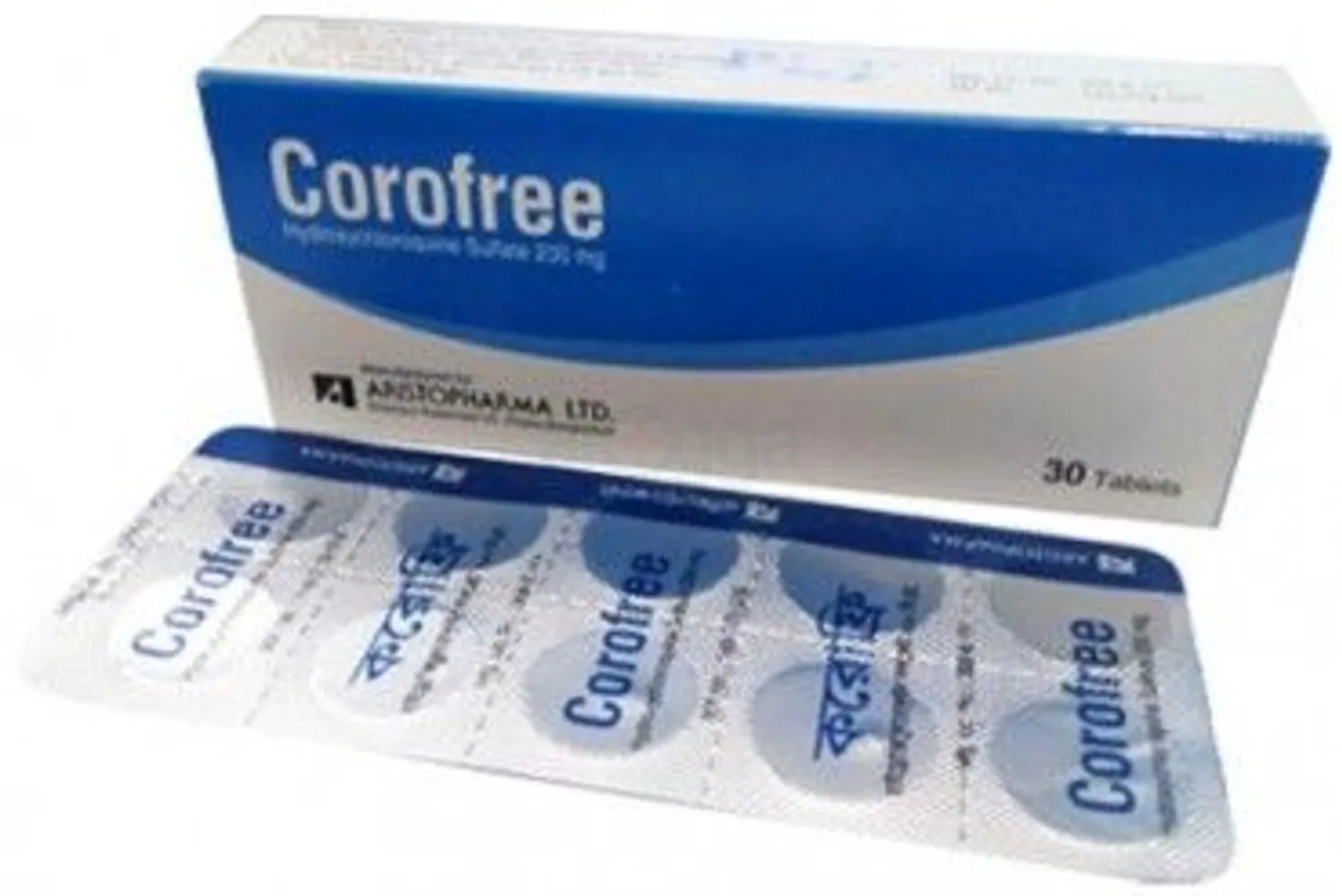

Medicine Overview of Corofree 200mg Tablet
Corofree 200 is used in the treatment of autoimmune conditions such as rheumatoid arthritis and systemic lupus erythematosus. It slows down the progression of the disease and provides relief from pain, swelling, and redness.
Corofree 200 should be taken with food. This will prevent you from getting an upset stomach upset. You should take it regularly and at the same time each day to get the maximum benefit from it. Keep taking it as recommended by your doctor and complete the dose even if you feel better.
Using this medicine may cause some common side effects such as blurred vision, abdominal pain, nausea, vomiting, diarrhea, headache, and skin rash. Consult with your doctor if any of these side effects do not go away with time or get worse. Your doctor may help with ways to reduce or prevent these symptoms.
To make sure the medicine is safe for you, before taking this medicine, let your doctor know if you have any problems with your heart, kidneys, or liver. Also, tell your doctor about all the other medicines you are taking. Your doctor may recommend regular eye tests to check your vision while on this medication. Pregnant and breastfeeding mothers should consult with their doctors before taking the medicine.
- Rheumatoid arthritis
- Systemic lupus erythematosus (SLE)
- Blurred vision
- Abdominal pain
- Diarrhea
- Feeling sick
- Headache
- Loss of appetite
- Mood changes
-
You have been prescribed HCQS 200 Tablet for the treatment of autoimmune conditions such as rheumatoid arthritis or systemic lupus erythematosus.
-
Take it with food to avoid an upset stomach.
-
It can take 8-12 weeks for HCQS 200 Tablet to work. Keep taking it as prescribed.
-
Do not take medicines that neutralise stomach acids (antacids) four hours before and after taking HCQS 200 Tablet as they can stop the medicine from being absorbed properly from your gut.
-
Have regular eye tests done while taking this medicine. Stop taking it and inform your doctor immediately if you notice any changes in your vision.
-
It can cause lowering of blood glucose level. Inform your doctor if you experience hypoglycemia symptoms such as cold sweats, cool pale skin, tremor, and anxious feeling.
Oral
Malaria
Acute treatment
800 mg PO, then 400 mg PO 6-8 hours later, then 400 mg PO at 24 and 48 hours
Prophylaxis
400 mg PO weekly, starting 2 weeks before exposure and continued for 4 weeks after departure from area
Rheumatoid Arthritis
400-600 mg PO daily for 4-12 weeks; maintenance: 200-400 mg PO daily
Systemic Lupus Erythematosus
400 mg PO once or twice daily; maintenance: 200-400 mg PO daily
Hepatic impairment: Estimation of plasma hydroxychloroquine levels to be undertaken in patients with severely compromised function and dosage adjusted accordingly.
Malaria
Acute treatment
13 mg/kg base PO, then 6.5 mg/kg base PO 6 hr later, then 6.5 mg/kg base PO at 24 and 48 hours; not to exceed 400 mg/day base
Prophylaxis
6.5 mg/kg base (not to exceed 400 mg [310 mg base]) PO weekly, starting 2 weeks before exposure and continued for 4 weeks after departure from area
Impaired liver or renal function, severe GI disorders, porphyria, psoriasis, neurological disorders especially a history of epilepsy, myasthenia gravis, G6PD deficiency, pregnancy, lactation. Monitor CBC in patients receiving prolonged therapy. Perform baseline and periodic 6-mth eye exams, test periodically for muscle weakness.
Lactation: Drug is concentrated in breast milk (American Academy of Pediatrics committee states that it is compatible with nursing)



Reviews
Clear filtersThere are no reviews yet.