


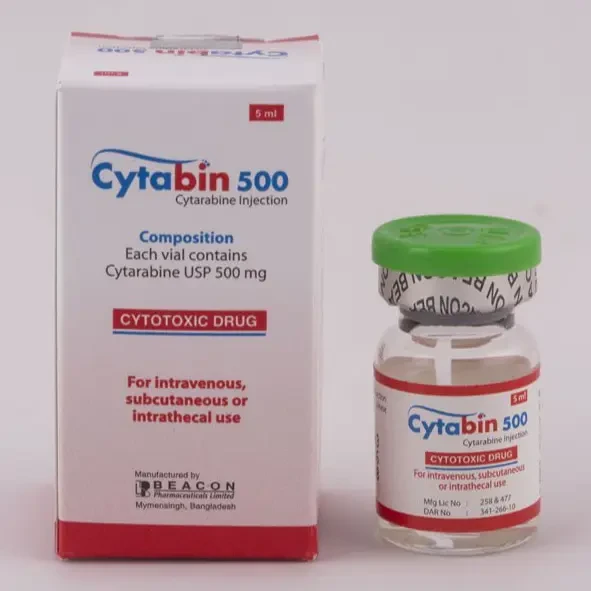

Medicine Overview of Cytabin 100mg/ml Injection
Cytabin is used to treat some kinds of cancers of blood. It may be also used to treat other conditions, as determined by the doctor. It is sometimes used with certain other medicines as part of combination chemotherapy.
Cytabin is given as an injection into the vein or under skin by the healthcare professional. Your doctor will decide what dose is necessary and how often you need to take it. This will depend on what you are being treated for and may change from time to time. You should take it exactly as your doctor has advised. Taking it in the wrong way or taking too much can cause very serious side effects. It may take several weeks or months for you to see or feel the benefits but do not stop taking it unless your doctor tells you to.
The most common side effects of this medicine include rash, skin ulcer, nausea, vomiting, and hair loss. This medicine may reduce the number of blood cells (decrease red blood and white blood cells) in your blood, thereby, increasing the susceptibility to infections or bleeding. Inform your doctor if you notice chills, unusual bleeding or bruising and black and tarry stools. Regular blood tests are required to check your blood cells along with heart, liver, and blood uric acid levels.
Before taking it, tell your doctor if you have bleeding, liver, or kidney problems or are taking any medicines to treat infections. Many other medicines can affect, or be affected by, this medicine so let your doctor know all medications you are using. This medicine is not recommended during pregnancy or while breastfeeding. The use of effective contraception by both males and females during treatment is important to avoid pregnancy.
- Blood cancer
- Rash
- Skin ulcer
- Nausea
- Vomiting
- Hair loss
- Abdominal pain
- Anal ulcers
- Anemia (low number of red blood cells)
- Decreased white blood cell count
- Fever
- Infection
- Abnormal liver function
- Low blood platelets
- Mouth ulcer
- Pneumonia
- Sepsis
- Mouth sore
- Stomatitis (Inflammation of the mouth)
-
Use a reliable contraceptive method to prevent pregnancy while you are taking this medicine.
-
Inform your doctor immediately if you notice any signs of infection such as fever, sore throat, rash or severe diarrhea.
Acute myeloid leukaemia, acute lymphocytic leukaemia (ALL), lymphomas, Leukaemic meningitis
IV Administration
Rapid IV, infusion over 1-3 hr, or SC intrathecal
Has been administered by IM & continuous SC infusion
IT: Patient should lie flat for 1 hour after lumbar puncture
Liposomal: To reduce incidence of arachnoiditis, administer dexamethasone concurrently
IV Preparation
Reconstitute vials in BWI containing benzyl alcohol 0.945% as follows (CAUTION: Do not use benzyl alcohol for intrathecal inj)
100 mg vial: add 5 mL diluent to 20 mg/mL
500 mg vial: add 10 mL diluent to 50 mg/mL
1 g vial: add 10 mL diluent to 100 mg/mL
2 g vial: add 20 mL diluent to 100 mg/mL
Acute Nonlymphocytic Leukemia
IV administration for remission induction
100-200 mg/sq.meter/day for 5-10 days; begin second course in 2-4 weeks after initial therapy if necessary OR
100 mg/sq.meter for 7 days OR
100 mg/sq.meter/dose q12hr for 7 days
Intrathecal (IT) administration for remission induction
5-75 mg/sq.meter q2-7Days until CNS findings normalize
IV administration for remission maintenance
70-200 mg/sq.meter/day for 2-5 days at monthly intervals
IM administration for remission maintenance
1-1.5 mg/kg single dose for maintenance at 1- 4 week intervals
Meningeal Leukemia
IT administration
30 mg/sq.meter intrathecal (IT) q4Days until CSF findings normal plus one additional dose
Refractory Leukemia
IV administration
3 g/sq.meter IV (infusion over 1-3 hours) q12hr x 4-12 doses
Repeat q2-3Weeks
Hepatic and renal dysfunction, severe infections, preexisting drug-induced bone marrow suppression. Monitor WBC, platelet counts and blood uric acid frequently. Assess renal and hepatic function periodically.
Lactation: not known if excreted in breast milk, avoid
1-10%
Anorexia,Nausea,Vomiting,Diarrhea,Oral/anal inflammation,Thrombophlebitis,Bleeding,Myelosuppression,Rash,Fever,Hepatic dysfunction
Frequency Not Defined
Headache,Neuropathy,Chest pain,Pericarditis,Pneumonia,Anemia,Bleeding,Leukopenia,Thrombocytopenia,Kidney disease,Infectious disease,Sepsis,”Cytarabine syndrome”: fever, myalgia, bone pain, rash, conjunctivitis, malaise,Skin ulcers,Cellulitis,Urinary retention,Neuritis,Jaundice,Anaphylaxis
Potentially Fatal: Convulsions. Cerebellar dysfunction, respiratory distress syndrome, GI perforation, bone marrow suppression.
Pregnancy Category: D
Lactation: not known if excreted in breast milk, avoid
May reduce efficacy of gentamicin, digoxin and flucytosine.
Potentially Fatal: Potentiates bone marrow depression with radiotherapy and other myelotoxic drugs.




Reviews
Clear filtersThere are no reviews yet.