

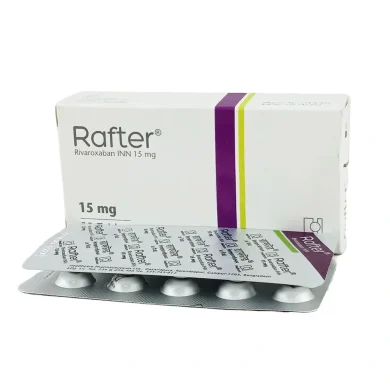



Introduction
Dabiran is a medicine known as an anticoagulant or blood thinner. It helps prevent and treat blood clots. It is used to reduce the risk of stroke and heart attack. It prevents and treats clot formation in the veins of your legs, lungs, brain and heart. Dabiran is commonly used in patients with irregular heart rhythm (atrial fibrillation) to prevent clot formation. It also reduces the risk of getting clots in people who have undergone knee or hip replacement surgeries. It can be taken with or without food, but it is best to take them at the same time each day. You may need to take this medicine for many years, even for life in some cases. Do not stop taking it or change the dose without guidance from your doctor. It could quickly put you more at risk of having a heart attack, stroke or thrombosis (formation of a blood clot within a blood vessel). You can reduce your risk of having a blood clot by making changes to your lifestyle, such as not smoking, eating a healthy diet, getting regular exercise and losing weight if you need to. The most common side effect of Dabiran are stomach upset and bleeding more easily than normal, for example having nosebleeds or bruising. If you experience any symptoms, tell your doctor immediately. Other side effects include headache, seizures, allergic reactions, changes to your eyesight, and tiredness. Do not take this medicine if you have severe kidney or liver problems, if you are currently bleeding or if you are taking other medicines to reduce blood clotting. You should not breastfeed while using this medicine. Unlike other anticoagulants, regular blood test (PT-INR) is not required while taking this medicine.
_
Uses of Dabiran
Stroke prevention
Deep vein thrombosis
Pulmonary embolism
Side effects of Dabiran
Common
Bleeding
Nausea
Stomach pain
Indigestion
How to use Dabiran
Take this medicine in the dose and duration as advised by your doctor. Do not chew, crush or break it. Dabiran may be taken with or without food, but it is better to take it at a fixed time.
How Dabiran works
Dabiran is a novel oral anticoagulant (NOAC). It works by preventing the formation of blood clots in the body.
What if you forget to take Dabiran?
If you miss a dose of Dabiran, please consult your doctor.
Quick Tips
Take it as per dose and duration suggested by your doctor.
Dabiran increases your risk of bleeding. Be careful while shaving, cutting fingernails or toenails, using sharp objects or engaging in contact sports (e.g., football and wrestling).
If you are going to have a surgery or dental treatment, you may be asked to stop taking Dabiran temporarily.
Your doctor may get a blood test done to check kidney function before starting treatment with this medicine.
Inform your doctor if you are pregnant, planning pregnancy or breastfeeding.
Do not stop taking the medication without talking to your doctor.
Brief Description
Indication
Prophylaxis of postoperative venous thromboembolism, Atrial fibrillation
Administration
May be taken with or without food. Swallow whole, do not chew/crush.
Adult Dose
Oral Prophylaxis of postoperative venous thromboembolism Adult: Initially, 110 mg given w/in 1-4 hr after surgery followed by 220 mg once daily for a total of 10 days after (knee replacement) or 28-35 after (hip replacement). Reduce dose to 150 mg once daily if given concurrently w/ amiodarone, verapamil or quinidine. Elderly: >75 yr Initially, 75 mg given w/in 1-4 hr after surgery followed by 150 mg once daily for a total of 10 days after (knee replacement) or 28-35 after (hip replacement). Atrial fibrillation Adult: 150 mg bid, reduce dose to 110 mg bid if given concurrently w/ verapamil. Elderly: >75 yr 110 mg bid.
_
Renal Dose
Prophylaxis of postoperative venous thromboembolism Renal impairment: CrCl (ml/min) Dosage Recommendation <30 Contraindicated. 30-50 Initial: 75 mg w/in 1-4 hr after surgery followed by 150 mg once daily for a total of 10 days after (knee replacement) or 28-35 days after (hip replacement). Max: 75 in patients taking w/ verapamil. Atrial fibrillation Renal impairment: CrCl (ml/min) Dosage Recommendation <30 Contraindicated. 30-50 110 mg bid.
_
Contraindication
Active pathological bleeding or patient at high risk for bleeding. Patients w/ prosthetic heart valve. Severe renal impairment. Concomitant use w/ antiplatelets, other anticoagulants, thrombolytics, dronedarone, P-glycoprotein inducers (e.g. carbamazepine, rifampicin, phenytoin and St John's wort) and P-glycoprotein strong inhibitors (e.g. ciclosporin, systemic ketoconazole, itraconazole, and tacrolimus).
Mode of Action
Dabigatran is a competitive, selective, reversible direct inhibitor of thrombin. It inhibits thrombin-induced platelet aggregation and the conversion of fibrinogen to fibrin thus preventing thrombus formation.
Precaution
Increased risk of haemorrhage and stroke. Renal and hepatic impairment. Pregnancy, lactation, elderly, childn. Monitoring Parameters Monitor renal function prior to initiation and periodically thereafter.
Side Effect
>10% Dyspepsia and gastritis (35%; compared with warfarin [24%]) Any bleed (16.6%; compared with warfarin [18.4%]) 1-10% Major bleed (3.3%; compared with warfarin [3.6%]) Life-threatening bleed (1.5%; compared with warfarin [1.9%]) <1% Intracranial hemorrhage (0.3%; compared with warfarin [0.8%]) Hypersensitivity, including urticaria, rash, pruritus (<0.1%)
_
Pregnancy Category Note
Risk Summery Limited available data on use in pregnant women are insufficient to determine drug-associated risks for adverse developmental outcomes; there are risks to mother associated with untreated venous thromboembolism in pregnancy and a risk of hemorrhage in mother and fetus associated with use of anticoagulants Pregnancy confers an increased risk for thromboembolism that is higher for women with underlying thromboembolic disease and certain high-risk pregnancy conditions; published data describe that women with previous history of venous thrombosis are at high risk for recurrence during pregnancy Use of anticoagulants, may increase risk of bleeding in fetus and neonate; monitor neonates for bleeding. Labor or delivery All patients receiving anticoagulants, including pregnant women, are at risk for bleeding; use during labor or delivery in women who are receiving neuraxial anesthesia may result in epidural or spinal hematomas; consider discontinuation or use of shorter acting anticoagulant as delivery approache. Lactation There are no data on presence of dabigatran in human milk, effects on breastfed child, or on milk production; drug and/or its metabolites were present in rat milk; breastfeeding is not recommended during therapy.
_
Interaction
May increase risk of bleeding w/ NSAIDs. Clarithromycin may increase the serum levels of dabigatran. Potentially Fatal: P-glycoprotein inducers (e.g. carbamazepine, rifampicin, and phenytoin) decreases systemic exposure of dabigatran. P-glycoprotein strong inhibitors (e.g. ciclosporin, systemic ketoconazole, itraconazole, and tacrolimus) and dronedarone increases systemic exposure of dabigatran. Increased bleeding risk w/ antiplatelets, other anticoagulants and thrombolytics.
_




Reviews
Clear filtersThere are no reviews yet.