



Introduction
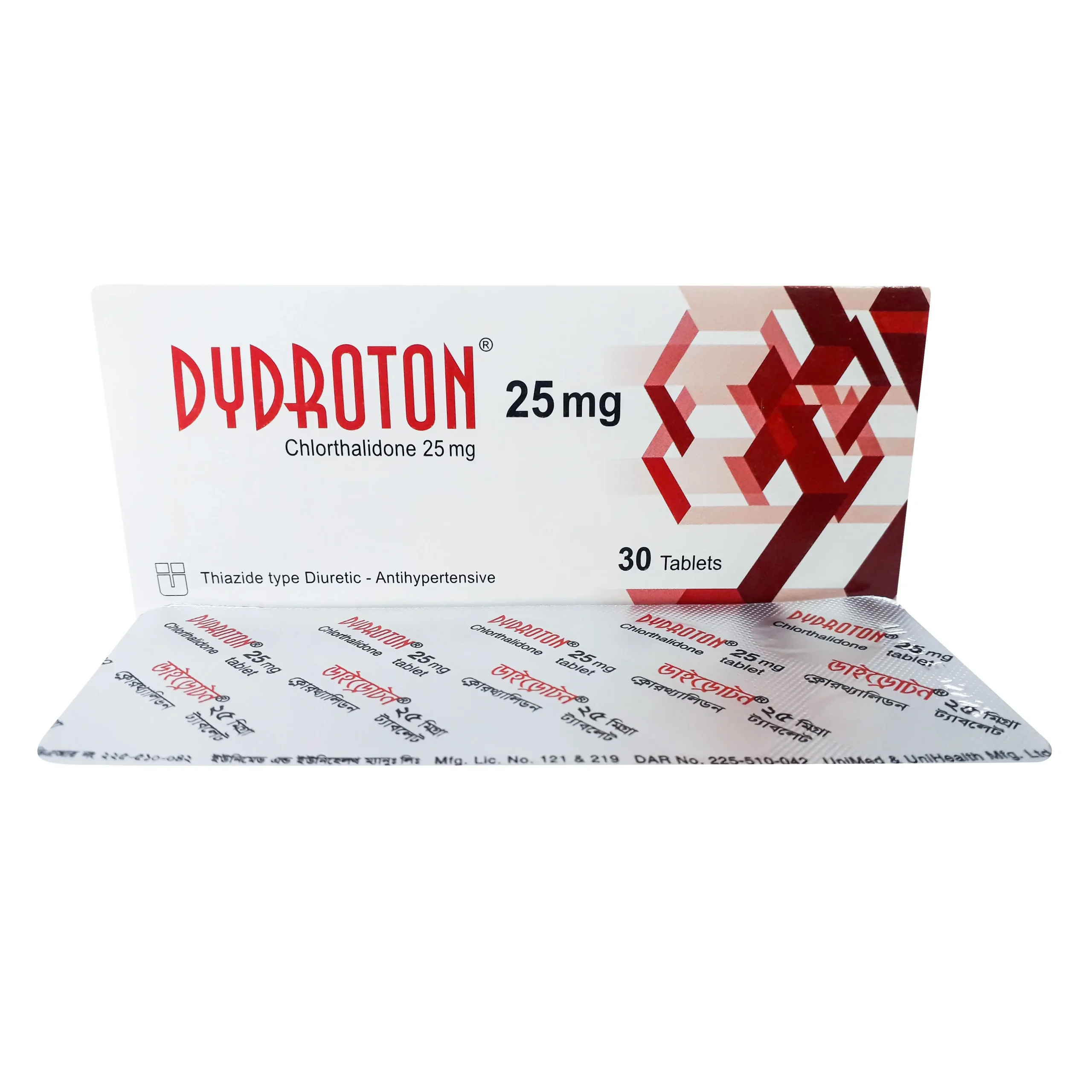
Dydroton 25 is a diuretic (water pill) medicine used to treat hypertension (high blood pressure). This medicine reduces excess fluid levels in the body and treats edema (fluid overload) associated with heart, liver, kidney, or lung disease. Dydroton 25 makes you lose excess water through urine. It may be used alone or in combination with other medicines. This medicine should be taken only during day time to avoid frequent urination at night. You must take this medicine in the dose and duration as advised by the doctor and never stop it abruptly without consulting the doctor. Most people with high blood pressure do not feel ill, but if you stop taking this medicine, your condition could get worse. This may lead to your blood pressure rising up again and increase your risk of heart disease and stroke. It is important to have your blood pressure checked regularly. This medicine is only one part of a treatment program which should also include a healthy diet, regular exercise, smoking cessation, moderation of alcohol intake and weight reduction. You can eat normally while taking this medicine, but try to reduce your salt intake. Common side effects of this medicine include headache, nausea, and dizziness. Consult your doctor if these side effects bother you. Before taking this medicine, its better to let your doctor know if you are suffering from any kidney or liver disease. Also, pregnant women and breastfeeding mothers should consult doctor before taking it. You must inform doctor about all the other medicines that you are taking apart from this medicine.
_
Uses of Dydroton 25
Hypertension (high blood pressure)
Side effects of Dydroton 25
Common
Headache
Nausea
Increased blood uric acid
Decreased potassium level in blood
Glucose intolerance
Altered blood lipid level
How to use Dydroton 25
Take this medicine in the dose and duration as advised by your doctor. Swallow it as a whole. Do not chew, crush or break it. Dydroton 25 is to be taken with food.
How Dydroton 25 works
Dydroton 25 is a diuretic which lowers blood pressure by removing extra water and certain electrolytes from the body. Over time it also relaxes blood vessels and improves blood flow.
What if you forget to take Dydroton 25?
If you miss a dose of Dydroton 25, take it as soon as possible. However, if it is almost time for your next dose, skip the missed dose and go back to your regular schedule. Do not double the dose.
Quick Tips
Take it in the morning with breakfast to avoid getting up at night to urinate.
It makes you feel dizzy. Avoid driving and attention requiring activity until you know how it affects you.
Avoid alcohol intake while taking CTD 12.5 Tablet as it may increase the dizziness.
It may cause a sudden drop of sodium level in blood. Avoid low sodium diet while you are taking this medication.
Monitor your blood pressure after starting CTD 12.5 Tablet, and notify your doctor if it does not lower down.
Notify your doctor if you experience dizziness, tiredness, or muscle weakness that does not go away.
Inform your doctor if you are pregnant, planning pregnancy or breastfeeding.
Brief Description
Indication
Hypertension, Oedema, Diabetes insipidus, Congestive heart failure
Administration
Should be taken with food. Take during meals.
Adult Dose
Hypertension 25-100 mg/day PO; usual range, 12.5-25 mg/day Edema 50-100 mg/day PO or 100 mg PO every other day; not to exceed 200 mg/day Heart Failure 12.5-25 mg/day PO; not to exceed 100 mg/day
_
Renal Dose
Renal impairment CrCl <10 mL/min: Ineffective; do not use CrCl >10 mL/min: Dose adjustment not necessary
_
Contraindication
Severe renal impairment or anuria. Severe hepatic impairment, addison’s disease, preexisting hypercalcaemia, asthma; hypersensitivity; severe allergy. Pregnancy and lactation.
Mode of Action
Chlortalidone is an oral, long acting antihypertensive/diuretic. It is a monosulfamyl diuretic that acts by enhancing the excretion of sodium and chloride ions, and water by interfering with the transport of sodium ions across the renal tubular epithelium. Their primary site of action appears to be at the cortical diluting segment in the nephron of the loop of Henle.
Precaution
Existing fluid and electrolyte disturbances, hepatic cirrhosis, severe heart failure, hyperuricaemia, mild to moderate renal impairment. Elderly. Monitor fluid and electrolyte balance. Kidney or liver disease; diabetes; gout; hyperlipidaemia and ventricular extra systoles. Lactation: Drug enters breast milk; not recommended (American Academy of Pediatrics states that it is “compatible with nursing”)
_
Side Effect
Common Cardiovascular: Hypotension, vasculitis Dermatologic: Photosensitivity, phototoxicity Endocrine/metabolic: Electrolyte abnormalities, hyperglycemia, hyperuricemia Gastrointestinal: Constipation, diarrhea, loss of appetite, nausea, vomiting Musculoskeletal: Spasticity Neurologic: Dizziness, headache, paresthesia Ophthalmologic: Blurred vision, xanthopsia Psychiatric: Restlessness Reproductive: Impotence Potentially Fatal: Rare. Severe hyponatraemia and idiosyncratic hypersensitivity.
_
Pregnancy Category Note
Pregnancy Available data over decades from observational studies and reports with chlorthalidone use in pregnant women have not identified a drug-associated risk of major birth defects or miscarriage; however, adverse fetal outcomes, including fetal or neonatal jaundice, thrombocytopenia, hypoglycemia, and electrolyte abnormalities reported following maternal use of thiazide diuretics Drug not for use as first-line therapy to treat hypertension in pregnancy; advise pregnant women of potential risk to fetus Hypertension in pregnancy increases maternal risk for pre-eclampsia, gestational diabetes, premature delivery, and delivery complications (eg, need for cesarean section, and post-partum hemorrhage); hypertension increases fetal risk for intrauterine growth restriction and stillbirth Thiazides can cross placenta, and concentrations reached in umbilical vein approach those in maternal plasma; thiazides, like other diuretics, can cause placental hypoperfusion Use of thiazides during pregnancy associated with risk of fetal or neonatal jaundice, thrombocytopenia, hypoglycemia, and electrolyte abnormalities; thiazides do not prevent or alter course of EPH (Edema, Proteinuria, Hypertension) gestosis (pre-eclampsia) and should not be used as first-line therapy to treat hypertension in pregnant women Lactation Drug is present in human milk; there is no information regarding effects of on breastfed infant or on milk production; because of potential for drug accumulation which may lead to serious adverse reactions in breastfed infant (such as jaundice, thrombocytopenia, hyperglycemia, electrolyte abnormalities), advise patients that breastfeeding is not recommended during therapy Pregnancy Categories
_
Interaction
NSAIDs antagonise hypotensive action. Suppresses action of oral anticoagulants due to reduced prothrombin activity. Increased risk of hypokalaemia when corticosteroids are given concurrently. Potentially Fatal: Potentiates bone marrow suppression caused by anticancer drugs. Diuretic-induced vol depletion can potentiate aminoglycoside nephrotoxicity. Impairs action of oral hypoglycaemic agents. Enhances digitalis toxicity due to hypokalaemia. vol depletion enhances lithium toxicity, conversely, sudden withdrawal of diuretics may result in subtherapeutic levels of circulating lithium. Prolonged paralysis with tubocurarine due to hypokalaemia.
_



Reviews
Clear filtersThere are no reviews yet.