



Introduction
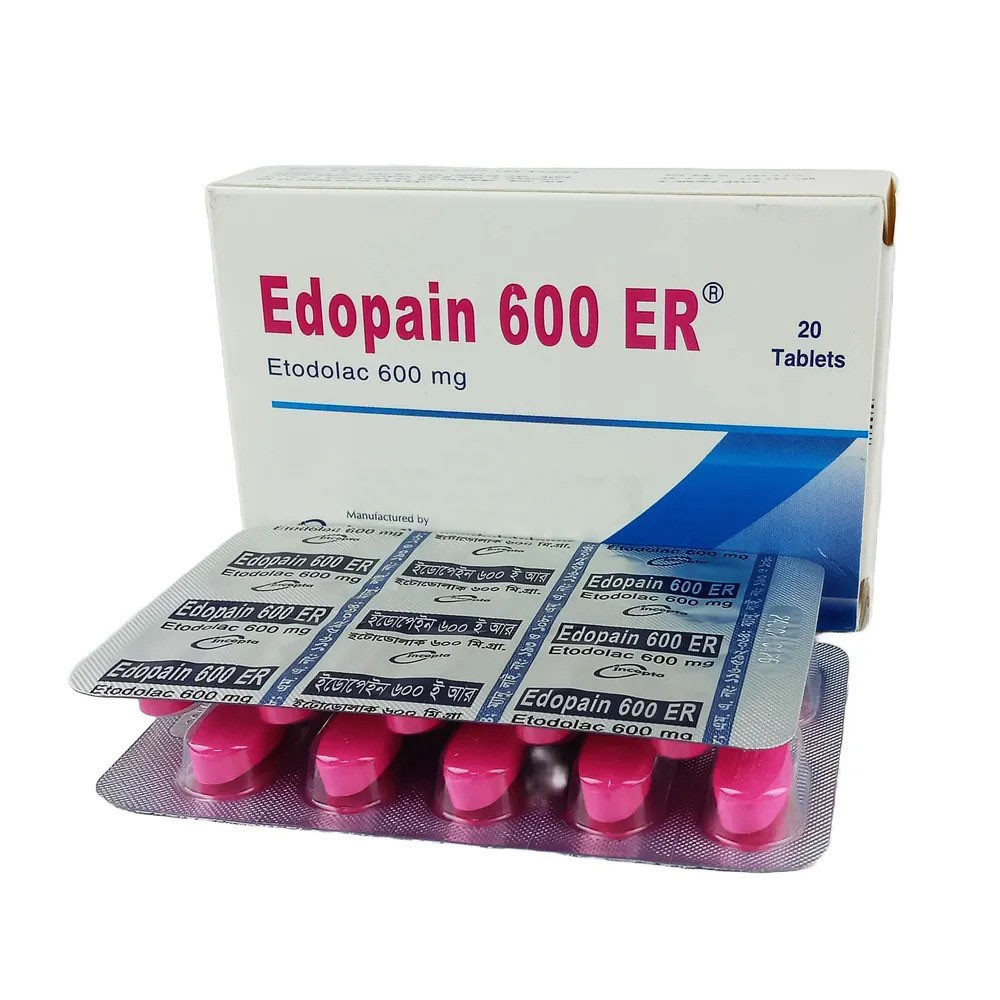
Edopain ER 600 is a pain relieving medicine. It effectively alleviates pain and inflammation in conditions like rheumatoid arthritis, osteoarthritis and acute pain. Edopain ER 600 should be taken in the dose and duration as advised by your doctor. It should be taken with food or milk to prevent stomach upset. Inform your doctor if you have any history of heart disease or stroke. Vomiting, stomach pain, nausea and indigestion are some of the common side effects that might be observed on taking this medicine. It may also cause dizziness, drowsiness or visual disturbances. Your doctor may regularly monitor your kidney function, liver function and levels of blood components, if you are taking this medicine for long-term treatment. Long term use may lead to serious complications such as stomach bleeding and kidney problems.
_
Uses of Edopain ER 600
Pain relief
Side effects of Edopain ER 600
Common
Vomiting
Stomach pain/epigastric pain
Nausea
Indigestion
Loss of appetite
Diarrhea
Heartburn
How to use Edopain ER 600
Use it as advised by your doctor or check the label for directions before use. Edopain ER 600 is to be taken with food.
How Edopain ER 600 works
Edopain ER 600 is a non-steroidal anti-inflammatory drugs (NSAID). It works by blocking the release of certain chemical messengers that cause pain and inflammation (redness and swelling).
Quick Tips
You have been prescribed Proxym ER Tablet to relieve pain and inflammation.
Take it with food or milk to prevent upset stomach.
Take it as per the dose and duration prescribed by your doctor. Long term use may lead to serious complications such as stomach bleeding and kidney problems.
It may cause dizziness, drowsiness or visual disturbances. Use caution while driving or doing anything that requires concentration.
Avoid consuming alcohol while taking Proxym ER Tablet as it can cause excessive drowsiness and increase your risk of stomach problems.
Inform your doctor if you have a history of heart disease or stroke.
Your doctor may regularly monitor your kidney function, liver function and levels of blood components, if you are taking this medicine for long-term treatment.
Brief Description
Indication
Rheumatoid arthritis, Pain, Osetoarthritis
Administration
Should be taken with food. Take w/ or immediately after meals.
Adult Dose
Oral Osteoarthritis; Rheumatoid arthritis Adult: 600-1000 mg/day in divided doses adjusted according to response. Max: 1200 mg/day. ER tablet: Once daily Hepatic impairment: Dose adjustment not necessary
_
Child Dose
Juvenile Rheumatoid Arthritis <6 years Safety and efficacy not established 6-16 years 20-30 kg (extended release): 400 mg PO once daily 31-45 kg (extended release): 600 mg PO once daily 46-60 kg (extended release): 800 mg PO once daily >60 kg (extended release): 1000 mg PO once daily
_
Renal Dose
Mild-to-moderate renal impairment: Dose adjustment not necessary Severe renal impairment; Not recommended
_
Contraindication
Peptic ulcer, hypersensitivity to etodolac/NSAIDs. Childn; pregnancy (3rd trimester) and lactation.
Mode of Action
Etodolac is an NSAID derived from pyrano-indoleacetic acid, inhibits cyclooxygenase 2 (COX-2) resulting in decreased prostaglandin precursor formation.
Precaution
CHF, dehydration, impaired renal, hepatic function, history of GI disease. Elderly, patients receiving anticoagulant. Lactation: Unknown whether drug is excreted in breast milk; not recommended
_
Side Effect
1-10% Dyspepsia (10%),Dizziness (3-9%),Nervousness (1-3%),Pruritus (1-3%),Blurred vision (1-3%),Depression (1-3%),Chills/fever (1-3%) >1% Asthenia, malaise,Blurred vision,Bronchospasm,Dysuria, urinary frequency,Edema,Melena,Rash,Tinnitus Potentially Fatal: Acute renal failure; blood disorder; nephrotoxicity; angioedema, arrhythmia, bone marrow suppression, CHF, dyspnoea, erythema multiforme, exfoliative dermatitis, hepatitis, hypertension, peripheral neuropathy, Stevens-Johnson syndrome, syncope, tachycardia, toxic amblyopia, toxic epidermal necrolysis, urticaria.
_
Pregnancy Category Note
Pregnancy category: C; avoid in late pregnancy (may cause premature closure of ductus arteriosus) Lactation: Unknown whether drug is excreted in breast milk; not recommended
_
Interaction
Increased effect of warfarin, lithium, methotrexate, digoxin, cyclosporin, aspirin. Effect may be reduced with aspirin. Reduced effect of some diuretics and ?-blockers. Alcohol enhances gastric mucosal irritation.



Reviews
Clear filtersThere are no reviews yet.