


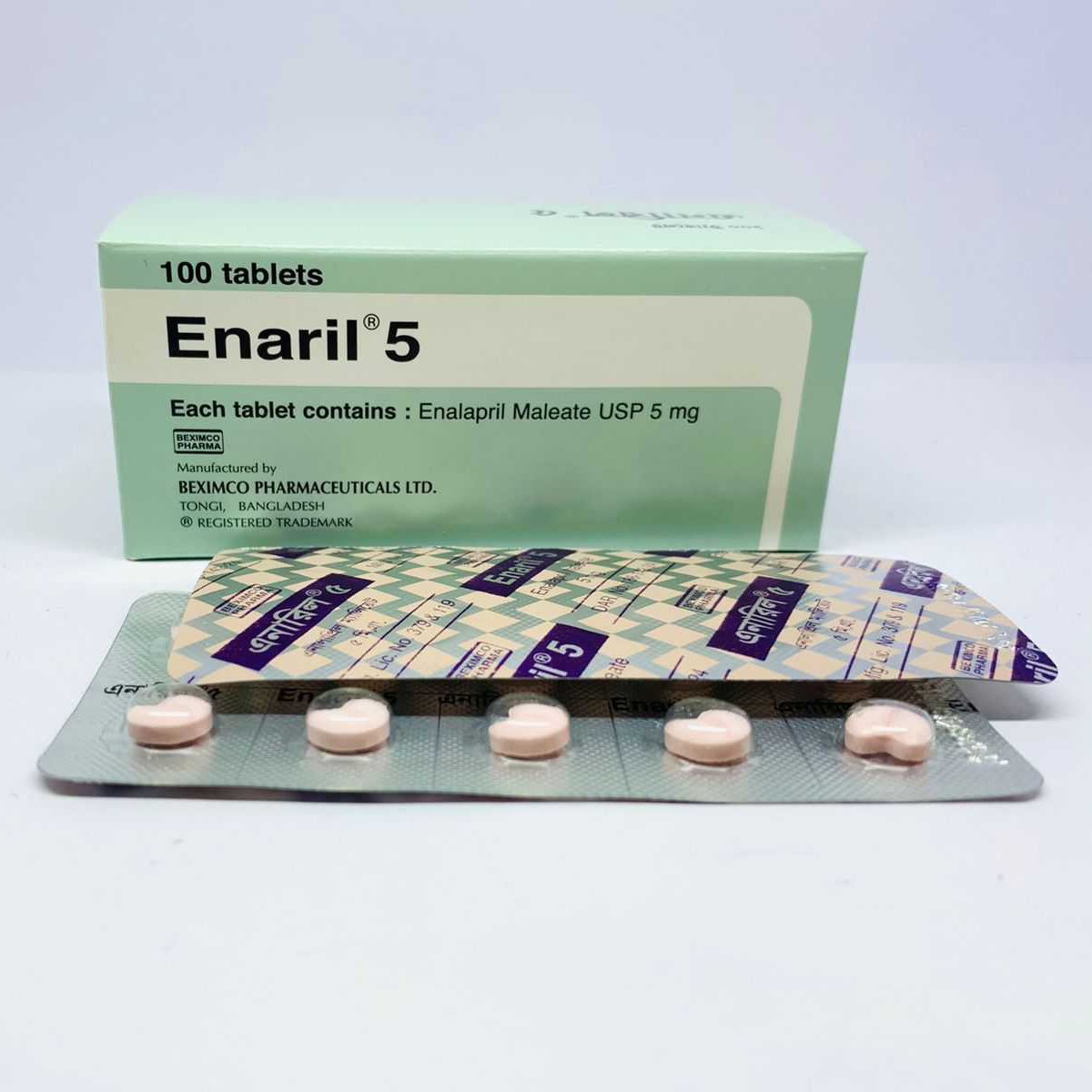

Medicine Overview of Enaril 5mg Tablet
Enaril 5 belongs to a group of medicines known as angiotensin converting enzyme (ACE) inhibitors. It is widely used to treat high blood pressure and heart failure and may be prescribed after a heart attack. It also lowers the chances of having a heart attack or stroke.
Enaril 5 can be prescribed either alone or in combination with other medicines. It should be taken on an empty stomach. This medicine should be taken at the same time each day to get the most benefit. It is important to continue taking it regularly even if you feel well or even if your blood pressure is controlled. Most people with high blood pressure do not feel ill, but if you stop taking this medicine, your condition could get worse. This is a widely used medicine and is considered safe for long-term use.
Making some changes in your lifestyle will also help lower your blood pressure. These may include regular exercise, losing weight, smoking cessation, reducing alcohol intake, and reducing the amount of salt in your diet as advised by your doctor. The most common side effects of this medicine include feeling dizzy or drowsy, headache, dry cough, fatigue, nausea, vomiting, diarrhea, stomach pain, and low blood pressure. Most of these are temporary and resolve with time. Talk to your doctor if any of the side effects bother you or do not go away.
Before taking this medicine, let your doctor know if you have any kidney or liver problems. Pregnant or breastfeeding mothers should also consult their doctor before taking it. Your doctor may check your kidney function, blood pressure and potassium levels in your blood at regular intervals while you are taking this medicine.
- Hypertension (high blood pressure)
- Prevention of heart attack and stroke
- Heart failure
- Decreased blood pressure
- Cough
- Increased potassium level in blood
- Fatigue
- Weakness
- Dizziness
-
It should be taken with or without food, preferably at the same time each day.
-
Enaril 5 can make you feel dizzy for the first few days, so rise slowly if you have been sitting or lying down. You can also prefer taking it at bedtime to avoid dizziness throughout the day.
-
Let your doctor know about any cough, or throat irritation that does not go away.
-
It may increase the level of potassium in blood. Avoid taking potassium supplements and potassium-rich foods such as banana and broccoli.
-
Inform your doctor if you are pregnant, planning pregnancy or breastfeeding.
Hypertension
Oral
Initial: 2.5-5 mg PO qDay
Maintenance: 10-40 mg/day PO qDay or divided q12hr
Left Ventricular Dysfunction
Initial: 2.5 mg PO q12hr
May titrate up to 20 mg/day
Congestive Heart Failure
Initial: 2.5 mg PO qDay or q12hr
Maintenance: 5-40 mg/Day PO divided q12hr; titrate slowly q2Weeks
Hepatic impairment: No dosage adjustment required
Hypertension
1 month to 16 years (oral)
Initial: 0.08 mg/kg/day PO or divided q12hr; not to exceed 5 mg/day
May increase PRN q2Weeks according to blood pressure not to exceed 0.58 mg/kg/day (or 40 mg/day)
Renal impairment
CrCl <30 mL/min: (PO) Initiate 2.5 mg; titrate to response; not to exceed 40 mg
Dialysis: 2.5 mg PO on day of dialysis; adjust dose on nondialysis days according to BP
CrCl <30 mL/min: (IV) Initiate 0.625 mg q6hr; titrate based on response
CrCl ?30 mL/min: (PO) Initiate 5 mg/day; titrate to maximum of 40 mg
CrCl ?30 mL/min: (IV) 1.25 mg q6hr; titrate based on response
1-10%
Dizziness (4-8%),Hypotension (0.9-6.7%),Headache (2-5%),Chest pain (2%),Cough (1-2%),Rash (1.5%)
Frequency Not Defined
Asthenia,Nausea,Vomiting,Hyperkalemia
Potentially Fatal: Angioedema.
Pregnancy
May cause fetal harm when administered to a pregnant woman; use of drugs that act on renin-angiotensin system during second and third trimesters of pregnancy reduces fetal renal function and increases fetal and neonatal morbidity and death; when pregnancy is detected, discontinue therapy as soon as possible
Hypertension in pregnancy increases maternal risk for pre-eclampsia, gestational diabetes, premature delivery, and delivery complications (e.g., need for cesarean section, and post-partum hemorrhage); hypertension increases fetal risk for intrauterine growth restriction and intrauterine death; pregnant women with hypertension should be carefully monitored and managed accordingly
Lactation
Enalapril and enalaprilat have been detected in human breast milk; because of potential for serious adverse reactions in breastfed infant, including hypotension, hyperkalemia, and renal impairment, advise women not to breastfeed during therapy





Reviews
Clear filtersThere are no reviews yet.