



Introduction
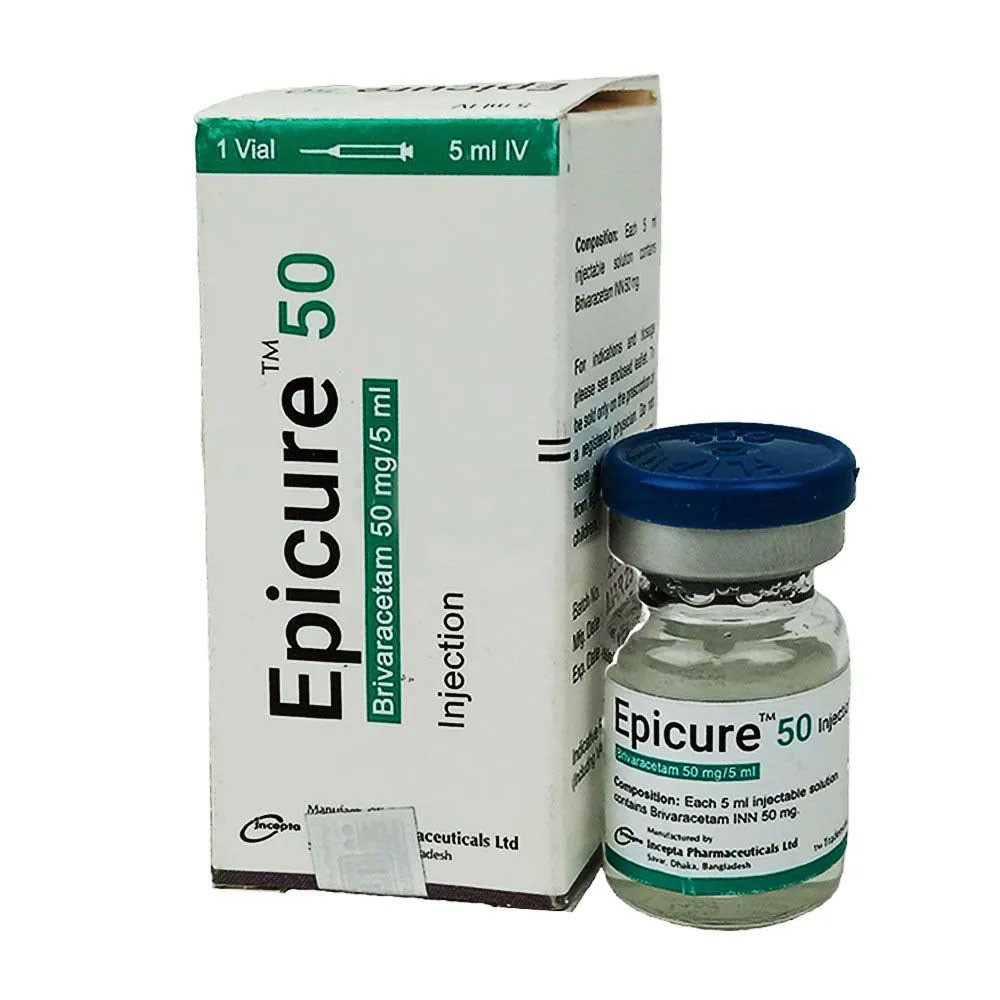
Epicure is an anti-epileptic medicine used to treat seizures (fits) in epilepsy. It can be used alone or along with other medicines. It helps to prevent seizures for as long as you continue to take it. Epicure suppresses the abnormal electrical activity in the brain. You can take it regularly with or without food but try to take it at the same time each day to get the most benefit. The dose and how often you need it will be decided by your doctor so that you get the right amount to control your seizures. It may be increased gradually. It is generally advised as a long-term treatment. You should continue taking it for as long as your doctor has told you to, even if you feel well. If you stop or miss doses your seizures could get worse. Do not stop taking this medicine unless your doctor tells you to. This is because stopping the medicine suddenly could make your seizures worse. Some common side effects of this medicine include dizziness, headache, irritation, nausea, and vomiting. You may also experience behavioral changes, aggressive behavior, irritation, agitation, etc. Side effects are more common during the first few weeks and usually lessen as your body gets used to the medicine. Most of these side effects do not need medical attention, but some of them can be serious. A small number of people being treated with this medicine have had thoughts of harming or killing themselves. Contact your doctor if your mood changes for the worse. Before taking it, you should tell your doctor if you have liver or kidney-related problems, depression or suicidal thoughts and if you are pregnant or planning to become pregnant. Breastfeeding mothers should also consult their doctor before taking this medicine.
_
Uses of Epicure
Epilepsy/Seizures
Side effects of Epicure
Common
Dizziness
Fatigue
Nausea
Sleepiness
Vomiting
Constipation
Irritation
How to use Epicure
Take this medicine in the dose and duration as advised by your doctor. Swallow it as a whole. Do not chew, crush or break it. Epicure may be taken with or without food, but it is better to take it at a fixed time.
How Epicure works
Epicure is an antiepileptic medication. It works by attaching itself to specific sites (SV2A) on the surfaces of nerve cells. This suppresses the abnormal activity of the nerve cells in the brain and prevents the spread of electrical signals that cause seizures.
Quick Tips
Epicure should be taken regularly as directed by your doctor as missing doses can trigger seizures.
Do not change the brand of your medicine and make sure that you have sufficient amount of medicine present with you.
Some healthy tips to prevent seizures:
It may cause sleepiness or drowsiness. If this happens to you, do not drive or use machinery.
Inform your doctor if you have a history of liver disease, kidney disease or drug abuse.
Do not stop using Epicure without talking to your doctor, even if you feel better.
Brief Description
Indication
Partial-Onset Seizures, Adjunctive therapy in treating partial-onset seizures w/ or w/o secondary generalisation in adults & adolescents ≥16 yr w/ epilepsy.
_
Adult Dose
Partial-Onset Seizures Indicated for partial-onset seizures 50 mg PO/IV q12hr initially; based on individual patient tolerability and therapeutic response, adjust dose between to 25-100 mg PO/IV BID (50-200 mg/day) Injection may be used for patients when oral administration is temporarily not feasible; clinical study experience with injection is limited to 4 consecutive days of treatment Hepatic impairment All stages: Decrease starting dose to 25 mg BID and do not exceed 75 mg BID (150 mg/day)
_
Child Dose
Partial Onset Seizures Tablets or oral solution Indicated for partial-onset seizures in children and adolescents ?4 years <4 years: Safety and efficacy not established 4 to <16 years 11 to <20 kg: 0.5-1.25 mg/kg PO BID (1-2.5 mg/kg/day) initially; based on individual patient tolerability and therapeutic response, adjust dose between to 0.5-2.5 mg/kg PO BID (1-5 mg/kg/day) 20 to <50 kg: 0.5-1 mg/kg PO BID (1-2 mg/kg/day) initially; based on individual patient tolerability and therapeutic response, adjust dose between to 0.5-2 mg/kg PO BID (1-4 mg/kg/day) ?50 kg: 25-50 mg PO BID (50-100 mg/day) initially; based on individual patient tolerability and therapeutic response, adjust dose between to 25-100 mg PO BID (50-200 mg/day) >16 years 50 mg PO BID (100 mg/day) initially; based on individual patient tolerability and therapeutic response, adjust dose between to 25-100 mg PO BID (50-200 mg/day) Injection Indicated for partial-onset seizures in adolescents ?16 years with epilepsy Injection may be used for patients when oral administration is temporarily not feasible <16 years: Safety and efficacy not established >16 years: 50 mg IV q12hr initially; based on individual patient tolerability and therapeutic response, adjust dose between to 25-100 mg IV BID (50-200 mg/day) Clinical study experience with injection is limited to 4 consecutive days of treatment
_
Renal Dose
Renal impairment Mild-to-moderate: No dose adjustment required ESRD undergoing dialysis: Not studied
_
Contraindication
Hypersensitivity; bronchospasms and angioedema have occurred
Mode of Action
Exact mechanism unknown Displays a high and selective affinity for synaptic vesicle protein 2A (SV2A) in the brain, which may contribute to the anticonvulsant effect
_
Precaution
Monitor patients for signs of suicidal ideation & behaviours. Minor or moderate influence on the ability to drive & use machines. Hepatic impairment. Not recommended in end-stage renal disease patients undergoing dialysis. Women of childbearing potential. Pregnancy & lactation. Elderly ≥65 yr. Childn <16 yr. FC tab: Rare hereditary problems of galactose intolerance, Lapp lactase deficiency or glucose-galactose malabsorption. Oral soln: Rare hereditary problems of fructose intolerance. Contains methyl parahydroxybenzoate (E218). Oral soln & vial: Patients on controlled Na diet.
_
Side Effect
>10% Somnolence and sedation (16%) Dizziness (12%) 1-10% Fatigue (9%) Nausea and vomiting (5%) Cerebellar coordination and balance disturbances (3%) Irritability (3%) Constipation (2%)
_
Pregnancy Category Note
Pregnancy No adequate and well-controlled studies in pregnant women In animal studies, brivaracetam produced evidence of developmental toxicity at plasma exposures greater than clinical exposure Lactation Unknown if distributed in human breast milk Studies in rats have shown excretion in milk Because many drugs are excreted into human milk, a decision should be made whether to discontinue nursing or to discontinue the drug, taking into account the importance of the drug to the mother
_
Interaction
Doubled effect of alcohol on psychomotor function, attention & memory. Possible increase in plasma conc w/ strong CYP2C19 inhibitors (eg, fluconazole, fluvoxamine). Decreased plasma conc w/ strong enzyme inducers (eg, rifampicin; carbamazepine, phenobarb, phenytoin; St. John’s wort). May increase plasma conc of CYP2C19-metabolised products (eg, lansoprazole, omeprazole, diazepam); OAT3-transported medicinal products. May decrease plasma conc of CYP2B6-metabolised products (eg, efavirenz). Increased conc of carbamazepine epoxide.
_



Reviews
Clear filtersThere are no reviews yet.