

Medicine Overview of Famoloc 40mg Tablet
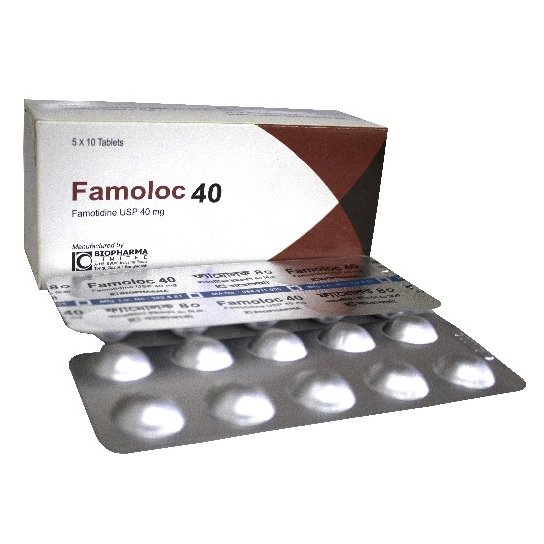
Famoloc 40 is an antacid. It reduces the amount of acid produced by your stomach. It is used to treat and prevent heartburn, indigestion and other symptoms caused by too much acid in the stomach. It is also used to treat and prevent stomach ulcers, reflux disease and some other rare conditions.
Famoloc 40 is also commonly prescribed to prevent stomach ulcers and heartburn caused due to the use of painkillers. It must be swallowed whole with water before or after a meal. The medicine must be taken in the dose and duration advised by the doctor. This medicine should relieve indigestion and heartburn within a few hours. If the symptoms persist or get worse even after 14 days of treatment, you should consult your doctor immediately. It is not recommended to take this medicine in severe stomach disease. You can help the medicine work better by eating smaller meals more often and avoiding spicy or oily foods.
Most people who take Famoloc 40 do not have any side effects but the most common ones include headache, dizziness, drowsiness, diarrhea and constipation. If you do get a side effect, it is usually mild and will go away when you stop taking this medicine or as you adjust to it. Consult your doctor if any of these side effects bother you or do not go away.
Before taking it, you should tell your doctor if you have any kidney or liver diseases so that your doctor can prescribe a suitable dose for you. Also, tell your doctor if you are taking other medications. This medicine is usually considered safe to take during pregnancy and breastfeeding if it has been prescribed by a doctor. Avoid drinking alcohol as this can increase the amount of acid in your stomach and make your symptoms worse.
- Gastroesophageal reflux disease (Acid reflux)
- Peptic ulcer disease
- Headache
- Diarrhea
- Constipation
-
Famoloc 40 is a well tolerated and safe medicine with a very low incidence of side effects.
-
Take it with or without food.
-
If you are also taking other medications to treat acidity (e.g., antacid), take them 2 hours before or after taking Famoloc 40.
-
Avoid taking soft drinks, citrus fruits like orange and lemon, which can irritate the stomach and increase acid secretion.
-
Inform your doctor if you do not feel better after taking Famoloc 40 for 2 weeks as you may be suffering from some other problems.
-
Inform your doctor if you have ever been diagnosed with kidney disease as dose of your medicine may need to be adjusted.
-
Do not stop taking the medication without talking to your doctor.
May be taken with or without food.
Reconstitution: For IV inj: Famotidine 20 mg is diluted to a total of 5 or 10 mL w/ NaCl 0.9% inj or dextrose 5% or 10% inj, lactated Ringer’s, water for inj soln to provide a soln containing approx 4 or 2 mg/mL, respectively.
For intermittent IV infusion: Famotidine 20 mg is added to dextrose 5% inj 100 mL or NaCl 0.9% inj, lactated Ringer’s soln, water for inj soln to provide a soln containing approximately 0.2 mg/mL.
IV Administration
Infuse at rate no faster than 10 mg/min
Oral
Benign gastric and duodenal ulceration
Adult: 40 mg daily at bedtime for 4-8 wk or 20 mg bid. Maintenance: 20 mg at bedtime to prevent recurrence of duodenal ulceration.
Gastro-oesophageal reflux disease
Adult: 20 mg bid for 6-12 wk or up to 40 mg bid if there is oesophageal ulceration. Maintenance: 20 mg bid to prevent recurrence.
Zollinger-Ellison syndrome
Adult: Initially, 20 mg 6 hrly, up to 800 mg/day if necessary.
Non-ulcer dyspepsia ; Heartburn
Adult: 10-20 mg once or bid.
Peptic Ulcer
1-16 years: 0.5 mg/kg PO at bedtime; not to exceed 40 mg/day
Gastroesophageal Reflux Disease
<3 months: 0.5 mg/kg PO once daily for up to 8 weeks
3-12 months: 0.5 mg/kg PO q12hr for up to 8 weeks
1-16 years: 1 mg/kg/day PO divided q12hr; individual dose not to exceed 40 mg
Heartburn
<12 years: Not established
>12 years: 10-20 mg q12 hr; may take 15-60 min before eating foods that could cause heartburn
Renal impairment:
CrCl (ml/min) Dosage Recommendation
<50 Reduce the dose by half or increase dosing interval to 36-48 hr.
Impaired renal function. Long term treatment should be avoided.
Lactation: Drug enters breast milk; use not recommended
1-10%
Headache (4.7%),Diarrhea (1.7%),Dizziness (1.3%),Constipation (1.2%)
Frequency Not Defined
Body as a whole: Fever, asthenia, fatigue
Cardiovascular: Arrhythmia, AV block, palpitation; prolonged QT interval in patients with impaired renal function, has been reported very rarely
Gastrointestinal: Cholestatic jaundice, hepatitis, liver enzyme abnormalities, vomiting, nausea, abdominal discomfort, anorexia, dry mouth
Hematologic: Rare cases of agranulocytosis, pancytopenia, leukopenia, thrombocytopenia
Hypersensitivity: Anaphylaxis, angioedema, orbital or facial edema, urticaria, rash, conjunctival injection
Musculoskeletal: Rhabdomyolysis, musculoskeletal pain including muscle cramps, arthralgia
Nervous system/psychiatric: Grand mal seizure; psychic disturbances, which were reversible in cases for which follow-up was obtained, including hallucinations, confusion, agitation, depression, anxiety, decreased libido; paresthesia; insomnia; somnolence; convulsions, in patients with impaired renal function, have been reported very rarely
Respiratory: Bronchospasm, interstitial pneumonia
Skin: Toxic epidermal necrolysis/Stevens-Johnson syndrome (very rare), alopecia, acne, pruritus, dry skin, flushing
Special senses: Tinnitus, taste disorder
Rare cases of impotence and rare cases of gynecomastia
Pregnancy
Available data in pregnant women are insufficient to establish a drug-associated risk of major birth defects, miscarriage or adverse maternal or fetal outcomes
Animal data
Animal reproduction studies have shown no adverse development effects at doses up to approximately 243 times, the recommended human dose of 80 mg per day for treatment of erosive esophagitis
Lactation
There are limited data available on presence in human breast milk; there were no effects on breastfed infant; there are no data on famotidine effects on milk production; drug reported present in milk of lactating rats; developmental and health benefits of breastfeeding should be considered along with mother’s clinical need for famotidine and any potential adverse effects on breastfed child or from underlying maternal condition





Reviews
Clear filtersThere are no reviews yet.