


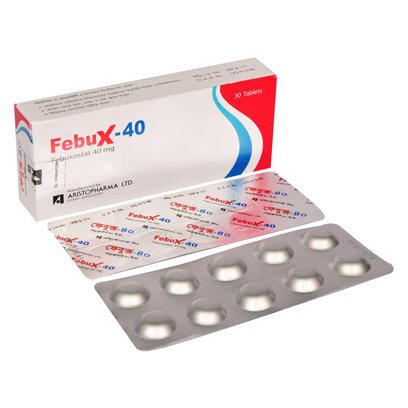

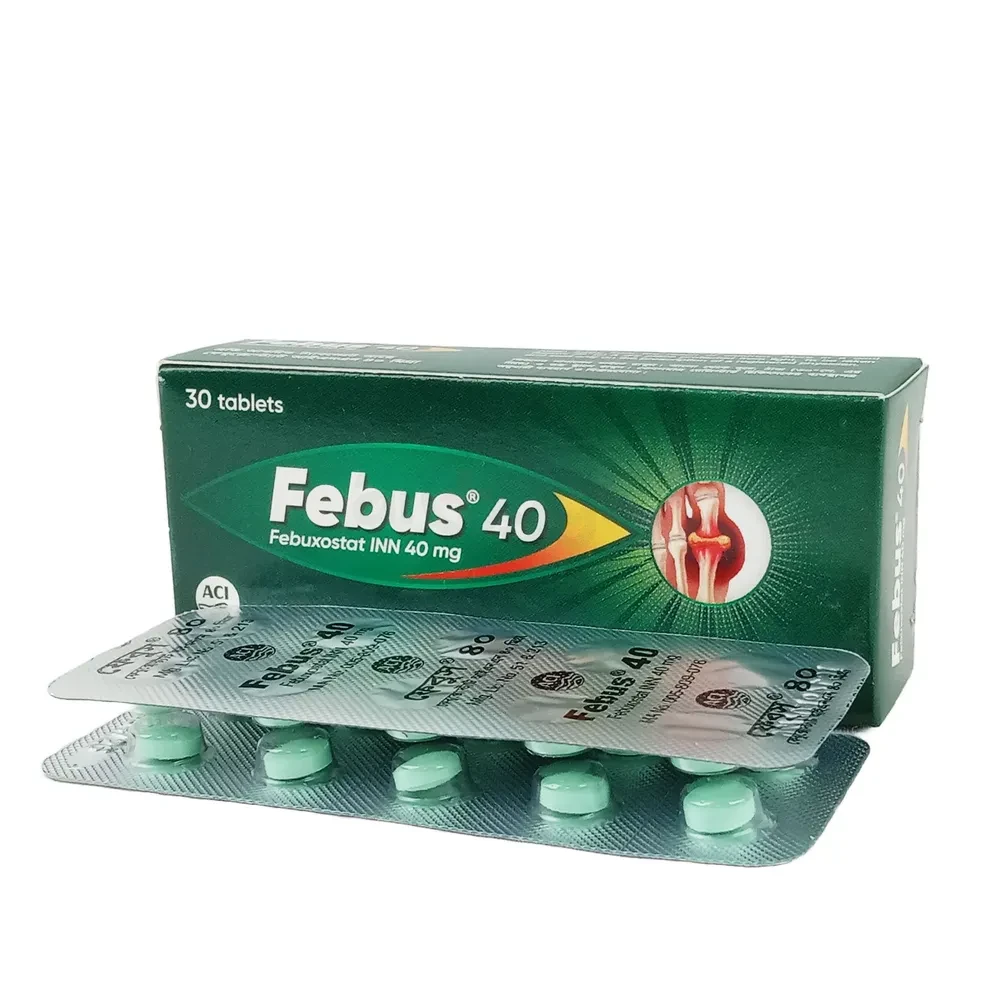
Medicine Overview of Febux 40mg Tablet
Introduction
Febux 40 is a medicine used to treat and prevent gout. Gout happens when there is too much uric acid in your body and it forms into crystals which can appear around your joints leading to painful and swollen joints. This medicine helps to keep uric acid levels low. Febux 40 can be taken with or without food. You should keep taking it as recommended by your doctor even when you are not having a gout attack. If you stop, your symptoms may get worse because of the formation of more crystals in your joints. You can help yourself by
Uses of Febux 40
- Gout
Side effects of Febux 40
Common
- Diarrhea
- Headache
- Increased liver enzymes
- Nausea
- Skin rash
- Gout flares
How to use Febux 40
Take this medicine in the dose and duration as advised by your doctor. Swallow it as a whole. Do not chew, crush or break it. Febux 40 may be taken with or without food, but it is better to take it at a fixed time.
How Febux 40 works
Febux 40 is a xanthine oxidase inhibitor. It works by decreasing blood uric acid, which is the chemical that causes gout.
What if you forget to take Febux 40?
If you miss a dose of Febux 40, take it as soon as possible. However, if it is almost time for your next dose, skip the missed dose and go back to your regular schedule. Do not double the dose.
Quick Tips
-
Your doctor has prescribed Febux 40 to reduce episodes of gout attack.
-
Take it at the same time every day, with or without food.
-
Take plenty of fluids (2-3 litres) daily while on Febux 40.
-
When you first start taking this medicine, you might have more gout attacks. Do not stop Febux 40 on having an acute attack of gout as that could make an attack worse.
-
Do not consume alcohol while taking this medicine as it may cause your gout to flare up.
-
Stop taking this medicine and inform your doctor straight away if you have symptoms like rash, itchiness, difficulties in breathing, fever or swelling of limbs or face.
Brief Description
Indication
Gout, Hyperuricemia
Administration
May be taken with or without food. May be taken w/o regard to antacid use.
Adult Dose
Chronic Gout
40 mg/day PO initially; maintenance: 40-80 mg/day; increased if serum uric acid is >6 mg/mL after 2 weeks
40 mg/day PO initially; maintenance: 40-80 mg/day; increased if serum uric acid is >6 mg/mL after 2 weeks
Hepatic impairment
Mild to moderate (Child-Pugh class A or B): Dosage adjustment not necessary
Severe (Child-Pugh class C): Data not available; use with caution
Child Dose
Safety and efficacy not established
Renal Dose
Renal impairment
Mild to moderate (CrCl 30-89 mL/min): Dosage adjustment not necessary
Severe (CrCl <30 mL/min): Data not available; use with caution
Mild to moderate (CrCl 30-89 mL/min): Dosage adjustment not necessary
Severe (CrCl <30 mL/min): Data not available; use with caution
Contraindication
Patients being treated with azathioprine, mercaptopurine, or theophylline.
Mode of Action
Febuxostat selectively inhibits xanthine oxidase, the enzyme that catalyses the conversion of hypoxanthine to xanthine to uric acid, thereby decreasing serum concentrations of uric acid.
Precaution
Cardiovascular death Patients with established cardiovascular (CV) disease treated with febuxostat had a higher rate of CV death compared with those treated with allopurinol in a CV outcomes study. Evaluate risks and benefits when prescribing febuxostat or continuing treatment. Gout Flare: An increase in gout flares is frequently observed during initiation of anti-hyperuricemic agents, including Febustat. If a gout flare occurs during treatment, Febustat need not be discontinued. Prophylactic therapy (i.e., non-steroidal anti-inflammatory drug (NSAID) or colchicine upon initiation of treatment) may be beneficial for up to six months. Lactation: Unknown whether drug is excreted into breast milk; use with
Side Effect
>1%
Arthralgia,Elevated liver function test (LFT) results,Liver function abnormalities,Nausea,Rash
Arthralgia,Elevated liver function test (LFT) results,Liver function abnormalities,Nausea,Rash
Pregnancy Category Note
Pregnancy Limited available data in pregnant women are insufficient to inform a drug associated risk of adverse developmental outcomes Animal data No adverse developmental effects observed in embryo-fetal development studies with oral administration of febuxostat to pregnant rats and rabbits during organogenesis at doses that produced maternal exposures up to 40 and 51 times, respectively, the exposure at the maximum recommended human dose (MRHD) No adverse developmental effects observed in a pre- and postnatal development study with administration of febuxostat to pregnant rats from organogenesis through lactation at an exposure ~11 times the MRHD Lactation There are no data on
Interaction
May increase plasma conc of mercaptopurine, azathioprine. Alteration of metabolism of xanthine oxidase substrate drugs (eg theophylline).





Reviews
Clear filtersThere are no reviews yet.