

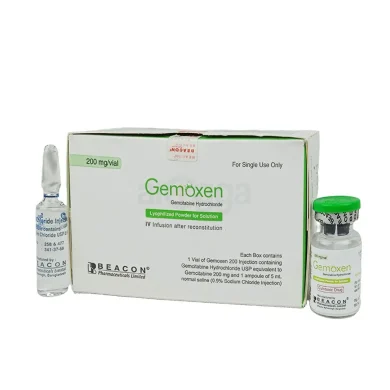
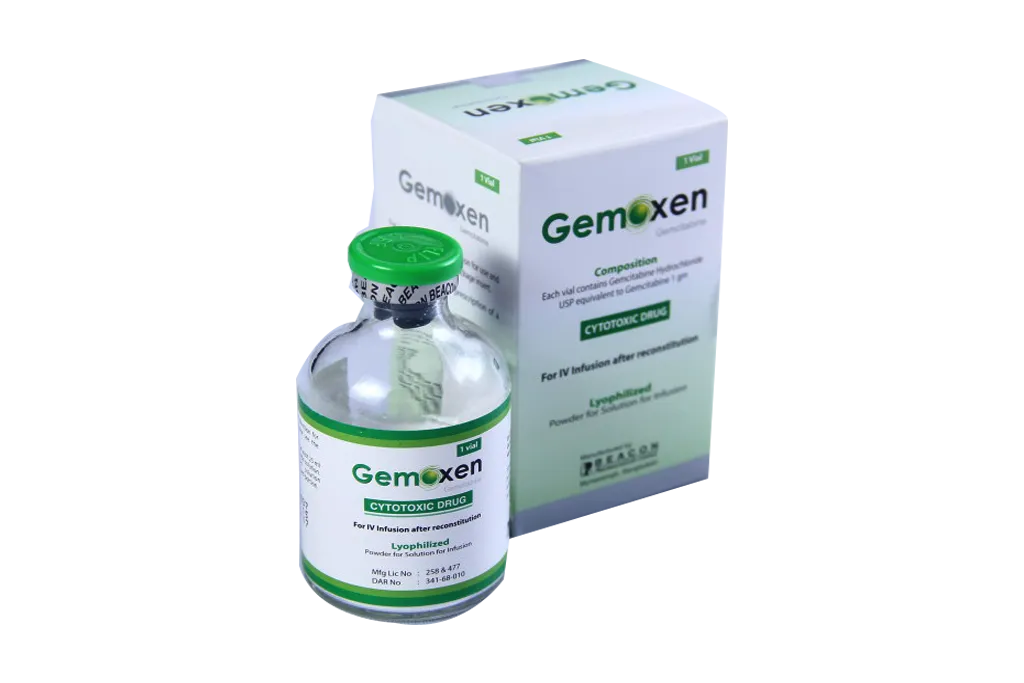

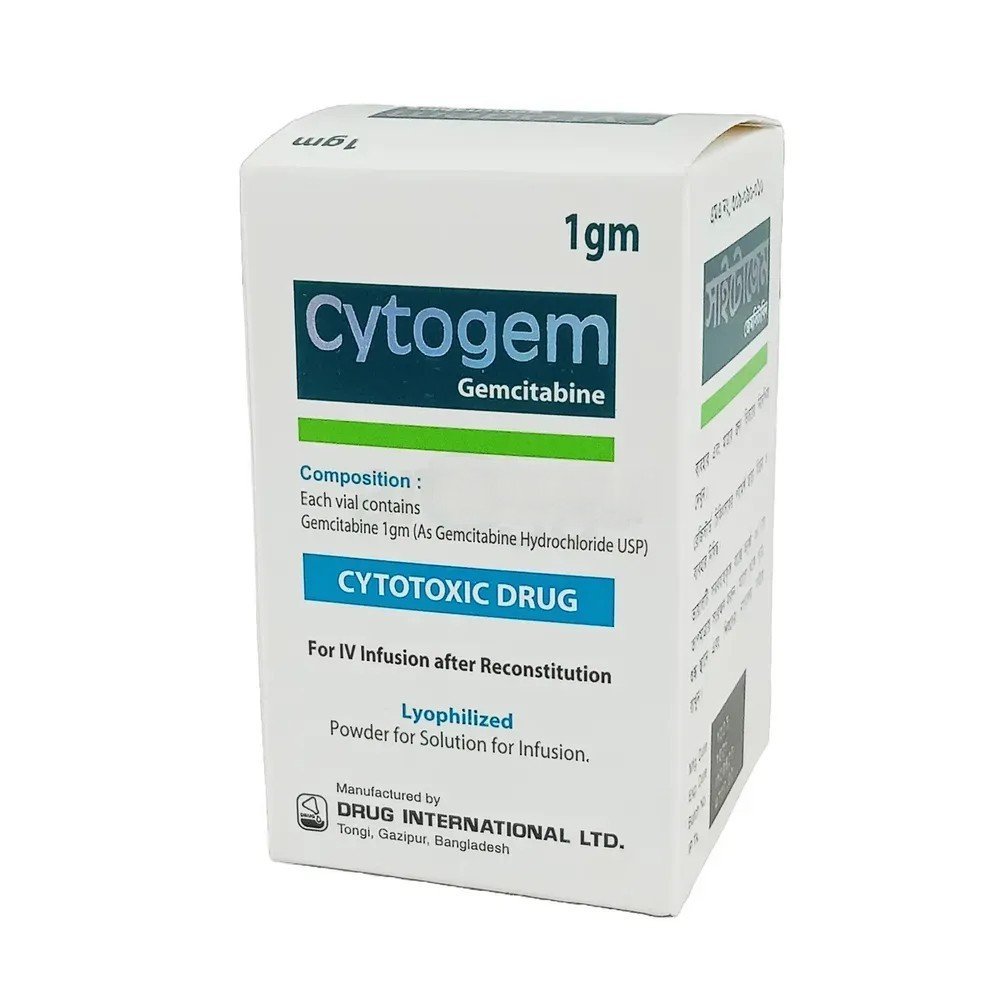
Medicine Overview of Gemoxen 1gm/vial Injection
Gemoxen is used in the treatment of non-small cell lung cancer, breast cancer, pancreatic cancer, urinary bladder cancer, and ovarian cancer.
Gemoxen is given as an injection by a qualified medical professional. Your doctor will decide what dose is necessary and how often you need to take it. This will depend on what you are being treated for and may change from time to time. You should take it exactly as your doctor has advised. Taking it in the wrong way or taking too much can cause very serious side effects. It may take several weeks or months for you to see or feel the benefits but do not stop taking it unless your doctor tells you to.
The most common side effects of this medicine include nausea, vomiting, loss of appetite, hair loss and low blood platelets. This medicine may reduce the number of blood cells (decrease red blood and white blood cells) in your blood, thereby, increasing the susceptibility to infections. Regular blood tests are required to check your blood cells along with heart, liver, and blood uric acid levels.
Before taking it, tell your doctor if you have heart disease, liver, or kidney problems or are taking any medicines to treat infections. Many other medicines can affect, or be affected by, this medicine so let your doctor know all medications you are using. This medicine is not recommended during pregnancy or while breastfeeding. The use of effective contraception by both males and females during treatment is important to avoid pregnancy.
- Non-small cell lung cancer
- Breast cancer
- Pancreatic cancer
- Urinary bladder cancer
- Ovarian cancer
- Nausea
- Vomiting
- Loss of appetite
- Hair loss
- Low blood platelets
- Allergic reaction
- Breathlessness
- Decreased white blood cell count
- Increased liver enzymes
- Anemia (low number of red blood cells)
- Flu-like symptoms
- Blood in urine
- Skin rash
- Protein in urine
-
Use a reliable contraceptive method to prevent pregnancy while you are taking this medicine.
-
Inform your doctor immediately if you notice any signs of infection such as fever, sore throat, rash or severe diarrhea.
Lung cancer, pancreatic cancer, bladder cancer, breast cancer, ovarian carcinoma
IV Preparation
Reconstitute 200 mg vial with 5 mL 0.9% NaCl OR 1000 mg vial with 25 mL 0.9% NaCl
IV Administration
For IV infusion only
Concentrated injection (10 mg/mL) must be diluted to 2 mg/mL prior to administration
Infuse over 30 min
Avoid rapid infusions
Pancreatic Cancer
Indicated as first-line treatment for locally advanced (nonresectable Stage II or Stage III) or metastatic (Stage IV) adenocarcinoma of the pancreas
1000 mg/m² IV infusion over 30 minutes once/week x7 weeks; rest 1 week, THEN
1000 mg/m² IV on Days 1, 8, and 15 of each 28-day cycle
Various regimens exist including monotherapy and in combination with other chemotherapy agents (eg, erlotinib, paclitaxel protein bound, capecitabine)
Non-small Cell Lung Cancer
1000 mg/m² IV infusion over 30 minutes on days 1, 8, and 15 of each 28-day cycle, OR
1250 mg/m² IV infusion over 30 minutes on days 1 and 8 of each 21-day cycle
Administer cisplatin 100 mg/m² IV after gemcitabine on day 1
Breast Cancer
1250 mg/m² IV infusion over 30 minutes on Days 1 and 8 of each 21-day cycle
With paclitaxel 175 mg/m² on Day 1 as a 3 hr infusion before gemcitabine
Ovarian Cancer
1000 mg/m² IV infusion over 30 minutes on Days 1 and 8 of each 21-day cycle
With carboplatin AUC 4 on Day 1 after gemcitabine
Children, hepatic and renal impairment. May impair ability to drive or operate machinery. Discontinue on 1st sign of microangiopathic haemolytic anaemia. Prolonged infusion time (>60 minutes) and more frequent than wkly dosing may increase toxicity. Monitor CBC before every dose. Increased risk of haemolytic uraemic syndrome and/or thrombocytcpenic purpura which may lead to irreversible renal failure.
Lactation: not known if excreted in breast milk; do not nurse
>10%
N/V (69%),Anemia (65%),Elev LFTs (68%),Neutropenia (63%),Leukopenia (62%),Pain (48%),Proteinuria (45%),Fever (41%),Hematuria (35%),Rash (30%),Thrombocytopenia (24%),Dyspnea (23%),Constipation (23%),Diarrhea (19%),Flu-like syndrome (19%),Hemorrhage (17%),BUN increased (16%),Infection (16%),Alopecia (15%),Edema (13%),Elev bilirubin (13%)
1-10%
Paresthesia (2-10%),Creatinine increased (2-8%),Inj site reactions (4%),Bronchospasm (2%)
Potentially Fatal: Oesophagitis and pneumonitis when given with radical radiotherapy to the thorax.




Reviews
Clear filtersThere are no reviews yet.