



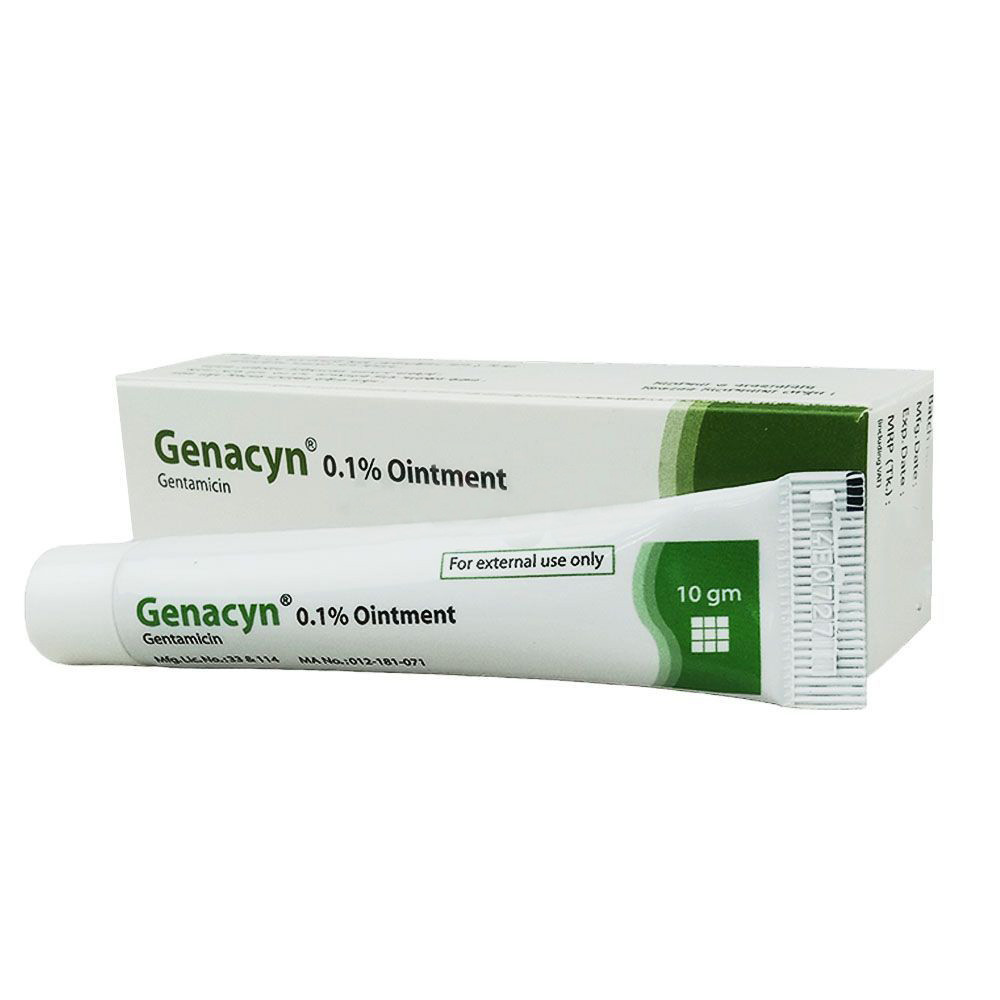

Introduction
Genacyn is an antibiotic used to treat minor skin infections (eg. folliculitis). It may also be used to treat infected cuts and wounds. This medicine stops the bacteria from growing, which helps to resolve your symptoms and cure the underlying infection. Genacyn is meant for external use only. It should be applied only to the affected area of the skin as per the dosage and schedule prescribed by your doctor. In order to get the most benefit, apply it regularly and preferably at a fixed time each day. Do not use larger amounts or apply it more often or for a longer duration than directed. This will only increase the risk of side effects. You may have to use it for some time before your condition starts to improve. Be patient and keep using it every day. You may observe minor irritation at the application site as a possible side effect of this medicine. Consult your doctor if this persists for a longer duration or if your condition does not improve. Avoid any contact with your eyes, nose or mouth. Rinse it off with water if you accidentally get the medicine in these areas. Before using it, inform your doctor if you have any previous history of allergy to it or any other medicine. Pregnant or breastfeeding women should consult their doctor before using it.
_
Uses of Genacyn
Bacterial skin infections
Side effects of Genacyn
Common
Application site irritation
How to use Genacyn
This medicine is for external use only. Use it in the dose and duration as advised by your doctor. Check the label for directions before use. Clean and dry the affected area and gently massage the ointment.
How Genacyn works
Genacyn is an antibiotic. It stops bacterial growth by preventing synthesis of essential proteins required by bacteria to carry out vital functions.
What if you forget to take Genacyn?
If you miss a dose of Genacyn, please consult your doctor.
Quick Tips
You have been prescribed Genacyn for the treatment of skin infections.
You may have to use it for a long time before your skin infection starts to improve. Be patient and keep using it every day.
It may cause minor burning, stinging, or irritation when applied. Inform your doctor if this does not go away
Avoid contact with your eyes, nose or mouth. Rinse it off with water if you accidentally get the cream in these areas.
If you think the area of skin you are treating has become more irritated and infected, you should stop using Genacyn and consult your doctor.
Brief Description
Indication
Bacterial skin infections, Burns, eczema, seborrheic dermatitis, ecthyma, excoriation, folliculitis, furunculosis, insect bites and stings, lacerations and abrasions, paronychia, pyoderma gangrenosum, skin cysts and abscesses, stasis ulcers and infected skin ulcers, bacterial, fungal or viral superinfection, sycosis barbae, minor surgical wounds, infected contact dermatitis caused by susceptible organisms.
_
Adult Dose
Adult: Apply to the affected area 3-4 times daily.
Child Dose
Child> 1 year: Apply to the affected area 3-4 times daily.
_
Contraindication
History of hypersensitivity to aminoglycoside; pregnancy; hepatic impairment, skin rash.
Mode of Action
Gentamicin is an aminoglycoside that binds to 30s and 50s ribosomal subunits of susceptible bacteria disrupting protein synthesis, thus rendering the bacterial cell membrane defective.
Precaution
Concurrent use of neuromuscular blocking agents; conditions predisposing to ototoxicity and nephrotoxicity; lactation. Monitor plasma concentrations of gentamicin in patients receiving high doses or prolonged courses, in infants, elderly, patients with renal impairment, cystic fibrosis or significant obesity. Monitor auditory and renal functions. Lactation: excreted in breast milk; no adverse effect on nursing infant
_
Side Effect
Allergic contact dermatitis, Erythema, Pruritus
_
Interaction
Synergistic with ampicillin, benzylpenicillin and other beta-lactam antibiotics. Increased risk of severe respiratory depression when used concurrently with anaesthetics or opioids. May reduce renal clearance of zalcitabine and induce hypocalcaemia when used with biphosphonates. Not to be used with agalsidase alfa or beta as it may inhibit alpha-galactosidase activity. Potentially Fatal: Increased incidence of ototoxicity when combined with ethacrynic acid and furosemide. Cephalosporins, ciclosporin, cisplatin, vancomycin, hydrocortisone and indometacin potentiate nephrotoxicity. Potentiates neuromuscular blocking agents.
_


Reviews
Clear filtersThere are no reviews yet.