



Introduction
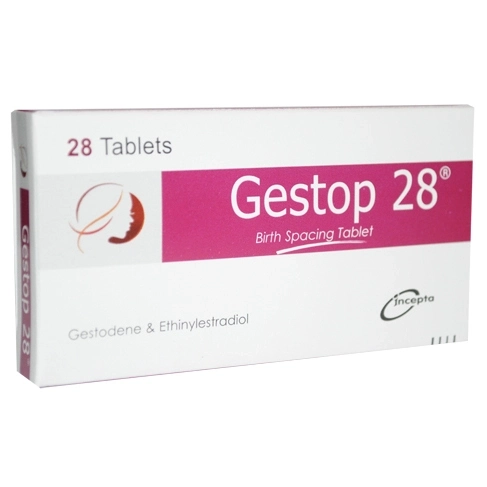
Gestop 28 is a combination of two medicines used for contraception (to prevent pregnancy) and in the treatment of irregular periods. This medicine helps to prevent release and fertilization of the egg. It may also help to reduce the risk of ovarian cancer. Gestop 28 can be taken with or without food, but take it at the same time to get the most benefit. It should be taken as your doctor’s advice. You should have to start taking the pill on the day one of your menstrual cycle and continue taking it for whole month and start with new pack once the pack get finished. If you experience vomiting with in 4 hours of dose intake, take another tablet. You body may take 7 days to get adjust with medicine, hence use condom during first week to avoid pregnancy. In case you missed your dose and you are late by 12 hours in taking the missed dose, in that case must use a condom while intercourse for a period of 2 days. Nausea, stomach pain, headache, breast pain, and weight gain are some commonly seen side effects of this medicine. If these bother you, or appear serious, let your doctor know. There may be ways of reducing or preventing them. You might experience spotting or bleeding between menstrual periods or missed periods. Consult with your doctor if this occurs frequently or persists longer. Inform your doctor if you notice swelling and pain in your limbs, shortness of breath, chest pain or changes in vision, as it may be a sign of blood clot. Before taking this medicine, let your doctor know if you smoke and are over 35, or if you have ever had a heart attack or have cancer of uterus/cervix, or vagina. Your doctor should also know about all other medicines you are taking as many of these may make this medicine less effective or change the way it works. Do not take the medicine if you are pregnant already or breastfeeding. You might be asked for regular blood test and breast examination while on treatment.
_
Uses of Gestop 28
Contraception
Side effects of Gestop 28
Common
Nausea
Stomach pain
Headache
Weight gain
Breast pain
Irregular uterine bleeding
How to use Gestop 28
Take this medicine in the dose and duration as advised by your doctor. Swallow it as a whole. Do not chew, crush or break it. Gestop 28 may be taken with or without food, but it is better to take it at a fixed time.
How Gestop 28 works
Gestop 28 is a combined oral contraceptive pill. It works by preventing the release of egg (ovulation) and affecting sperm movement in the womb to prevent its union with the egg. It also changes the lining of the womb and renders it unsuitable for pregnancy.
Quick Tips
Your doctor has prescribed Gestop 28 to help you prevent pregnancy.
It also results in lighter, less painful and more regular menstrual bleeding.
It may help reduce the risk of ovarian cancer.
Take your pill at the same time every day to help you remember to take it.
You may experience menstrual irregularities such as spotting or bleeding between menstrual periods or missed periods. Consult your doctor if this persists.
Do not use Gestop 28 if you are obese, over 35, smoke, on prolonged bed rest, or have a history of blood clots.
Stop taking this medicine and inform your doctor immediately if you notice unexplained swelling and pain in your limbs, shortness of breath, chest pain, severe headache, or changes in vision. These could be symptoms of a blood clot in a vein.
Stop taking Gestop 28 and inform your doctor immediately if you notice your skin and whites of the eye turning yellow (jaundice), severe stomach pain, severe depression or if you think you could be pregnant.
Brief Description
Indication
Contraception
Adult Dose
Oral Oral contraception Adult: For a 21-day pack: 1 tablet daily for 21 days starting on the 1st day of menstruation, followed by 7 pill-free days, during which withdrawal bleeding will usually occur. The 2nd pack should be started immediately on the day after the 7 pill-free days, regardless of whether the bleeding has stopped. For a 28-day pack, 1 tablet daily for 28 days, to be started on the 1st day of menstruation, withdrawal bleeding will usually occur during the period when the 7 non-hormonal tablets are taken. Start the next pack immediately on the day after the last pill of the previous pack.
_
Contraindication
Severe hepatic impairment, jaundice or persistent itching during a previous pregnancy, Dubin-Johnson syndrome, Rotor syndrome, previous or existing liver tumours. Personal or family history of venous thromboembolism (VTE). Risk factors for VTE. Sickle-cell anaemia, severe DM with vascular changes, lipid metabolism disorders, undiagnosed abnormal vaginal bleeding, history of herpes gestationis, worsening of otosclerosis during pregnancy. Exisiting or history of mammary or endometrial carcinoma. Pregnancy.
Mode of Action
Gestodene is a progestogen while ethinylestradiol is a synthetic oestrogen. Used together, they inhibit ovulation by suppressing the mid-cycle surge of luteinising hormone which causes changes in the cervical mucus, thus forming a barrier to sperm, and making the endometrium unreceptive to implantation.
Precaution
May increase risk of arterial and venous thrombotic and thromboembolic diseases e.g. MI, stroke, deep venous thrombosis and pulmonary embolism. Caution when used in patients who are obese (BMI >30 kg/m2, have hypertension or dyslipoproteinaemia, vavular heart disease or atrial fibrillation. Heavy smokers >35 yr of age. Recommended to discontinue use at least 6 wk before and for 2 wk after elective surgery that may involve prolonged immobilisation. May increase severity and frequency of migraines. May increase risk of cervical carcinoma. May affect glucose tolerance. Efficacy of oral contraceptive may be reduced in the event of severe diarrhoea or vomiting. Lactation.
_
Side Effect
Headaches, body wt changes, depressed/altered moods, breast pain or tenderness, changes in libido. GI disturbance such as nausea and abdominal pain.
Interaction
Concurrent use with hepatic enzyme inducers e.g. barbiturates, primidone, phenobarbitone, phenytoin, phenylbutazone, rifampicin, carbamazepine and griseofulvin may affect contraceptive efficacy. Short courses of broad-spectrum antibiotics may also reduce the efficacy of the oral contraceptive. Concurrent use with HIV protease and non-nucleoside reverse transcriptase inhibitors may affect hepatic metabolism of gestodene and/or ethinylestradiol. May increase plasma concentrations of ciclosporin and decrease the serum levels of lamotrigine. Concurrent use with felbamate may increase the clearance of gestodene. Gestodene may increase serum levels of buprenorphine. Co-trimoxazole, miconazole and etoricoxib may increase serum levels of ethinylestradiol. Aprepitant, modafinil and bosentan may reduce the serum levels of ethinylestradiol. Metabolism of omeprazole may be inhibited by ethinylestradiol. GI absorption of ethinylestradiol may be increased by concurrent admin of paracetamol.
_



Reviews
Clear filtersThere are no reviews yet.