



Introduction
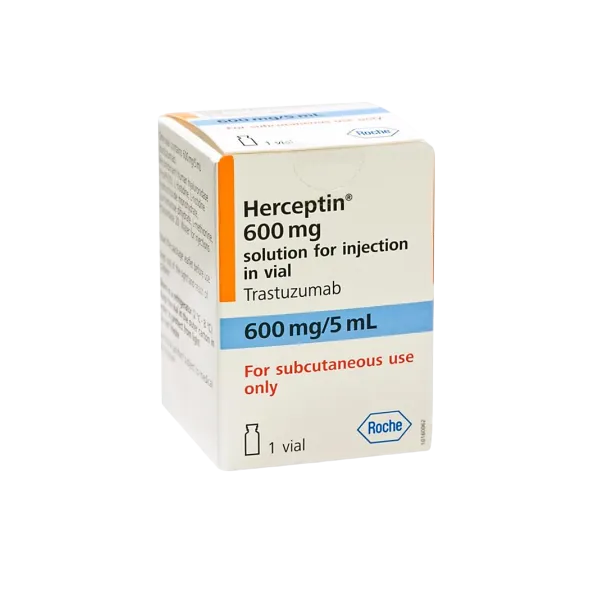
Herceptin 600 is used in the treatment of breast and stomach cancer. It works by killing the cancer cells by inhibiting HER2 (human epidermal growth factor receptor protein). Herceptin 600 is given as an injection by a qualified medical professional. Your doctor will decide what dose is necessary and how often you need to take it. This will depend on what you are being treated for and may change from time to time. You should take it exactly as your doctor has advised. Taking it in the wrong way or taking too much can cause very serious side effects. It may take several weeks or months for you to see or feel the benefits but do not stop taking it unless your doctor tells you to. The most common side effects of this medicine include nausea, headache, rash, insomnia, and infection. This medicine may reduce the number of blood cells (decrease red blood and white blood cells) in your blood, thereby, increasing the susceptibility to infections. Regular blood tests are required to check your blood cells along with heart, liver, and blood uric acid levels. You must have to inform your doctor if you experience breathlessness, cough, shivering, swelling of legs and arm. Many other medicines can affect, or be affected by, this medicine so let your healthcare team know all medications you are using. This medicine is not recommended during pregnancy or while breastfeeding. The use of effective contraception by both males and females during treatment is important to avoid pregnancy.
_
Uses of Herceptin 600
Breast cancer
Stomach cancer
Side effects of Herceptin 600
Common
Anemia (low number of red blood cells)
Chills
Common cold
Cough
Decreased blood cells (red cells, white cells, and platelets)
Diarrhea
Fatigue
Fever
Headache
Heart failure
Infection
Insomnia (difficulty in sleeping)
Mucosal inflammation
Nausea
Rash
Stomatitis (Inflammation of the mouth)
Taste change
Upper respiratory tract infection
Weight loss
How to use Herceptin 600
Your doctor or nurse will give you this medicine. Kindly do not self administer.
How Herceptin 600 works
Herceptin 600 is a recombinant IgG1 monoclonal antibody. It works against the HER2 (human epidermal growth factor receptor protein) receptors which are responsible for the over-proliferation of cancer cells in breast cancer and stomach cancer cells. It destroys the cancer cells by inhibiting HER2. It also inhibits various cancer-causing downstream signaling pathways.
What if you forget to take Herceptin 600?
If you miss a dose of Herceptin 600, please consult your doctor.
Quick Tips
It is given as an injection into your vein or under the skin, usually over 1 hour.
Use effective contraception method to prevent pregnancy while taking this medicine and for 7 months after you stop the treatment.
Your doctor will monitor your heart regularly while taking this medicine. Inform your doctor if you notice symptoms such as breathlessness, cough, shivering, swelling of legs and arm.
Inform your doctor if you are pregnant, planning pregnancy or breastfeeding.
Brief Description
Indication
Breast cancer, Gastric cancer
Administration
IV Administration Not for IV push or bolus administration Administer initial IV infusion over 90 min Subsequent weekly IV infusions may be administered over 30 min if prior infusions are well tolerated
_
Adult Dose
Intravenous Breast Cancer Adjuvant treatment Indicated for adjuvant treatment of HER-2 overexpressing breast cancer Administer during and following paclitaxel, docetaxel, or docetaxel/carboplatin 4 mg/kg IV over 90 minutes, THEN 2 mg/kg IV over 30 minutes qWeek during chemotherapy for the first 12 weeks (paclitaxel or docetaxel) or 18 weeks (docetaxel/carboplatin) One week following the last weekly dose administer at 6 mg/kg as an IV infusion over 30?90 min every three weeks As single agent within three wk following completion of multi-modality, anthracycline based chemotherapy regimens: Initial dose at 8 mg/kg as an IV infusion over 90 min; subsequent doses at 6 mg/kg as an IV infusion over 30?90 min every three wks Extending adjuvant treatment beyond one year not recommended Metastatic breast cancer Treat as a single agent or in combination with paclitaxel 4 mg/kg IV over 90 minutes, THEN 2 mg/kg IV over 30 minutes qWeek Gastric Cancer Indicated for treatment of HER2-overexpressing metastatic gastric or gastroesophageal junction adenocarcinoma Administered in combination with cisplatin and capecitabine or 5-fluorouracil who have not received prior treatment for metastatic disease First cycle: 8 mg/kg IV; infuse IV over 90 min Subsequent cycles: 6 mg/kg IV q3wk; infuse IV over 30-90 min Continue q3week cycles until disease progression
_
Child Dose
Safety and efficacy not established
_
Contraindication
Lactation (start only 6 mth after last dose of drug). Do not admin by rapid IV or bolus inj.
Mode of Action
Trastuzumab, a monoclonal antibody, has action directed against a cell surface protein produced by human epidermal growth factor receptor 2 (HER2). It inhibits proliferation of tumour cells that overexpress HER2 e.g. in 1/3 of breast cancer.
Precaution
Patient w/ pre-existing CV and pulmonary disease; extensive pulmonary tumour involvement. Pregnancy and lactation. Monitoring Parameters Monitor cardiac function prior and during treatment. Lactation: not known if excreted in breast milk, discontinue nursing during treatment and for 6 months after last dose
_
Side Effect
>10% Pain (47%),Asthenia (42%),Fever (36%),Nausea (33%),Chills (32%),Cough (26%),Headache (26%),Diarrhea (25%),Vomiting (23%),Abdominal pain (22%),Back pain (22%),Dyspnea (22%),Infection (20%),Rash (18%),Anorexia (14%),Insomnia (14%),Dizziness (13%) 1-10% Flu-like syndrome (10%),Peripheral edema (10%),CHF (7%),Depression (6%),Tachycardia (5%),UTI (5%),Anemia (4%),Hypersensitivity (3%),Leukopenia (3%) Potentially Fatal: Severe hypersensitivity (anaphylaxis) and infusion reactions; pulmonary events e.g. acute respiratory distress syndrome; cardiotoxicity. Neutropenia (especially when given with chemotherapy).
_
Interaction
Increased risk of severe cardiotoxicity with anthracyclines. Increased risk of leukopenia and anaemia in combination chemotherapy (e.g. paclitaxel). Paclitaxel may decrease the clearance of trastuzumab. Increased risk of bleeding with warfarin.




Reviews
Clear filtersThere are no reviews yet.