


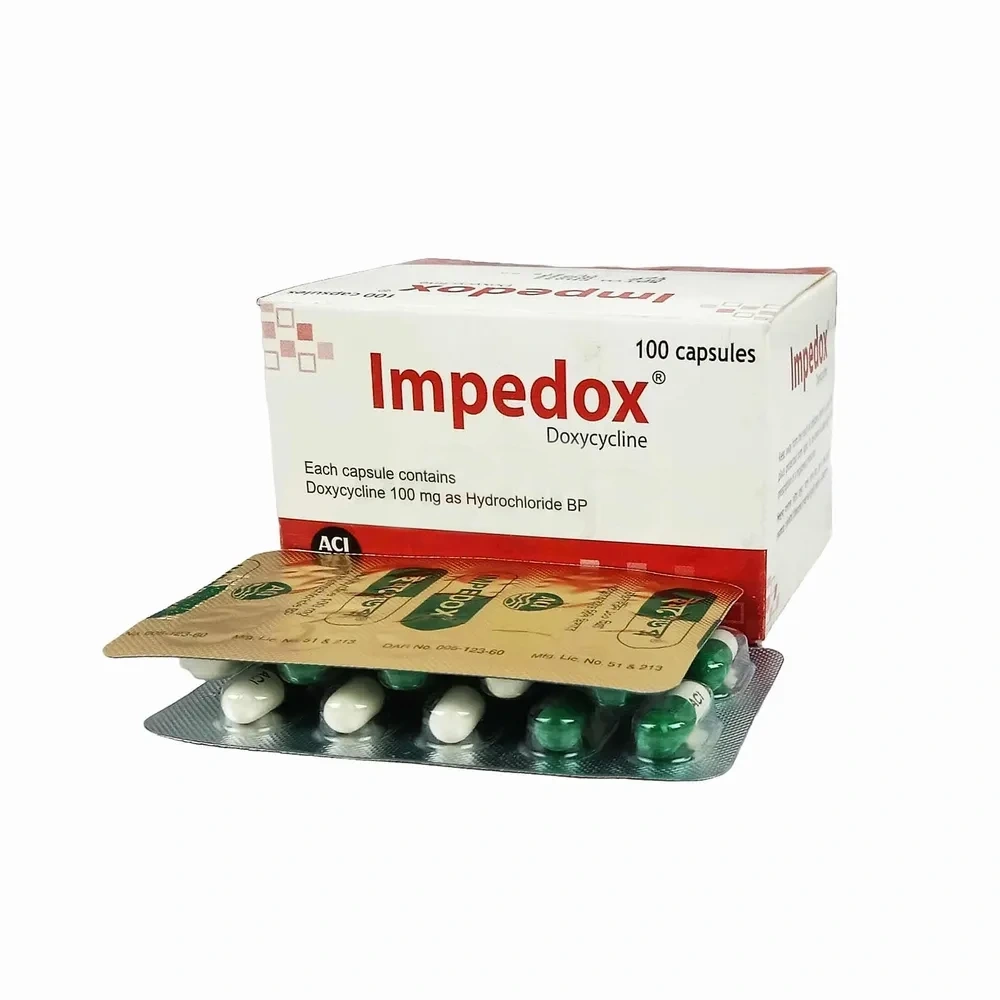

Medicine Overview of Impedox 100mg Capsule
Impedox is an antibiotic medicine used to treat bacterial infections in your body. It is effective in some infections of the lungs, urinary tract, eyes, and others. It kills bacteria, which helps to improve your symptoms and cure the infection.
Impedox is also used to treat many sexually transmitted diseases and a skin condition known as acne. It should be taken preferably either one hour before or 2 hours after a meal. You should take it regularly at evenly spaced intervals as per the schedule prescribed by your doctor. Taking it at the same time every day will help you to remember to take it. The dose will depend on what you are being treated for, but you should always complete a full course of this antibiotic as prescribed by your doctor. Do not stop taking it until you have finished, even when you feel better. If you stop taking it early, some bacteria may survive and the infection may come back.
Commonly seen side effects seen with this medicine include vomiting, nausea, and diarrhea. These are usually temporary and subside with the completion of treatment. Consult your doctor if you find these side effects bother or worry you.
Inform your doctor if you have any previous history of allergy to any antibiotic before taking this medicine. You should also let your doctor know all other medicines you are taking as they may affect, or be affected by this medicine. Pregnant or breastfeeding women should consult their doctor before using it. It may blur your vision or make you feel sleepy and dizzy. Do not drive if these symptoms occur.
Show less
- Bacterial infections
- Vomiting
- Nausea
- Diarrhea
Avoid Impedox with dairy products such as milk, cheese, curd, butter, paneer and ice cream.
-
Your doctor has prescribed Impedox to cure your infection and improve symptoms.
-
Take it with food and plenty of water to avoid stomach upset.
-
Do not skip any doses and finish the full course of treatment even if you feel better. Stopping it early may make the infection to come back and harder to treat.
-
Take it while you are sitting or standing, to prevent any throat irritation. Do not lie down for at least 30 minutes after taking Impedox.
-
Diarrhea may occur as a side effect but should stop when your course is complete. Inform your doctor if it doesn’t stop or if you find blood in your stools.
-
Avoid excessive sun exposure and use sunscreen and protective clothing when outdoors.
May be taken with or without food. Take w/ a full glass of water & remain upright for at least ½ hr. Take w/ food or milk if GI irritation occurs.
Show less
Oral
Susceptible infections
Adult: 200 mg on day 1 as a single or in divided doses, followed by 100 mg once daily. Severe infections: Maintain initial dose throughout the course of treatment.
Sexually Transmitted Diseases
Uncomplicated gonococcal infection of the cervix, urethra, and rectum, Uncomplicated urethral, endocervical, or rectal infection caused by Chlamydia trachomatis, Nongonococcal urethritis caused by C. trachomatis and U. urealyticum
100 mg PO q12hr for 7 days
Syphilis (early): Patients who are allergic to penicillin should be treated with doxycycline 100 mg PO BID x 2 weeks
Syphilis >1 year duration: Patients who are allergic to penicillin should be treated with doxycycline
100 mg PO BID x 4 weeks
Acute epididymo-orchitis caused by N. gonorrhoeae or C trachomatis:
100 mg PO BID x least 10 days
Acne, Rosacea
Adult: 50 mg daily for 6-12 wk.
Malaria
Indicated for prophylaxis of malaria due to Plasmodium falciparum in short-term travelers (ie, <4 months) to areas with chloroquine and/or pyrimethamine-sulfadoxine resistant strain
Prophylaxis: 100 mg PO qDay; begin taking 1-2 days before travel and continue daily during travel and for 4 weeks after traveler leaves malaria infested area
Intestinal Amebiasis, Respiratory Tract Infections
Indicated for adjunctive therapy to amebicides for acute intestinal amebiasis
100 PO q12hr on day 1, then 100 mg PO qDay
Rickettsial Infections
Indicated for Rocky Mountain spotted fever, typhus fever and the typhus group, Q fever, rickettsial pox, and tick fevers caused by Rickettsiae
100 PO q12hr on day 1, then 100 mg PO qDay
Brucellosis
Brucellosis due to Brucella species
100 mg PO twice daily for 6 weeks with rifampin or streptomycin
Cholera
Indicated for cholera caused by Vibrio cholerae
300 mg PO once; adjunct to fluid and electrolyte replacement
Acute Bacteria Rhinosinusitis
200 mg/day PO qDay or divided BID for 5-7 days
Anthrax
Postexposure prophylaxis: 100 mg PO BID for 60 days
Infective Endocarditis
Suspected Bartonella infection with a negative culture: 100 mg PO BID x 6 weeks in combination with gentamicin and ceftriaxone
Positive culture Bartonella infection: 100 mg PO BID x 6 weeks in combination with gentamicin or rifampin
Show less
Children: PO >8 y, <45 kg: 2–4 mg/kg/day q12h
Show less
It is contraindicated to patients with known hypersensitivity to any of the tetracyclines. It is also contraindicated in severe hepatic disorder and patients with systemic lupas erythematosus. Concomitant intake of alkalis, antacids and iron may interfere with the absorption of Doxycycline. It is advisable to avoid giving doxycycline in conjunction with penicillin. Doxycycline should not be used in pregnant women unless, in the judgment of the physician, it is essential for the welfare of the patient.
Show less
The use of drugs of tetracycline group during tooth development (last half of pregnancy, infancy and childhood to the age of 12 years) may cause permanent discoloration of the teeth. Tetracyclines, therefore, should not be used in this age group unless other drugs are not likely to be effective or are contraindicated.
Lactation: Enters breast milk; Not recommended
Show less
Hypotension, pericarditis, angioneurotic oedema, dyspnoea, serum sickness, peripheral oedema, tachycardia, urticaria, haemolytic anaemia, thrombocytopenia, neutropenia, porphyria, eosinophilia, brown-black microscopic discolouration of thyroid tissue, headache, bulging fontanelles in infants and benign intracranial HTN in adults, blurring of vision, scotomata, diplopia, tinnitus, abdominal pain, stomatitis, anorexia, nausea, vomiting, diarrhoea, dyspepsia, oesophageal ulceration, discolouration of teeth, enamel hypoplasia, transient increases in LFT and BUN, jaundice, pancreatitis, rashes, exfoliative dermatitis, photo-onycholysis, photosensitivity, arthralgia, myalgia, vaginitis.
Potentially Fatal: Anaphylactoid reactions, Stevens-Johnson syndrome, toxic epidermal necrolysis, Clostridium difficile-associated disease (CDAD), hepatotoxicity.
Show less
Pregnancy
Not studied in pregnant patients; the vast majority of reported experience with doxycycline during human pregnancy is short-term, first trimester exposure; there are no human data available to assess effects of long-term therapy of doxycycline in pregnant women, such as that proposed for treatment of anthrax exposure; it should not be used in pregnant women unless, in judgment of physician, it is essential for welfare of patient; evidence of embryotoxicity has been noted in animals treated early in pregnancy
Lactation
Tetracyclines are excreted in human milk; however, extent of absorption of tetracyclines, including doxycycline, by breastfed infant is not known; short-term use by lactating women is not necessarily contraindicated; however, effects of prolonged exposure to doxycycline in breast milk are unknown;11 because of potential for serious adverse reactions in nursing infants from doxycycline, a decision should be made whether to discontinue nursing or to discontinue the drug, taking into account importance of drug to mother
Show less
Concomitant use w/ isotretinoin is known to cause pseudotumour cerebri. Prolonged prothrombin time w/ anticoagulants (e.g. warfarin). May interfere w/ the bactericidal action of penicillin. Impaired absorption w/ antacids containing Al, Ca, or Mg, oral Zn, Fe salts, and bismuth preparations. Increased metabolism w/ phenobarbital, carbamazepine, primidone and phenytoin. Risk of breakthrough bleeding w/ oral contraceptives. Increased plasma concentration of ciclosporin. Decreased half-life w/ hepatic enzymes inducers (e.g. rifampicin).
Potentially Fatal: Concurrent use w/ methoxyflurane may result to fatal renal toxicity.
Show less




Reviews
Clear filtersThere are no reviews yet.