



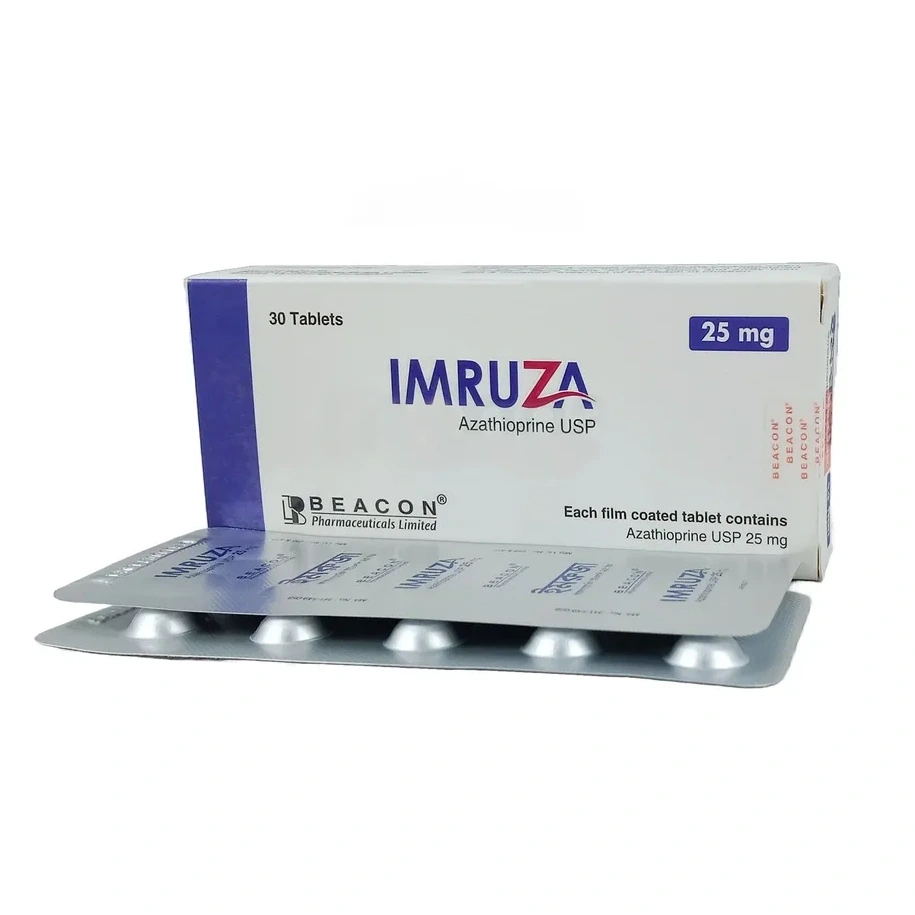

Medicine Overview of Imruza 25mg Tablet
Imruza 25 belongs to a group of medicines called immunosuppressants. It is used with other medicines to prevent your body rejecting an organ (such as a kidney, heart or liver) after a transplant. It works by weakening your body’s immune system, so it does not attack the new organ.
The amount of Imruza 25 to be taken and how often you need to take it will depend on the type of transplant you have. Follow your doctor’s instructions on this. You should take it along with food. Swallow it as a whole, do not crush, chew, break, or open them. Take the medicine regularly to get the most benefit and keep taking it even if you feel well. If you stop taking it, you may increase the chances of rejecting your transplanted organ. The treatment will continue for as long as you need it to prevent rejection.
It has many potential side effects. The most common are loss of appetite, nausea and increased risk of bleeding. Because it suppresses your immune system, you may catch more infections than usual. There’s also an increased risk of developing some cancers for this reason. To reduce your risk of skin cancer, limit your exposure to the sun and use a protective cream. There is a long list of potential side effects. You should ask your doctor about them and what signs to look out for because some can be serious and need urgent medical attention.
Imruza 25 can cause birth defects and miscarriages so do not take it if you are pregnant, planning to become pregnant or breastfeeding. You should talk to your doctor before taking this medicine if you have any signs of infection or if you have any unexpected bruising or bleeding. Your doctor also needs to know what other medicines you are taking as there are many which interact with this medicine and affect the way it works. You will have regular tests to check for any changes in the number of your blood cells.
- Prevention of organ rejection in transplant patients
- Rheumatoid arthritis
- Decreased white blood cell count
- Increased bleeding tendency
- Nausea
- Infection
- Loss of appetite
-
Your doctor has prescribed Imruza 25 to stop the body from rejecting a transplanted organ (e.g. kidney, heart or liver).
-
Imruza 25 also relieves joint pain and inflammation in rheumatoid arthritis.
-
You may have to take additional medications along with Imruza 25 for better relief of symptoms.
-
Avoid contact with people who have cold, flu or other contagious illness. Notify your doctor if you have any signs of infection such as a fever or sore throat.
-
Inform your doctor if you are pregnant or planning to conceive or breastfeeding.
Rheumatoid Arthritis
1 mg/kg/day PO initially in single daily dose or divided q12hr; may be increased by 0.5 mg/kg/day after 6-8 weeks, then by 0.5 mg/kg/day every 4 weeks; not to exceed 2.5 mg/kg/day
Maintenance: Reduce daily dose by 0.5 mg/kg every 4 weeks until lowest effective dosage is reached
Kidney Transplantation
Prevention of transplant rejection
3-5 mg/kg/day PO initially on day of transplant or 3 days before transplant (rare)
Maintenance: 1-3 mg/kg/day PO
Auto-immune diseases 1-3 mg/kg/day.
Hepatic Impairment Reduce dose.
Juvenile Idiopathic Arthritis
1 mg/kg/day PO initially in single daily dose or divided q12hr; may be increased by 0.5 mg/kg/day after 6-8 weeks, then by 0.5 mg/kg/day every 4 weeks; not to exceed 2.5 mg/kg/day
Maintenance: Reduce daily dose by 0.5 mg/kg every 4 weeks until lowest effective dosage is reached
Increased risk of serious infections and neoplasia in chronic immunosuppression; leucopenia, thrombocytopenia, renal or hepatic impairment. Increased risk of haematologic toxicity in patients with thiopurine methyltransferase deficiency. Monitor CBC (including platelet count) wkly during 1st mth, twice mthly for 2nd and 3rd mth, then mthly; monitor more frequently if there are dosage adjustments. Monitor LFT periodically; discontinue treatment if jaundice occurs. Reduce dose promptly or withdraw drug temporary if there is rapid decrease/persistently low WBC or signs of bone marrow depression. Dose reduction may be necessary in patients with reduced TPMT (thiopurine methyltransferase) activity.
Lactation: Drug excreted at low levels in breast milk; use not recommended
>10%
Leukopenia (28-50%),Infection (20%)
<1%
Lymphoma
Frequency Not Defined
Fever, chills; bone marrow depression, thrombocytopenia or anaemia; anorexia, nausea, diarrhoea; arthralgias; secondary infections; hepatotoxicity, rash, alopoecia.
Potentially Fatal: Myelosuppression, mutagenicity and carcinogenicity; veno-occlussive liver disease.
Pregnancy category: D
Lactation: Drug excreted at low levels in breast milk; use not recommended
Increased risk of haematotoxicity with aminosalicylates, drugs that affect myelopoesis e.g. co-trimoxazole or trimethoprim. Increased risk of infections with intra-uterine devices and live vaccines. Increased risk of leucopenia with ACE inhibitors. Concurrent use may reduce the anticoagulant effect of vitamin K antagonists e.g. warfarin. Increased risk of myelosuppressive effects when used with drugs that inhibit TPMT (thiopurine methyltransferase) or xanthine oxidase e.g. olsalazine, allopurinol.
Potentially Fatal: Increased risk of serious haematotoxicity or hepatotoxicity with leflunomide. Increased risk of bone marrow suppression with mycophenolate mofetil. Increased risk of infections and malignancies with efalizumab.


Reviews
Clear filtersThere are no reviews yet.