

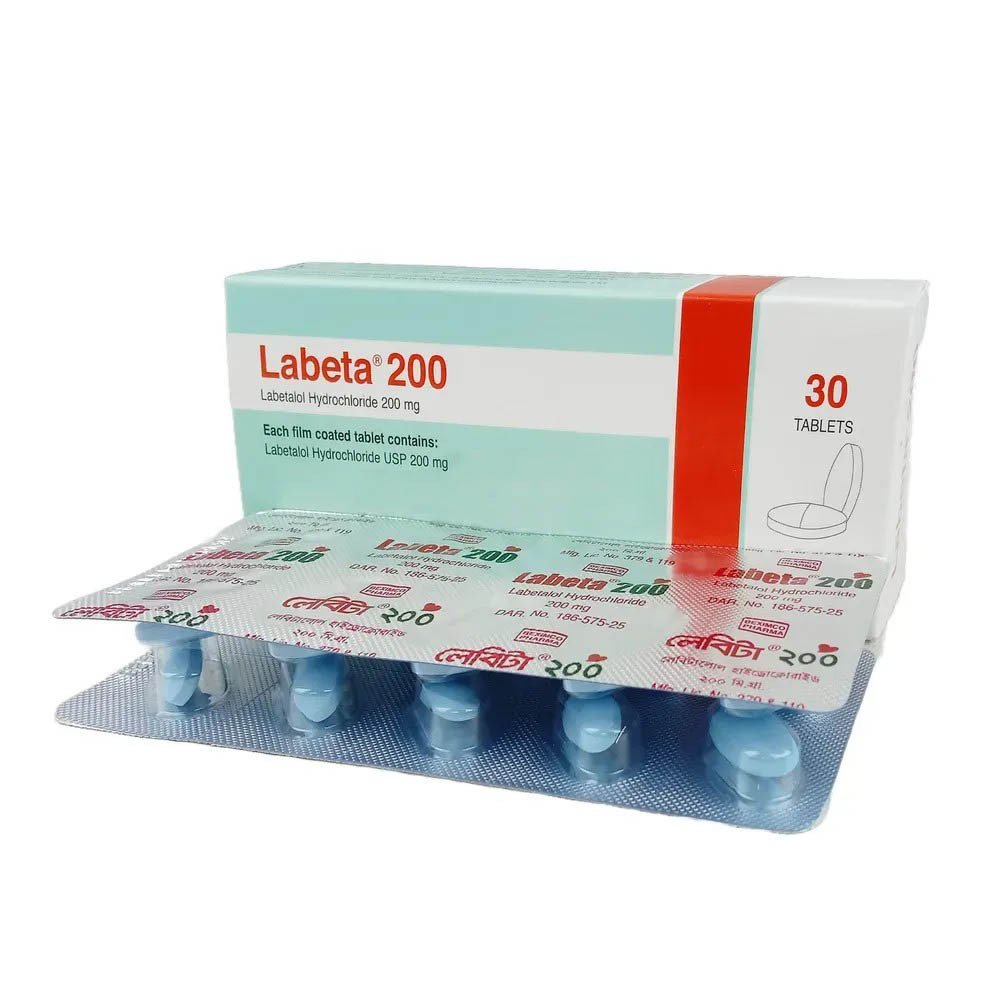

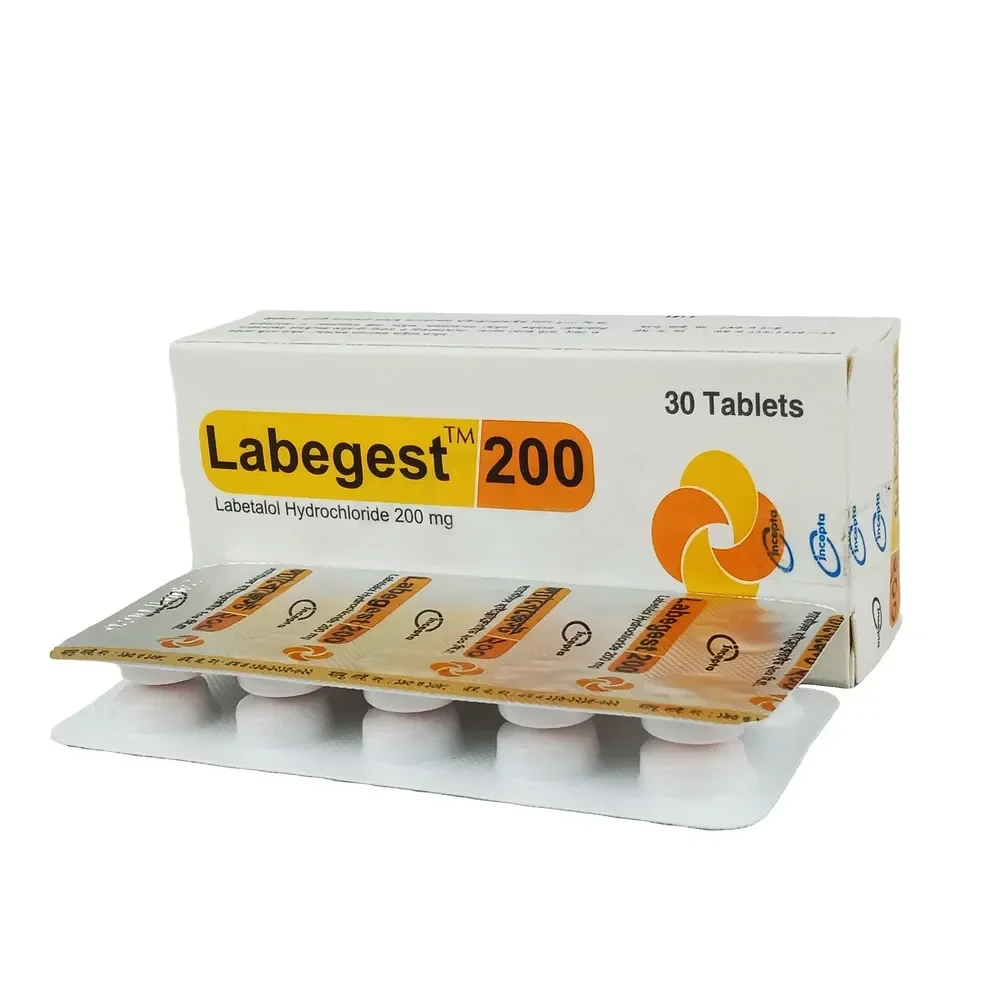
Medicine Overview of Labeta 200mg Tablet
Labeta 200 is a medicine used for treating high blood pressure (hypertension) and heart-related chest pain (angina). It is also effective for treating high blood pressure in pregnancy. It lowers the blood pressure and thus helps in preventing future stroke and heart attack.
Labeta 200 may be used alone or in combination with other medicines. It should be taken with food. You can take it at any time of day but try to take it at the same time each day. Since it can cause serious withdrawal effects, it should not be stopped abruptly. Most people with high blood pressure do not feel ill, but if you stop taking this medicine, your condition could get worse. This may lead to your blood pressure rising up again and increase your risk of heart disease and stroke.
It is important to have your blood pressure checked regularly. This medicine is only one part of a treatment program which should also include a healthy diet, regular exercise, smoking cessation, moderation of alcohol intake and weight reduction. You can eat normally while taking this medicine, but try to reduce your salt intake.
Common side effects of this medicine include dizziness, difficulty in urination, allergic reaction, increased liver enzymes, and ejaculation disorder. Consult your doctor if these side effects bother you.
Before taking this medicine, it is better to let your doctor know if you are suffering from any kidney or liver disease. Also, pregnant women and breastfeeding mothers should consult doctor before taking it.
- Hypertension (high blood pressure)
- Angina (heart-related chest pain)
- Prevention of heart attack and stroke
- Dizziness
- Allergic reaction
- Ejaculation disorder
- Increased liver enzymes
- Difficulty in urination
-
It should be taken with food.
-
Check your blood pressure 1 week after starting Labeta 200, and inform your doctor if it has not improved.
-
Labeta 200 may cause dizziness or sleepiness. Do not drive or do anything requiring concentration until you know how it affects you.
-
It may cause you to feel lightheaded or weak especially when you stand up (orthostatic hypotension). Rise slowly if you have been sitting or lying down.
-
It is best to avoid drinking alcohol while taking Labeta 200 as it may make the side effects worse.
-
Do not stop taking Labeta 200 suddenly as it can cause your blood pressure to rise suddenly, thereby increasing the risk of heart attack and stroke.
Should be taken with food. Take immediately after meals.
IV Preparation
Standard diluent: 500 mg/250 mL D5W
Minimum volume: 250 mL D5W
IV Administration
Requires infusion pump
Slow direct IV push administered over 2 minutes
Loading infusions (2 mg/min) require close monitoring of HR and BP and are terminated after response occurs or a cumulative dose of 300 mg is reached
Continuous infusions of 2-6 mg/hr have been used in some settings and should not be confused with loading infusions
Oral
Hypertension
Adult: Initially, 100 mg bid, may increase gradually according to patients response to 200-400 mg bid. Max: 2.4 g/day in 2-4 divided doses.
Elderly: Initially, 50-100 mg bid. Maintenance: 100-200 mg bid.
Intravenous
Emergency treatment of hypertension
Adult: 20 mg injected slowly for at least 2 min, followed by 40-80 mg dose every 10 min, if necessary up to 300 mg. Patient should remain supine during and 3 hr after the procedure.
Hypertension in pregnancy
Adult: Start infusion at a rate of 20 mg/hr, doubled every 30 min until a satisfactory response is achieved or a dose of 160 mg/hr is reached.
Hypertension after myocardial infarction
Adult: Initiate infusion at a rate of 15 mg/hr, then increase gradually until a favourable response is obtained or a dose of 120 mg/hr is reached.
Hypotensive anaesthesia
Adult: Initially, 10-20 mg, increase at 5-10 mg increments if satisfactory hypotension is not achieved after 5 min. Administer higher initial doses if halothane anaesth is not used.
Incompatibility: Na bicarbonate 5% and alkaline solutions.
Hypertensive Emergency
0.4-1 mg/kg/hr by continuous IV infusion; not to exceed 3 mg/kg/hr
Phaeochromocytoma, compensated heart failure, nonallergic bronchospasm. Avoid abrupt withdrawal. DM. Hepatic impairment. Perform LFTs. Elderly. Pregnancy and lactation.
Lactation: Small amounts excreted; use with caution
>10%
Dizziness (1-20%),Lightheadedness (1-20%),Nausea (<19%),Tingling sensation of scalp (4-12%),Fatigue (1-11%)
1-10%
Elevated serum blood urea nitrogen (BUN) (<8%),Elevated serum creatinine (8%),Congestion of nasal sinus (1-6%),Orthostatic hypotension (1-5%),Absence of ejaculation (<5%),Paresthesia (<5%),Elevated liver enzymes (4%),Diaphoresis (<4%),Edema (<2%),Bronchospasm (1-2%),Dyspnea (1-2%),Pruritus (1%),Rash (1%),Altered taste sense (1%),Ventricular arrhythmia (1%; IV)
Frequency Not Defined
Angioedema,Bradycardia,Alopecia,Cholestatic jaundice,Depression,Diabetes insipidus,Hepatitis,Raynaud syndrome,Toxic myopathy,Urinary retention,Urticaria,Raynaud phenomenon
Potentially Fatal: Hepatic injury.



Reviews
Clear filtersThere are no reviews yet.