

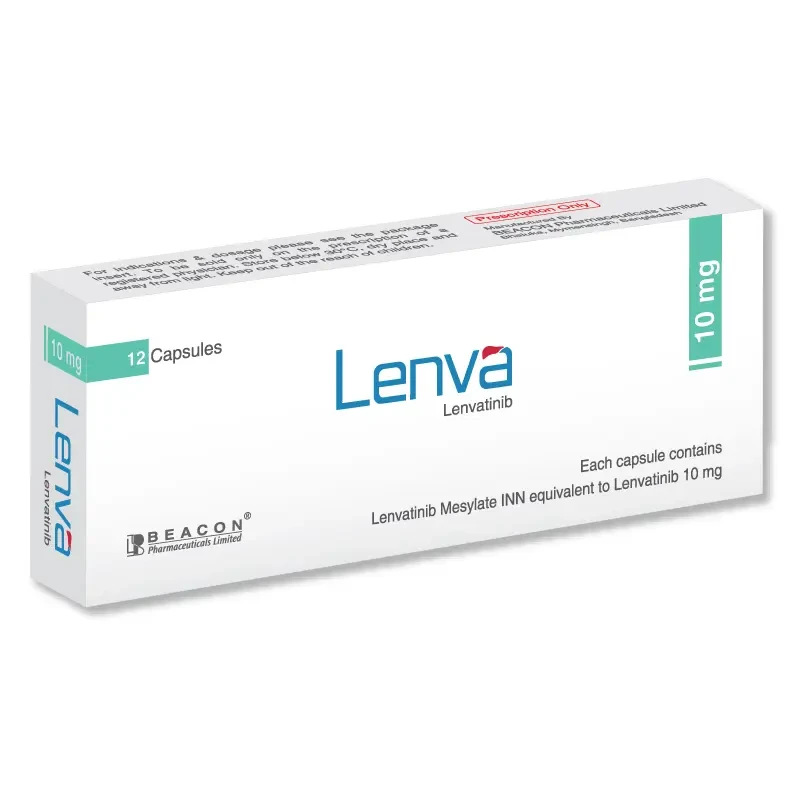

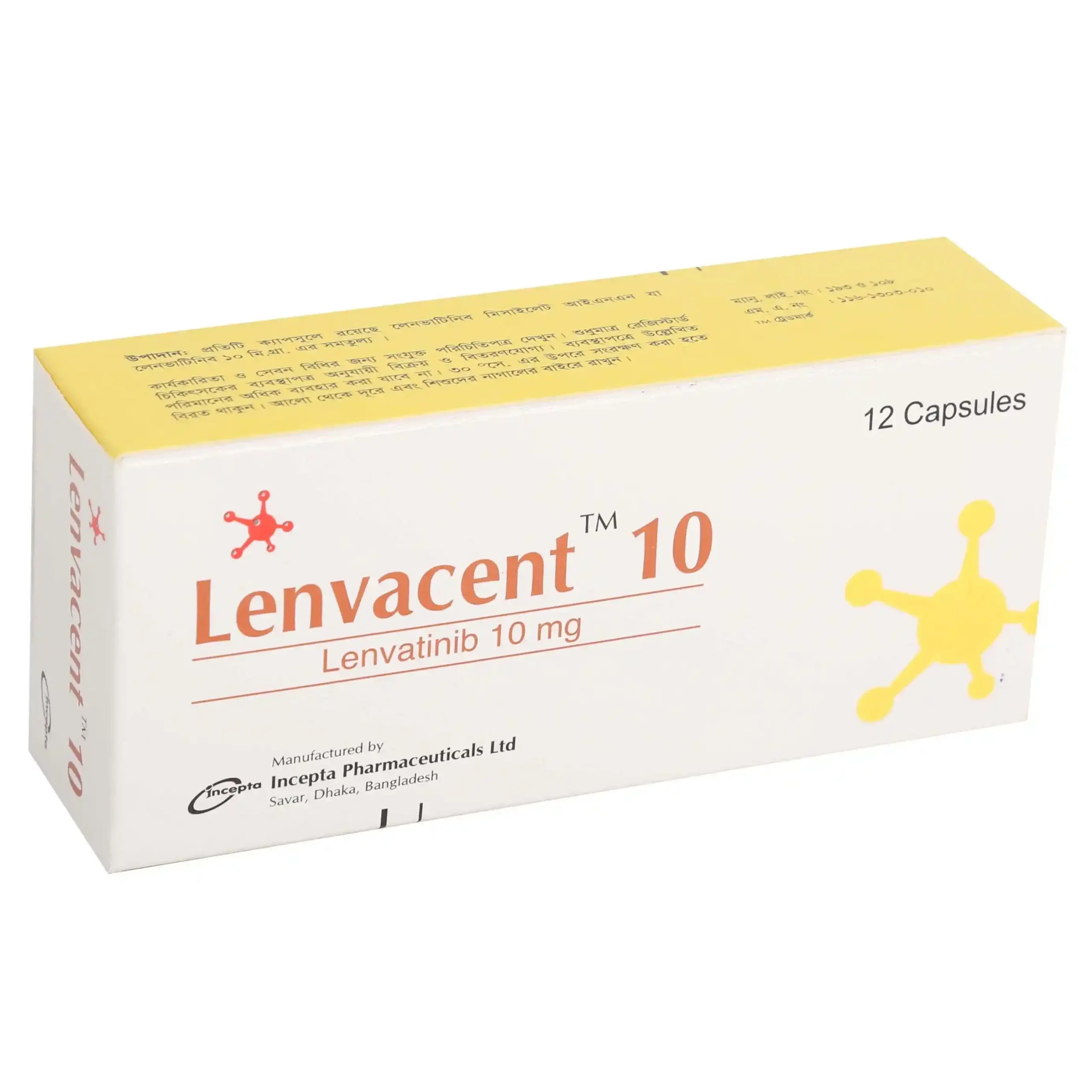
Medicine Overview of Lenva 10mg Capsule
Lenva 10 is an oral receptor tyrosine kinase inhibitor used in the treatment of thyroid cancer.
Lenva 10 can be taken with or without food, but try to have it at the same time every day to get the most benefits. Your doctor will decide what dose is necessary and how often you need to take it. This will depend on what you are being treated for and may change from time to time. You should take it exactly as your doctor has advised. Taking it in the wrong way or taking too much can cause very serious side effects. It may take several weeks or months for you to see or feel the benefits but do not stop taking it unless your doctor tells you to.
The most common side effects of this medicine include tiredness, joint pain, muscle pain, nausea, and vomiting. It might also cause severe headache, confusion, problems with your eyesight, and difficult talking. If happens, your doctor may checked you for blood pressure as these might be symptom of high blood pressure. If you experience severe diarrhea, then consult with your doctor or drink plenty of fluids. Let your doctor know about severe abdominal pain or black, tarry, or bloody stools as it might be symptoms of bleeding disorder. You may be asked for some blood tests to check for liver, kidney, and level of thyroid stimulating hormones.
Before taking it, tell your doctor if have heart disease, liver, or kidney problems or are taking any medicines to treat infections. Many other medicines can affect, or be affected by, this medicine so let your healthcare team know all medications you are using. This medicine is not recommended during pregnancy or while breastfeeding. Use of effective contraception by both males and females during treatment is important to avoid pregnancy.
- Thyroid cancer
- Bleeding
- Cough
- Decreased appetite
- Erythema (skin redness)
- Hoarseness of voice
- Itching
- Joint pain
- Mouth sore
- Muscle pain
- Nausea
- Peripheral edema
- Rash
- Skin peeling
- Stomach pain
- Tiredness
- Vomiting
- Weight loss
-
Lenva 10 is used for the treatment of thyroid cancer.
-
Take it with or without food, preferably at the same time each day.
-
Diarrhea may occur as a side effect. Drink plenty of fluids and inform your doctor if it doesn’t stop or if you find blood in your stools.
-
Use a reliable contraceptive method to prevent pregnancy while you are taking this medicine and for a month after you stop taking it.
-
Monitor your blood pressure regularly while taking this medication. Inform your doctor if you notice symptoms of very high blood pressure such as severe headache, confusion, problems with your eyesight, nausea or vomiting.
-
It may cause serious bleeding problem. Inform your doctor if you get headaches, stomach pain or if you notice blood in your urine or stools.
-
Do not take this medicine if you are pregnant, planning to conceive or breastfeeding.
Swallow capsule whole
May take with or without food
Take at the same time each day
Adult Differentiated thyroid cancer (DTC) 24 mg once daily.
Renal cell carcinoma (RCC) 18 mg in combination w/ everolimus 5 mg once daily.
Patient w/ severe hepatic impairment
Initially 14 mg once daily for DTC.
10 mg once daily for RCC.
Patient w/ severe renal impairment
Initially 14 mg once daily for DTC.
10 mg once daily for RCC.
Receptor tyrosine kinase (RTK) inhibitor that inhibits the kinase activities of vascular endothelial growth factor (VEGF) receptors VEGFR1 (FLT1), VEGFR2 (KDR), and VEGFR3 (FLT4)
Also inhibits other RTKs that have been implicated in pathogenic angiogenesis, tumor growth, and cancer progression in addition to their normal cellular functions, including fibroblast growth factor (FGF) receptors FGFR1, 2, 3, and 4; the platelet-derived growth factor receptor alpha (PDGFR-alpha), KIT, and RET
Monitor BP after 1 wk of treatment then every 2 wk for the 1st 2 month & monthly thereafter. Monitor urine protein regularly. Actively managed GI toxicity to reduce the risk of development of renal impairment/renal failure. Monitor for clinical symptoms or signs of cardiac decompensation. Posterior reversible encephalopathy syndrome/reversible posterior leucoencephalopathy syndrome. Monitor liver function tests before initiation of treatment, then every 2 wk for the 1st 2 month & monthly thereafter during treatment. Adjust initial dose in patients w/ severe renal or hepatic impairment.
Serious tumour-related bleeds including fatal haemorrhagic events, GI perforation & fistula formation may occur. Patients w/ arterial thromboembolic event w/in the previous 6 month. Consider periodic monitoring of ECG & electrolytes during treatment. Monitor TSH levels. Discontinue use in the event of persistence of GI perforation or fistula & grade 4 diarrhoea. Patients of ethnic origin other than Caucasian or Asian. Not recommended in patients w/ end-stage renal disease. May affect the ability to drive or operate machinery. Women of childbearing potential must use highly effective contraception while taking & 1 month after stopping treatment. Do not use during pregnancy. Do not use in child <2 yr. Elderly >75 yr.
Lactation
Unknown if distributed in human breast milk; advise women to discontinue breastfeeding during treatment because of the potential for serious adverse reactions in nursing infants
Lenvatinib and its metabolites are excreted in rat milk at concentrations higher than in maternal plasma (approximately 2 times higher [based on AUC] in milk compared with maternal plasma
>10%
Percentages are for all grades of adverse effects unless otherwise noted
Hypertension (73%),Diarrhea (67%),Fatigue (67%),Arthralgia/myalgia (62%),Decreased appetite (54%),Weight decreased (51%),Nausea (47%),Hypertension, grades 3-4 (44%),Stomatitis (41%),Headache (38%),Vomiting (36%),Proteinuria (34%),Palmar-plantar erythrodysesthesia (32%),Abdominal pain (31%),Dysphonia (31%),Constipation (29%),Oral pain (25%),Cough (24%),Peripheral edema (21%),Rash (21%),Dysgeusia (18%),Dry mouth (17%),Dizziness (15%),Dyspepsia (13%),Alopecia (12%),Epistaxis (12%),Insomnia (12%),Urinary tract infection (11%)
1-10%
Percentages are for all grades of adverse effects unless otherwise noted
Dental infections (10%)
Hypotension (9%)
Diarrhea, grades 3-4 (9%)
Dehydration (9%)
Prolonged QT interval (9%)
Hypocalcemia (9%)
Decreased appetite, grades 3-4 (7%)
Hyperkeratosis (7%)
Hypokalemia (6%)
AST increased (5%)
ALT increased (4%)
Lipase increased (4%)
Creatinine increased (3%)
Nausea, grades 3-4 (2%)
Platelet count decreased (2%)



Reviews
Clear filtersThere are no reviews yet.