



Introduction
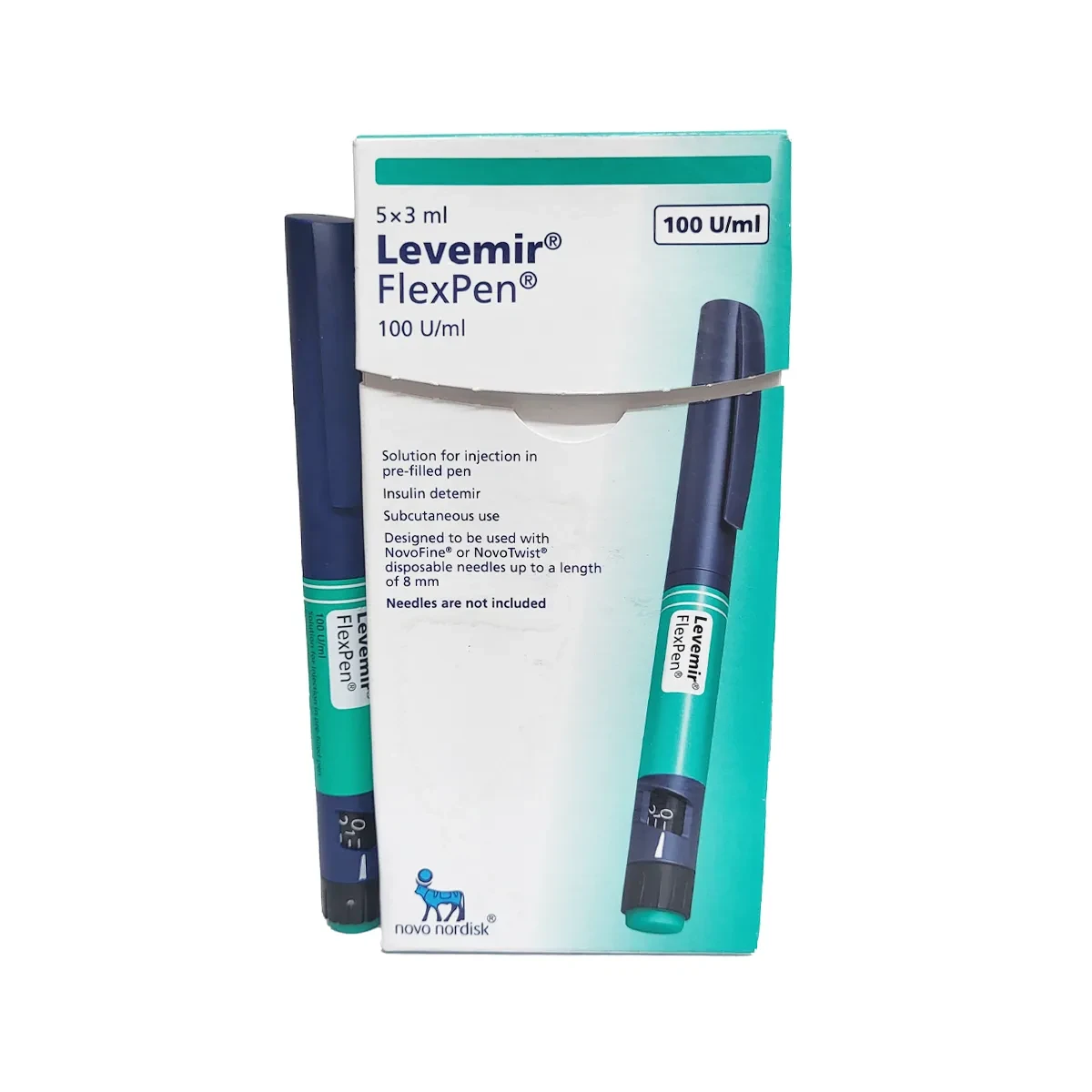
Levemir Flexpen is a long-acting type of insulin used to treat types 1 and 2 diabetes mellitus in both adults and children. It provides a steady level of insulin in the body for an entire day and helps control blood sugar levels. This helps to prevent complications of diabetes. Levemir Flexpen can be prescribed by itself or along with a fast-acting type of insulin or other diabetes medicines. Your doctor or nurse will teach you the correct way of injecting it under the skin. You should use this medicine regularly as per the dose advised to get the most benefit. If you stop taking it your blood sugar levels may rise very high and put you at risk of serious complications. It is only a part of the treatment program that should also include a healthy diet, regular exercise, and weight reduction as advised by your doctor. The most common side effect of this medicine is low blood sugar levels (hypoglycemia). To prevent this, it is important to always inject the correct dose of medicine only, have regular meals, and monitor your blood sugar levels regularly. Drinking excessive alcohol can also lead to a fall in your blood sugar levels. Other side effects include allergy at the injection site like redness, swelling, or hard lumps (lipohypertrophy). Some people may even gain weight while taking insulin. Do not use this medicine when you have low blood sugar levels (hypoglycemia). Tell your doctor if you have ever had kidney, liver or heart problems before starting treatment. It is generally regarded as safe for pregnant and breastfeeding women, if it has been prescribed by a doctor.
_
Uses of Levemir Flexpen
Diabetes mellitus (Type 1 & Type 2)
Side effects of Levemir Flexpen
Common
Hypoglycemia (low blood glucose level)
Injection site allergic reaction
Lipodystrophy (skin thickening or pits at the injection site)
How to use Levemir Flexpen
Your doctor or nurse will guide you how to use this medicine.
How Levemir Flexpen works
Levemir Flexpen is a long-acting insulin that provides consistent, all-day sugar control. It works like your body’s natural insulin. Insulin facilitates reuptake of sugar in muscle and fat cells and also suppresses the production of sugar in the liver.
What if you forget to take Levemir Flexpen?
If you miss a dose of Levemir Flexpen, take it as soon as possible. However, if it is almost time for your next dose, skip the missed dose and go back to your regular schedule. Do not double the dose.
Quick Tips
This medicine should be injected under the skin (subcutaneously) at the same time every day, as advised by your doctor.
Injection below the skin of the abdomen results in faster absorption than other injection sites.
Injection sites must be rotated to prevent hard lumps from developing at one site.
Do not use if the preparation is no longer clear and colorless or if it contains particles.
Hypoglycemia (low blood sugar level) is a common side effect. Learn how to identify and manage its symptoms (sweating, rapid heartbeat, weakness, blurry vision, headache) and teach your family as well.
Opened vials/cartridges stay good at room temperature for up to 4 weeks, while unopened vials must be placed in the refrigerator (2°C–8°C).
Brief Description
Indication
Diabetes mellitus
Administration
Administer subcutaneously in the upper arm, thigh or abdominal wall. A subcutaneous injection into the abdominal wall results in a faster absorption than from other injection sites. May be taken with or without food. For patients treated w/ once daily regimen, administer w/ evening meal or at bedtime. For patients who need twice daily dosing, the evening dose can be administered either w/ the evening meal or at bedtime or 12 hr after the morning dose.
_
Adult Dose
Subcutaneous Type I or II Diabetes Mellitus Once daily dosage: Administer SC with evening meal or at bedtime Twice daily dosage: Administer SC with morning meal and either with evening meal, at bedtime, or 12 hr after the morning dose Initial dose Type 1 diabetes: Approximately one third of the total daily insulin requirements SC; rapid-acting or short-acting, premeal insulin should be used to satisfy the remainder of the daily insulin requirements; usual daily maintenance range is 0.5-1 unit/kg/day in divided doses; nonobese may require 0.4-0.6 unit/kg/day; obese may require 0.6-1.2 units/kg/day Type 2 diabetes inadequately controlled on oral medication: 10 units/day SC (or 0.1-0.2 unit/kg/day) in evening or divided q12hr Type 2 diabetes inadequately controlled on GLP-1 receptor agonist: 10 units/day SC given once daily in evening Subsequently adjust dose based on blood glucose measurements Conversion from other insulins If converting from insulin glargine: Change can be accomplished on a unit-to-unit basis If converting from NPH insulin: Change can be accomplished on a unit-to-unit basis; however, some patients with type 2 diabetes may require more insulin detemir than NPH insulin Closely monitor blood glucose during transition and in the initial weeks thereafter; concurrent rapid-acting or short-acting insulins or other concomitant antidiabetic treatment may require dose adjustment Dosing Considerations Dosage of human insulin, , must be based on the results of blood and urine glucose tests and must be carefully individualized to optimal effect Dose adjustments should be based on regular blood glucose testing Adjust to achieve appropriate glucose control Dose adjustments Look for consistent pattern in blood sugars for >3 days
_
Child Dose
Subcutaneous Type 1 Diabetes Mellitus <2 years: Safety and efficacy not established >2 years: Approximately one-third of the total daily insulin requirements SC; rapid-acting or short-acting, premeal insulin should be used to satisfy the remainder of the daily insulin requirements; usual daily maintenance range in adolescents is <1.2 units/kg/day during growth spurts
_
Renal Dose
Renal impairment: Dose adjustments may be needed.
Contraindication
Do not admin by IV, IM or via insulin infusion pump.
Mode of Action
Insulin detemir is a recombinant human insulin analogue which is long-acting. It is prepared using recombinant DNA technology and genetically modified cultures of Saccharomyces cerevisiae. Slow systemic absorption and reversible binding to albumin may account for the prolonged duration of action of insulin detemir.
Precaution
Renal or hepatic impairment. Regular monitoring of blood glucose and HbA1c. Continuous rotation of the inj site within a given area to reduce inj site reactions. Pregnancy, lactation Lactation: Safe
_
Side Effect
Hypoglycaemia, lipodystrophy, pruritus, rash, wt gain, sodium retention and oedema. Inj site reactions e.g. pain, itching, hives, swelling and inflammation. Influenza-like symptoms, Pallor, Palpitation, Tachycardia, Mental confusion, Weakness, Blurred vision, Itching, Hunger, Nausea.
Interaction
Possible absence of hypoglycaemic warning symptoms with beta-blockers. Increased blood sugar with thiazide diuretics, corticosteriods, chlorpromazine, tibolone, isoniazid, niacin, some calcium-channel blockers such as diltiazem or nifedipine, diazoxide, lithium and thyroid hormones. Increased risk of hypoglycemia with disopyramide, larges doses of aspirin, gatifloxacin, MAOIs, mebanazine, nandrolone, pegvisomant, testosterone. Decreased insulin resistance with octreotide and lanreotide. Increased risk of wt gain and peripheral oedema with pioglitazone, rosiglitazone. Decreased effect of sermorelin.



Reviews
Clear filtersThere are no reviews yet.