



Introduction
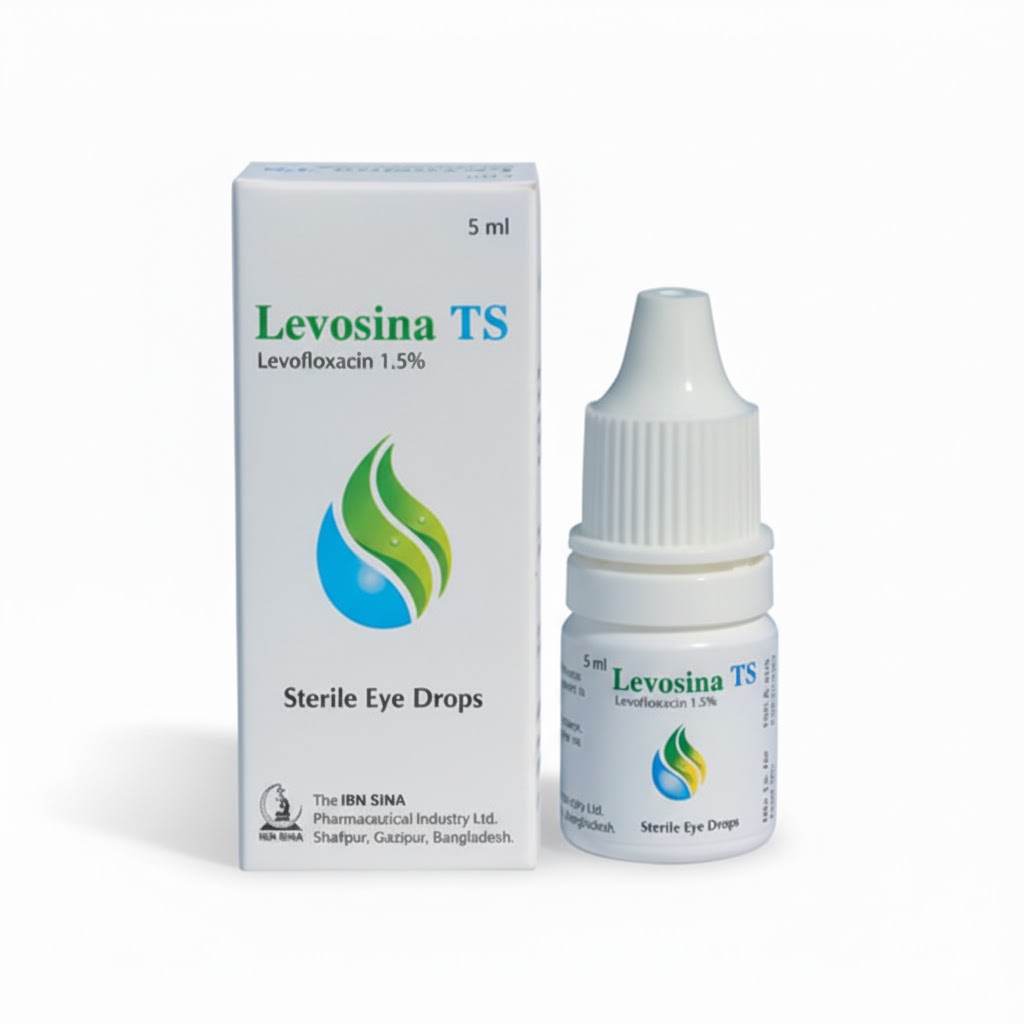
Levosina TS is an antibiotic, used in the treatment of bacterial infections of the eye. It relieves the symptoms of the infection by stopping the further growth of the causative microorganisms. Levosina TS is for external use only. Take it in the dose and duration as advised by your doctor. Hold the dropper close to the eye without touching it. Gently squeeze the dropper and place the medicine inside the lower eyelid. Wipe off extra liquid. Avoid skipping any doses and finish the full course of treatment even if you feel better. It may cause eye irritation and burning sensation in the eyes immediately following application. However, these side effects are temporary and usually subside on their own. Inform your doctor if they persist for a longer duration. It may cause short term blurring of vision when first used. Use caution before driving or using machines. Do not wear contact lenses while using it.
_
Uses of Levosina TS
Bacterial eye infections
Side effects of Levosina TS
Common
Eye irritation
Burning sensation
How to use Levosina TS
This medicine is for external use only. Take it in the dose and duration as advised by your doctor. Check the label for directions before use. Hold the dropper close to the eye without touching it. Gently squeeze the dropper and place the medicine inside the lower eyelid. Wipe off extra liquid.
How Levosina TS works
Levosina TS is an antibiotic. It treats bacterial eye infections by preventing the bacteria from dividing and repairing. It does so stopping the action of a bacterial enzyme called DNA-gyrase.
What if you forget to take Levosina TS?
If you miss a dose of Levosina TS, take it as soon as possible. However, if it is almost time for your next dose, skip the missed dose and go back to your regular schedule. Do not double the dose.
Quick Tips
You have been prescribed Levosina TS for the treatment of bacterial infections of the eye.
Do not skip any doses and finish the full course of treatment even if you feel better.
Apply pressure on the corner of the eye (close to the nose) for about 1 minute, immediately after instilling the medication.
Do not touch the tip to any surface, or to your eye, to avoid contamination.
Wait for at least 5-10 minutes before delivering the next medication in the same eye to avoid dilution.
It may cause short term blurring of vision when first used. Use caution before driving or using machines.
Do not wear contact lenses until your infection clears up.
Make sure to use within 4 weeks of opening the medication.
Brief Description
Indication
Corneal ulcer
Adult Dose
Ophthalmic Bacterial corneal ulcer Adults: Days 1 through 3: Instill one to two drops in the affected eye(s) every 30 minutes to 2 hours while awake and approximately 4 and 6 hours after retiring. Day 4 through treatment completion: Instill one to two drops in the affected eye(s) every 1 to 4 hours while awake.
_
Child Dose
Ophthalmic Bacterial corneal ulcer Children 6 year of age and older: Days 1 through 3: Instill one to two drops in the affected eye(s) every 30 minutes to 2 hours while awake and approximately 4 and 6 hours after retiring. Day 4 through treatment completion: Instill one to two drops in the affected eye(s) every 1 to 4 hours while awake.
_
Contraindication
Levofloxacin is contraindicated in patients with a history of hypersensitivity to Levofloxacin, quinolone, or any other components of this product.
Mode of Action
Levofloxacin exerts antibacterial action by inhibiting bacterial topoisomerase IV and DNA gyrase, the enzymes required for DNA replication, transcription repair and recombination. It has in vitro activity against a wide range of gram-negative and gram-positive microorganisms.
Precaution
This drug should not be injected subconjunctially, nor should it be introduced directly into the anterior chamber of the eye. Avoid contaminating the applicator tip with material from the eye, fingers or other source. Lactation: May be distributed into milk; use caution
_
Side Effect
Transient decrease in vision,Transient ocular burning,Ocular pain or discomfort,Foreign body sensation,Headache,Fever,Pharyngitis,Photophobia,Allergic reactions,Lid edema,Ocular dryness,Ocular itching
Interaction
Additive effects on QT interval prolongation w/ class IA (e.g. quinidine, procainamide) or class III (amiodarone, sotalol) antiarrhythmics, fluoxetine or imipramine. Reduced absorption w/ sucralfate, didanosine, antacids containing Mg or Al, dietary supplements containing Zn, Ca, Mg or Fe. Altered glucose levels w/ antidiabetic agents (e.g. insulin, glibenclamide). Increased risk of severe tendon disorders w/ corticosteroids. Increased risk of CNS stimulation and seizures w/ NSAIDs. Increased prothrombin time w/ warfarin.



Reviews
Clear filtersThere are no reviews yet.