


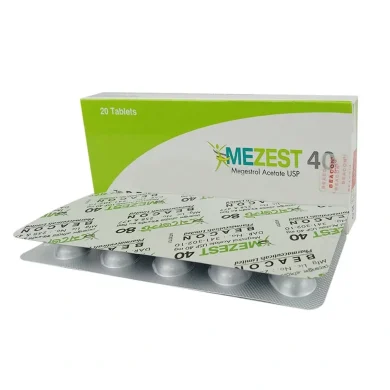
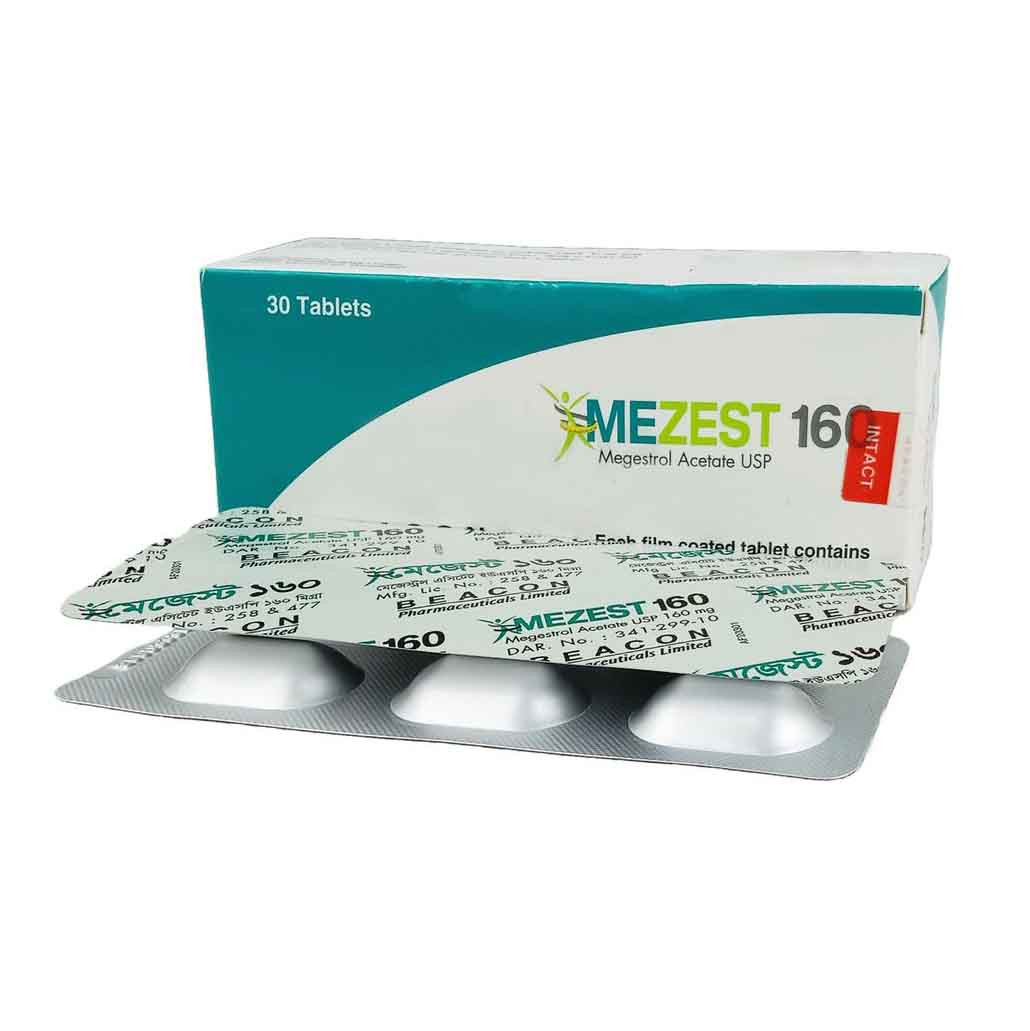

Medicine Overview of Mezest 160mg Tablet
Mezest 160 is used to treat breast cancer and endometrial cancer. It specifically helps treat breast and endometrial cancer that are hormone dependent. It may also be used for treating low appetite and weight loss in patients with advanced cancer or HIV.
Mezest 160 should be taken with or without food, preferably at a fixed time each day to ensure consistent levels of medicine in the body. This medicine is not used for pregnant or breastfeeding women. It may cause side effects like high blood pressure and increased blood sugar levels but they are temporary. However, if these persists, consult with the doctor.
- Breast cancer
- Endometrial cancer
- Increased appetite
- Weight gain
- Hot flashes
- High blood pressure
- Constipation
- Increased glucose level in blood
-
Mezest 160 is used to treat women with certain hormone-dependent cancers such as breast cancer and endometrial cancer.
-
It may also be used for treating appetite and weight loss in people with advanced cancer or AIDS.
-
You may have to take it for atleast 2 months before you notice any changes in your appetite.
-
Your doctor might do regular blood tests to check your hormones and blood sugar levels while you are taking this medicine.
-
Do not take Mezest 160 if you are pregnant or breastfeeding.
-
Inform your doctor immediately if you notice unexplained swelling and pain in your limbs, shortness of breath, chest pain, severe headache, or changes in vision. These could be symptoms of a blood clot in a vein.
-
Do not stop taking the medicine suddenly without talking to your doctor first.
Oral
Palliative treatment of breast carcinoma
Adult: 40 mg 4 times daily or 160 mg once daily.
Palliative treatment of endometrial carcinoma
Adult: 40-320 mg daily in divided doses. evaluate efficacy after 2 months of treatment; up to 800 mg/day may be used
Anorexia and cachexia in patients with cancer or AIDS
Adult: Initial: 800 mg daily. Usual range: 400-800 mg daily.
History of thrombophlebitis, mild to moderate hepatic impairment, risk of fluid retention, history of depression, diabetes, hypertension, renal or cardiac dysfunction.
Lactation: Not safe; do not nurse
Common
Hypertension,Insomnia, mood swings
Rash, sweating,Amenorrhea, breakthrough bleeding, change in menstrual flow, hot sweats, impotence, spotting
Diarrhea, flatulence, indigestion, nausea, vomiting, weight gain
Serious
Deep vein thrombosis (DVT),Pulmonary embolism,Thrombophlebitis,Anemia,Adrenal insufficiency







Reviews
Clear filtersThere are no reviews yet.