

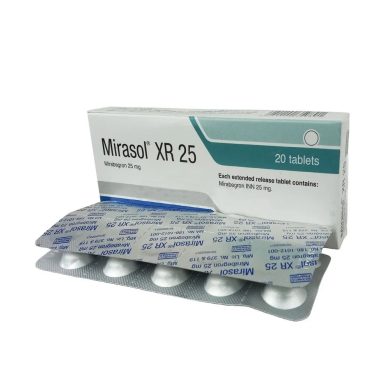

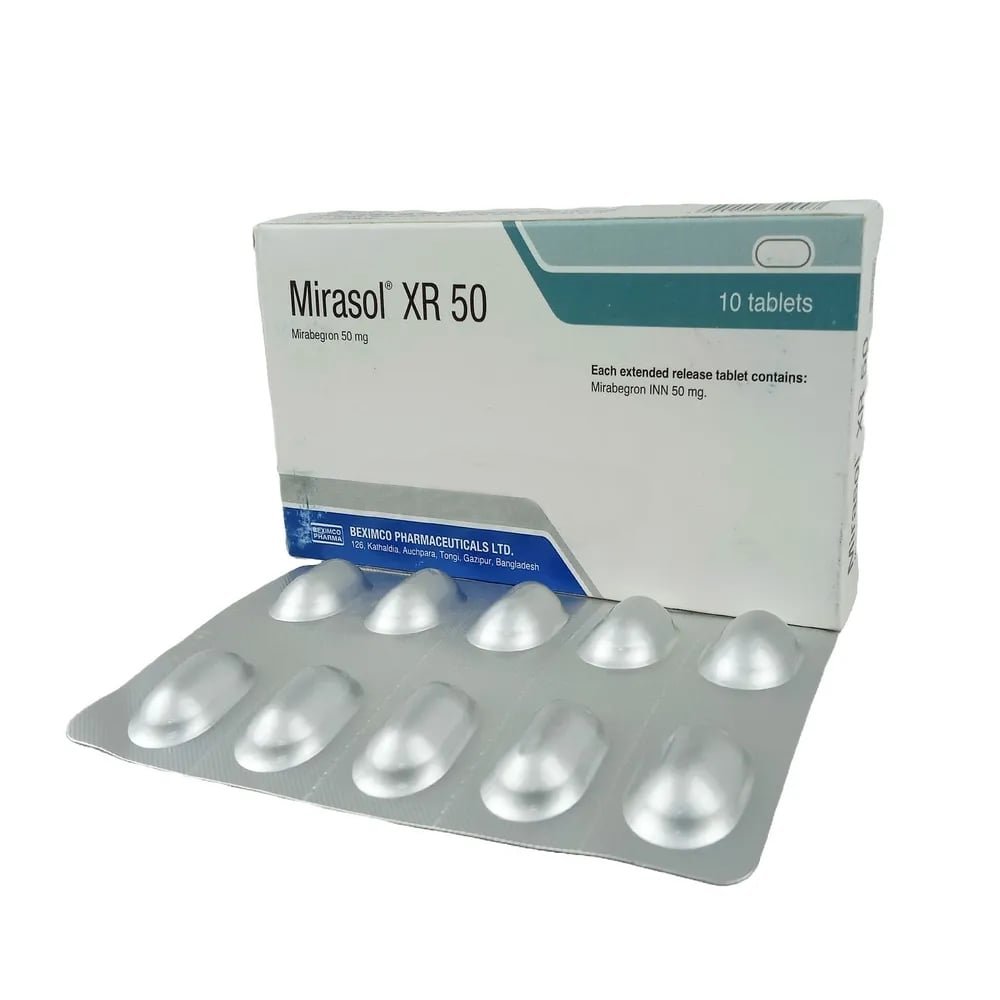

Medicine Overview of Mirasol XR 50mg Tablet
Mirasol XR 50 is used to treat symptoms of overactive bladder that includes increased or frequent urination, urgent need to urinate and inability to control urination. It helps to relax the muscle surrounding the bladder and increase it’s ability to store urine.
Mirasol XR 50 is advised to take it in a dose and duration as per prescription. It can be taken with or without food. Swallow the medicine as a whole without crushing or chewing it. You should not stop taking the medicine without consulting the doctor as it may lead to the worsening of your symptoms. The course of the treatment should be completed for better efficacy of the medicine.
Some common side effects of this medicine are hypertension, common cold symptoms (nasopharyngitis), urinary tract infection, and headache. If any of the side effects bother you or persist, consult the doctor without delay.
Before receiving the treatment, inform your doctor if you are on any medication for any other health condition. If you are pregnant or breastfeeding, tell your doctor prior to the treatment. Patients with liver or kidney disease must be cautious while receiving the prescription and they must receive regular follow-ups as per the doctor’s advice.
- Overactive bladder (OAB) symptoms
- Constipation
- Headache
- High blood pressure
- Nasal inflammation
- Urinary tract infection
-
Mirago 50 Tablet ER helps you to have better control over your urination. It relaxes your bladder which increases its capacity to hold urine thereby reducing the need to pass urine.
-
It causes less drowsiness and constipation than other medicines for overactive bladder.
-
It may raise your blood pressure. Monitor your blood pressure regularly.
-
Do not stop taking this medicine if you do not notice an improvement in your symptoms as it may take some time for your bladder to adapt and your symptoms to improve.
Overactive Bladder
Indicated for overactive bladder with symptoms of urge urinary incontinence, urgency, and urinary frequency
25 mg PO qDay
25 mg dose is typically effective within 8 weeks
May increase to 50 mg PO qDay based on individual efficacy and tolerability
Hepatic impairment
Moderate (Child-Pugh B): Not to exceed 25 mg/day
Severe (Child Pugh C): Not recommended
Renal impairment
Severe (CrCl 15-29 mL/min): Not to exceed 25 mg/day
ESRD: Not recommended
End-stage renal disease, severe renal impairment; moderate (Child-Pugh Class B) & severe hepatic impairment (Child-Pugh Class C); severe uncontrolled HTN. Known history of QT prolongation or taking medicines known to prolong QT interval; bladder outlet obstruction & taking antimuscarinic medications for OAB. Women of childbearing potential not using contraception. Pregnancy & lactation. Childn <18 yr.
Lactation: Unknown whether distributed in breast milk; excretion in breast milk possible; discontinue nursing or the drug taking into account the importance of the drug to the mother
>10%
Elevated BP occurring predominantly in patients with preexisting hypertension (7-11%)
1-10%
Dry mouth (3-9%),Nasopharyngitis (3-4%),UTI (3-6%),Headache (2-4%),Influenza (2-3%),Constipation (2-3%),Dizziness (2%),Arthralgia (2%),Cystitis (2%),Back pain (1-3%),Sinusitis (1-3%),URTI (1-2%),Arthralgia (1-2%),Diarrhea (1-2%),Tachycardia (1-2%),Fatigue (1%),Abdominal pain (0-1%),Reports of neoplasms (0-1%)
<1%
Cardiac disorders (eg, palpitations, elevated BP),Eye Disorders (eg, glaucoma, blurry vision),GI disorders (eg, dyspepsia, gastritis, abdominal distension),Rhinitis,Elevations in GGT, AST, ALT, LDH,
Renal and urinary disorders (eg, nephrolithiasis, bladder pain),
Reproductive system disorders (eg, vulvovaginal pruritis, vaginal infection)
Skin and subcutaneous tissue disorders (eg, urticaria, leukocytoclastic vasculitis, rash, pruritus, purpura, lip edema)
Stevens-Johnson syndrome associated with increased serum ALT, AST and bilirubin
Increased AUC of strong CYP3A/P-gp inhibitors eg, ketoconazole, itraconazole, ritonavir, clarithromycin. Decreased plasma conc by CYP3A/P-gp inducers. Increased Cmax & AUC of metoprolol, despiramine & digoxin. Thioridazine, type 1C antiarrhythmics (eg flecainide, propafenone), TCAs. Potential P-gp inhibition of dabigatran.


Reviews
Clear filtersThere are no reviews yet.