


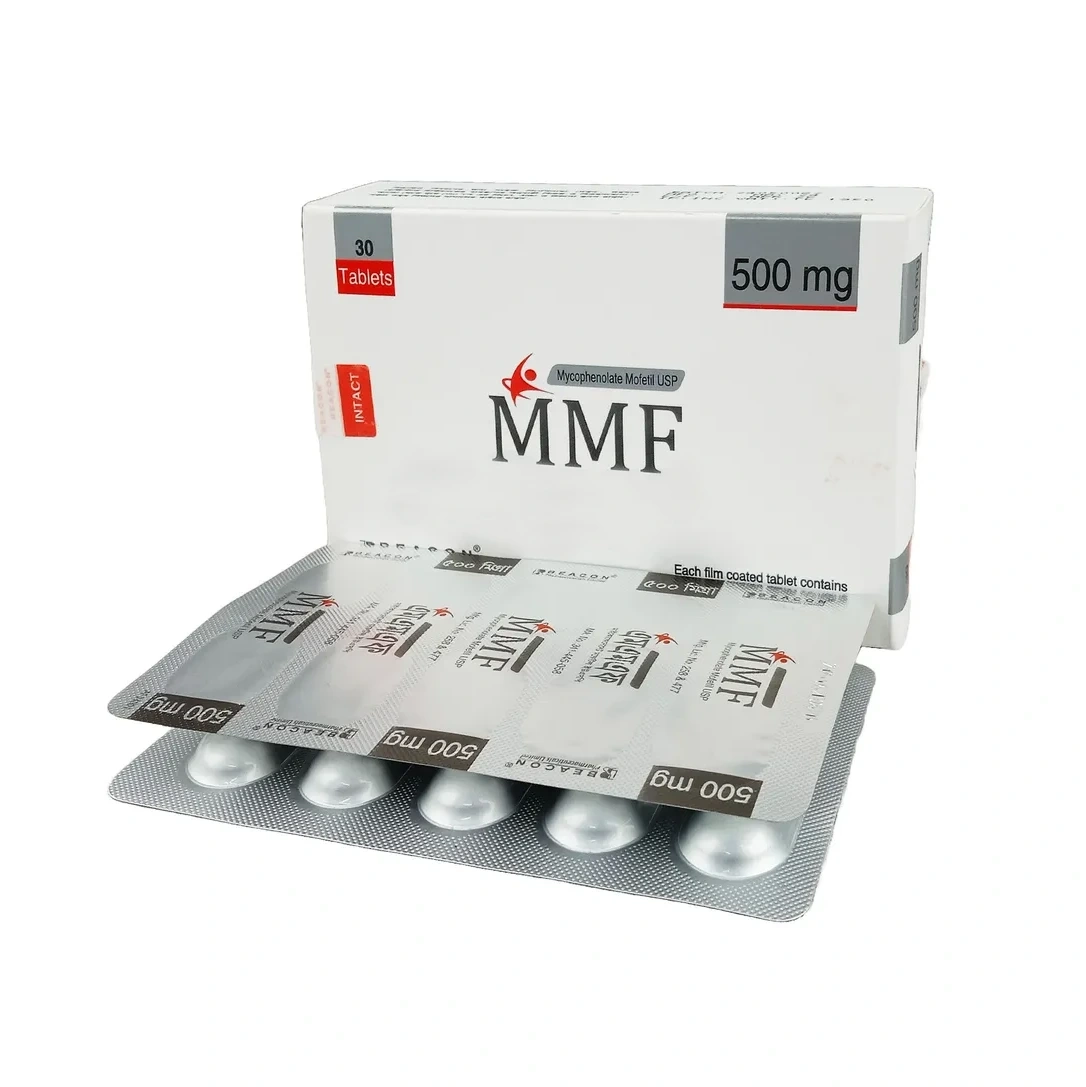

Medicine Overview of MMF 500mg Tablet
MMF 500 belongs to a group of medicines called immunosuppressants. It is used with other medicines to prevent your body from rejecting an organ (such as a kidney, heart or liver) after a transplant. It works by supressing your body’s immune system, so that it does not attack the new organ.
The amount of MMF 500 you take and how often you take it depends on the type of transplant you have. Follow your doctor’s instructions on this. You should take it on an empty stomach, at least 1 hour before or 2 hours after a meal. Swallow it as a whole, do not crush, chew or break it. Take the medicine regularly to get the maximum benefit and keep taking it even if you feel well. If you stop taking it, you may increase the chances of rejecting your transplanted organ. The treatment will continue for as long as you need it to prevent rejection.
The most common side effects are nausea, vomiting, diarrhea, stomach pain, headache, high blood pressure and changes in the number of white blood cells. You may catch more infection than usual as medicine suppresses the immune system. There is also an increased risk of developing some cancers for this reason. To reduce your risk of skin cancer, limit your exposure to the sun and use sunscreen. There is a long list of potential side effects with this medicine. You should ask your doctor about them and what signs to look out for because some of them can be serious and need urgent medical attention.
MMF 500 can cause birth defects and abortion so do not take it if you are pregnant, planning to become pregnant or breastfeeding. You should talk to your doctor before taking this medicine if you have any signs of infection or if you have any unexpected bruising or bleeding. You should also let your healthcare team know all other medicines you are taking as they may affect, or be affected by, this medicine. You will have regular tests to check for any changes in the number of your blood cells and the amount of sugar and cholesterol in your blood.
- Prevention of organ rejection in transplant patients
- Nausea
- Vomiting
- Diarrhea
- Abdominal pain
- Headache
- High blood pressure
- Decreased white blood cell count (neutrophils)
-
Your doctor has prescribed MMF 500 to stop your body from rejecting a transplanted organ (e.g. kidney, heart or liver).
-
It may take 6 to 12 weeks for MMF 500 to start working. Keep taking it as prescribed.
-
It may cause birth defects so birth control is required in females with reproductive potential.
-
It makes you more susceptible to getting infections. Avoid contact with people who have an infection. Consult your doctor immediately if you develop a sore throat, high temperature, any other signs of infections.
-
Protect yourself from direct sunlight by wearing protective clothing and applying a sunscreen with a high sun protection factor (SPF).
-
Take it with food to minimize possible side effects like nausea and stomach pain.
-
Your doctor may get regular blood tests done to monitor the levels of blood cells in your blood. Inform your doctor if you experience symptoms such as unexplained bruising or bleeding, sore throat, mouth ulcers, or fever.
Drug is taken on empty stomach 1 hour before or 2 hours after meals
Once dosage is stabilized, MMF can be taken with food after kidney transplant
Oral
Adult
Prophylaxis of acute renal graft rejection
As Mycophenolate Mofetil (MMF): 1 g twice daily starting w/in 72 hr of transplantation. Max: 2 g/day.
Prophylaxis of cardiac graft rejection, Liver Transplant
Adult:
As Mycophenolate Mofetil (MMF):1.5 g bid starting within 5 days after transplantation.
<3 months
Safety and efficacy not established
>3 months
Prophylaxis of organ rejection in patients receiving allogeneic renal transplants
As Mycophenolate Mofetil (MMF):
MMF (suspension): 600 mg/m² PO q12hr; not to exceed 2 g/day
MMF: BSA 1.25-1.5 m²: 750 mg capsule PO q12hr
MMF: BSA >1.5 m²: 1 g capsule/tablet PO q12hr
Renal impairment
MMF: In severe renal impairment (glomerular filtration rate [GFR] <25 mL/min/1.73 m²), not to exceed 1 g q12hr
No dosage adjustment needed in renal transplant patients experiencing delayed graft function post-operatively.
Teratogenic in animals; avoid inhalation or direct skin contact. Monitor patients for lymphoproliferative disorders; advise patient to limit exposure to sunlight/UV light. Perform CBCs; monitor for neutropenia.
Mycophenolate mofetil and mycophenolate sodium are not interchangeable.
Lactation: Unknown whether drug is excreted in breast milk; avoid using, or do not nurse
>10%
Hyperglycemia (44%),Hypercholesterolemia (41%),Hypomagnesemia (39%),Dyspnea (37%),Back pain (35%),Increased blood urea nitrogen (BUN) (35%),Leukopenia (34%),Pleural effusion (34%),Urinary tract infection (34%),Increasing frequency of cough (31%),Hypocalcemia (30%),Hypertension (28%),Abdominal pain (27%),Peripheral edema (27%),Anemia (26%),Fever (23%),Nausea (23%),Hyperkalemia (22%),Diarrhea (21%),Infection (21%),Headache (16%)
1-10%
Melanoma (1.6-4.2%),Other malignancies (0.7-2.1%),Lymphoma (0.4-1%),Opportunistic infection (including herpes),Neutropenia,GI bleeding,Pulmonary fibrosis,Progressive multifocal leukoencephalopathy
Potentially Fatal: Angioedema, anaphylaxis, fatal pulmonary fibrosis.




Reviews
Clear filtersThere are no reviews yet.