


Introduction
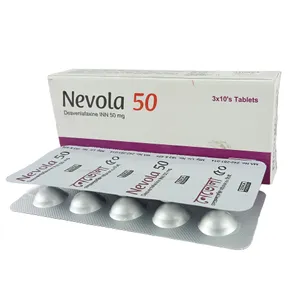
Nevola 50 is a prescription medicine used in the treatment of depression. This medicine helps by increasing the level of chemical messengers (serotonin and noradrenaline) in the brain that have a calming effect on the brain and relax the nerves, thus treating your depression. Nevola 50 may be taken with or without food. It is advised to take this medicine at a fixed time each day to maintain a consistent level in the blood. If you miss any doses, take it as soon as you remember. Do not skip any doses and finish the full course of treatment even if you feel better. It is important that this medication is not stopped suddenly as it may worsen your symptoms. Some common side effects of this medicine include nausea, vomiting, anxiety, increased sweating, insomnia (difficulty sleeping), constipation, decreased appetite, and sexual dysfunction. It even causes dizziness and sleepiness, so do not drive or do anything that requires mental focus until you know how this medicine affects you. However, these side effects are temporary and usually resolve on their own in some time. Please consult your doctor if these do not subside or bother you. Before taking Nevola 50, inform your doctor if you have any problems with your kidneys, heart, liver, or have a history of seizures (epilepsy or fits). Inform your doctor if you develop any unusual changes in mood or behavior, new or worsening depression, or if you have any suicidal thoughts.
_
Uses of Nevola 50
Depression
Side effects of Nevola 50
Common
Anxiety
Constipation
Decreased appetite
Dizziness
Increased sweating
Insomnia (difficulty in sleeping)
Nausea
Sexual dysfunction
Vomiting
How to use Nevola 50
Take this medicine in the dose and duration as advised by your doctor. Swallow it as a whole. Do not chew, crush or break it. Nevola 50 may be taken with or without food, but it is better to take it at a fixed time.
How Nevola 50 works
Nevola 50 works by increasing the levels of chemical messengers (serotonin and noradrenaline), natural substances in the brain that help maintain mental balance.
What if you forget to take Nevola 50?
If you miss a dose of Nevola 50, take it as soon as possible. However, if it is almost time for your next dose, skip the missed dose and go back to your regular schedule. Do not double the dose.
Quick Tips
Ventab Dxt 50 Tablet ER helps in treating depression and anxiety.
It may also be used to treat nerve pain from diabetes and some other forms of chronic pain.
It may take 2 to 4 weeks for Ventab Dxt 50 Tablet ER to start working. Keep taking it as prescribed.
It may cause dizziness and sleepiness. Do not drive or do anything requiring concentration until you know how it affects you.
Avoid consuming alcohol when taking Ventab Dxt 50 Tablet ER as it may cause excessive drowsiness and increase the risk of liver damage.
It may cause a sensation of restlessness, especially when you first start taking it. Inform your doctor if this happens to you.
Talk to your doctor if you notice sudden mood changes or develop suicidal thoughts.
Do not stop taking the medication suddenly without talking to your doctor.
Brief Description
Indication
Depression
Administration
Take whole with fluid; do not divide, crush, chew, or dissolve Take at approximately the same time every day
_
Adult Dose
Oral Depression Adult: 50 mg once daily. Doses up to 400 mg once daily have been studied and shown to be effective, but no additional benefit was observed with doses >50 mg once daily. Hepatic impairment: 50 mg once daily. Doses >100 mg/day are not advised.
_
Renal Dose
Renal impairment: CrCl (ml/min) 30-50 mL/min 50 mg once daily. <30 mL/min or ESRD 50 mg every other day. Additional doses should not be given after dialysis.
_
Contraindication
Hypersensitivity to Desvenlafaxine, venlafaxine or any component of the formulation. Concomitant/recent (within preceeding 14 days) use of MAOI. Do not initiate MAOI at least 7 days after discontinuing Desvenlafaxine.
Mode of Action
Desvenlafaxine, the major active metabolite of venlafaxine, is a potent and selective serotonin and norepinephrine reuptake inhibitor (SNRI). Clinical efficacy of desvenlafaxine is thought to be related with the drug's potentiation of serotonergic and noradrenergic activity in the CNS. It does not have monoamine oxidase (MAO) inhibitory activity; and has not shown significant affinity for muscarinic cholinergic, H1-histaminergic, alpha-adrenergic, dopaminergic, gama-aminobutyric acid (GABA), glutamate, and opiate receptors in vitro. At concentrations that inhibit serotonin and norephinephrine reuptake, inhibition of dopamine reuptake appears to be unlikely.
Precaution
May be associated with increased risk of suicidal thinking and behaviour in children, adolescents, and young adults with major depressive disorder and other psychiatric disorders. Monitor patients for clinical worsening of depression, emergence of suicidality, unusual changes in behaviour particularly during initiation of therapy and during dosage adjustments. Serotonin syndrome or neuroleptic malignant syndrome (NMS) have occurred with selective serotonin reuptake inhibitor (SSRI) or SNRI treatment alone; and particularly with concomitant use of MAOI, serotogenic agents (e.g. triptans), antipsychotics or dopamine antagonists. Gradually taper dose if discontinuing to reduce risk of withdrawal symptoms. May activate mania/hypomania, caution in patients with history or family history of mania or hypomania. Caution in patients with pre-existing glaucoma, hypertension, cardiovascular, cerebrovascular, or lipid metabolism and seizure disorders. Sustained elevations in blood pressure have been reported. May be associated with dose-related increase in serum total cholesterol, LDL, triglycerides. May increase risk of bleeding. May be associated with development of syndrome of inappropriate antidiuretic hormone (SIADH) and Hyponatraemia, elderly and patients who are taking diuretics or with volume depletion may be at greater risk. Interstitial lung disease and eosinophilic pneumonia associated with venlafaxine (the parent drug of desvenlafaxine) have been reported. Medications containing venlafaxine should not be used concomitantly. Renal and hepatic impairment. Safety and efficacy have not been established in paediatrics. Elderly. Pregnancy. Not recommended in lactation. Lactation: Drug is excreted in breast milk; discontinue drug, or do not nurse; use only if benefits greatly outweigh risks
_
Side Effect
>10% Nausea (22-41%),Headache (20-29%),Dry mouth (11-25%),Hyperhidrosis (10-21%),Dizziness (13-16%),Insomnia (9-15%),Constipation (9-14%),Fatigue (7-11%),Diarrhea (5-11%) 1-10% Decreased appetite (5-10%),Anxiety (0-10%),Elevated cholesterol and triglycerides (0-10%),Insomnia (0-10%),Tremor (2-9%),Proteinuria (5-8%),Mydriasis (2-6%),Male sexual dysfunction (0-6%),Anxiety (3-5%),Vertigo (1-5%),Blurred vision (3-4%),Abnormal dreams (2-4%),Urinary hesitation (2-4%),Yawning (1-4%),Feeling jittery (1-3%),Female sexual dysfunction (0-3%),Irritability (2%) Other (eg, abnormal liver function tests, increased blood prolactin, convulsion, syncope, extrapyramidal disorders, musculoskeletal stiffness, depersonalization, hypomania, bruxism, epistaxis, orthostatic hypotension) (<2%) Asthenia (1-2%),Nervousness (1-2%),Hot flush (1-2%),Rash (1-2%) Frequency Not Defined Ischemic cardiac events in patients with multiple underlying cardiac risk factors Gastrointestinal (GI) bleeding, hallucinations, photosensitivity reactions and severe cutaneous reactions (eg, Stevens-Johnson syndrome, toxic epidermal necrolysis, erythema multiforme) have occurred with other serotonin-norepinephrine reuptake inhibitors (SNRIs) or selective serotonin reuptake inhibitors (SSRIs) Suicidal thoughts and behaviors in adolescents and young adults Hyponatremia,Interstitial lung disease and eosinophilic pneumonia,Serotonin syndrome,Elevated blood pressure,Abnormal bleeding,Narrow-angle glaucoma,Activation of mania or hypomania,Discontinuance syndrome,Seizure Potentially Fatal: Serotonin syndrome or neuroleptic malignant syndrome-like reactions.
_
Pregnancy Category Note
Pregnancy No published studies on desvenlafaxine in pregnant women; however published epidemiologic studies of pregnant women exposed to venlafaxine, the parent compound, have not reported a clear association with adverse developmental outcomes Exposure to SNRIs in mid to late pregnancy may increase the risk for preeclampsia, and exposure to SNRIs near delivery may increase the risk for postpartum hemorrhage Exposure to SNRIs or SSRIs in late pregnancy may lead to an increased risk for neonatal complications requiring prolonged hospitalization, respiratory support, and tube feeding; monitor neonates who were exposed to desvenlafaxine in the third trimester of pregnancy for drug discontinuation syndrome Lactation Available limited data from published literature show low levels of desvenlafaxine in human milk, and have not shown adverse reactions in breastfed infants There are no data on the effects of desvenlafaxine on milk production Consider the developmental and health benefits of breastfeeding along with the mother’s clinical need for desvenlafaxine and any potential adverse effects on the breastfed child from desvenlafaxine or from the underlying maternal condition
_
Interaction
Desvenlafaxine may diminish the therapeutic effect of Iobenguane I-123. May enhance adverse effects of other CNS depressants. Sibutramine and MAOI may enhance the serotonergic effect of Desvenlafaxine; increase risk of development of serotonin syndrome. Concomitant use with alpha-/beta-agonists may enhance tachycardic and vasopressor effect. Desvenlafaxine may increase concentration of CYP2D6 substrates (e.g. desipramine); decrease exposure of CYP3A4 substrates (e.g. midazolam). CYP3A4 inhibitors (e.g. ketoconazole) may increase concentration of desvenlafaxine. May enhance the antiplatelet effect of nonselective NSAIDs, aspirin; and anticoagulant effect of warfarin. Potentially Fatal: Concurrent use with MAOIs may lead to fatal serotonin syndrome or NMS-like reactions. Do not use within at least 14 days of discontinuing MAOI treatment and start MAOI at least 7 days after stopping desvenlafaxine. Increased risk of serotonin syndrome with sibutramine.
_



Reviews
Clear filtersThere are no reviews yet.