



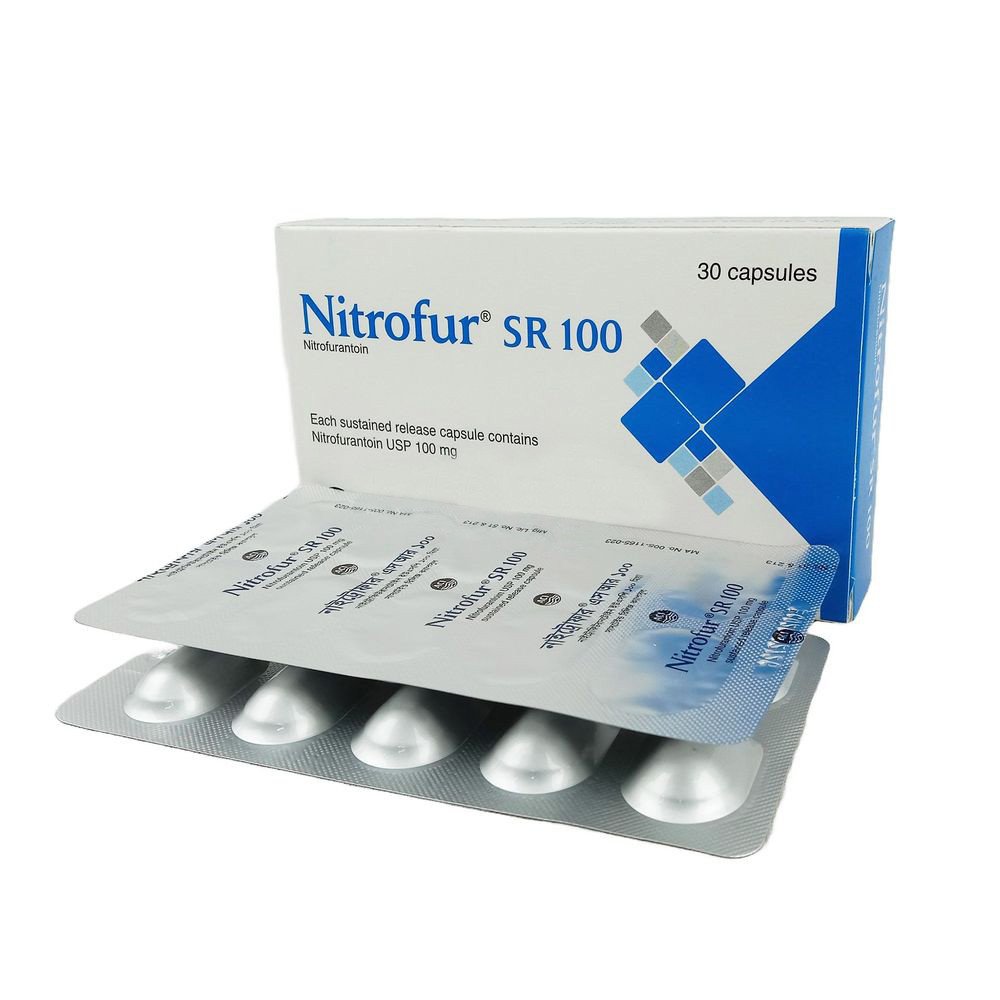

Medicine Overview of Nitrofur SR 100mg Capsule
Nitrofur SR 100 is an antibiotic that fights bacteria. It is used to treat and prevent uncomplicated urinary tract infections. It works by killing the bacteria that cause such disease. But, it will not treat a viral infection.
Nitrofur SR 100 should be taken in the dose and duration as advised by the doctor. You may take it with food to avoid nausea, which is a common side effect. It is better to have this medicine at the same time each day to get the most benefit and you should keep on taking this medicine for as long as you are prescribed it, even if your symptoms quickly improve. If you stop taking it too early the infection may return or worsen.
Some people may develop side effects like nausea, vomiting, and diarrhea. These side effects are usually temporary and go away during treatment as your body adjusts to the medicine. Consult your doctor if these side effects bother you or do not go away. This medicine may turn your urine into dark yellow or brown color. But, this is normal and nothing to worry about.
Before starting treatment with this medicine, you should tell your doctor if you are pregnant, breastfeeding or suffering from any liver, kidney or heart problems or if you are allergic to any antibiotic.
Show less
- Bacterial infections of urinary tract
- Nausea
- Vomiting
- Diarrhea
-
Niftas Tablet SR treats and prevents uncomplicated urinary tract infections.
-
Finish the prescribed course of the medicine, even if you start to feel better. Stopping it early may make the infection come back and harder to treat.
-
Take it with food to avoid nausea, which is a common side effect.
-
It can turn your urine a dark yellow or brown colour. This is normal and nothing to worry about.
-
Do not take it for longer or more often than prescribed by your doctor.
Should be taken with food. Take w/ or immediately after meals. Sustained release macrocrystals indicated only for patients >12 years for acute UTIs (cystitis) caused by E coli or S saprophyticus
Show less
Oral
Acute uncomplicated urinary tract infections
Adult: 50-100 mg 4 times daily for 7 days or for 3 days after obtaining sterile urine.
SR preparation: 100 mg bid for 7 days or for 3 days after obtaining sterile urine.
Prophylaxis of uncomplicated urinary tract infections
Adult: 50-100 mg at bedtime for up to 12 months.
Show less
Urinary Tract Infection
>1 month
5-7 mg/kg/day PO divided q6hr for 7 days
UTI prophylaxis: 1-2 mg/kg PO qHS or 2 divided doses
>12 years
50-100 mg PO q6hr for 7 days or for 3 days after obtaining sterile urine
SR preparation: 100 mg PO q12hr for 7 days or for 3 days after obtaining sterile urine
Long-term prophylaxis/suppression: 50-100 mg PO at bedtime for up to 12 months
Show less
Loses effectiveness in patients with CrCl <60 mL/min due to inadequate urine concentration
Monitor renal function; renally excreted; decreased renal function more likely in elderly
Show less
Severe renal impairment (anuria, oliguria, significantly elevated serum creatinine, CrCl <60 ml/min). Hypersensitivity to nitrofurans, G6PD deficiency, infants <3 mth. Pregnancy at term, during labour and delivery, or when the onset of labour is imminent.
Show less
Elderly. Monitor hepatic and pulmonary function during prolonged therapy. Pre-existing pulmonary, hepatic, neurological, or allergic disorders, predisposition to peripheral neuropathy e.g. renal impairment, anaemia, DM, electrolyte imbalance, debility, vitamin B deficiency. Withdraw if signs of peripheral neuropathy occur. Lactation.
Lactation: Enters breast milk; discontinue drug or do not nurse
Show less
Nausea, vomiting, anorexia, abdominal pain, diarrhoea; headache, drowsiness, vertigo, dizziness, nystagmus, benign intracranial hypertension; rash, urticaria, pruritus, fever, sialadenitis, angioedema, erythema multiforme, exfoliative dermatitis, pancreatitis, lupus-like syndrome, myalgia, arthralgia; acute pulmonary sensitivity reactions; megaloblastic anaemia, leucopenia, granulocytopenia or agranulocytosis, thrombocytopenia, aplastic anaemia, haemolytic anaemia (in G6PD-deficient patients); transient alopecia; brownish discolouration of urine.
Potentially Fatal: Peripheral polyneuropathy, hepatotoxicity, anaphylaxis, Stevens-Johnson syndrome, interstitial pneumonitis, pulmonary fibrosis.
Show less



Reviews
Clear filtersThere are no reviews yet.