


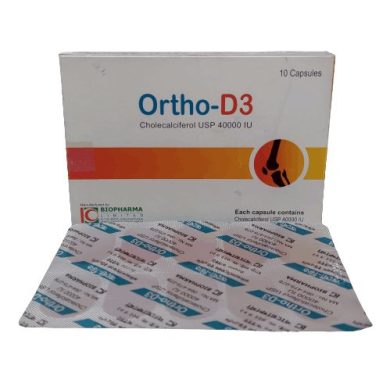
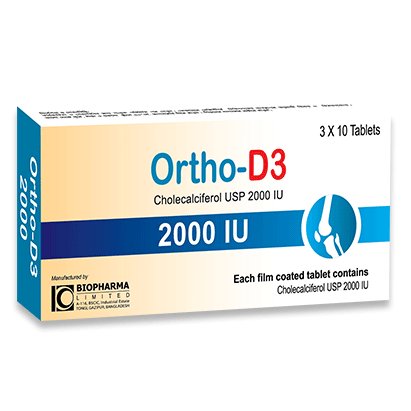

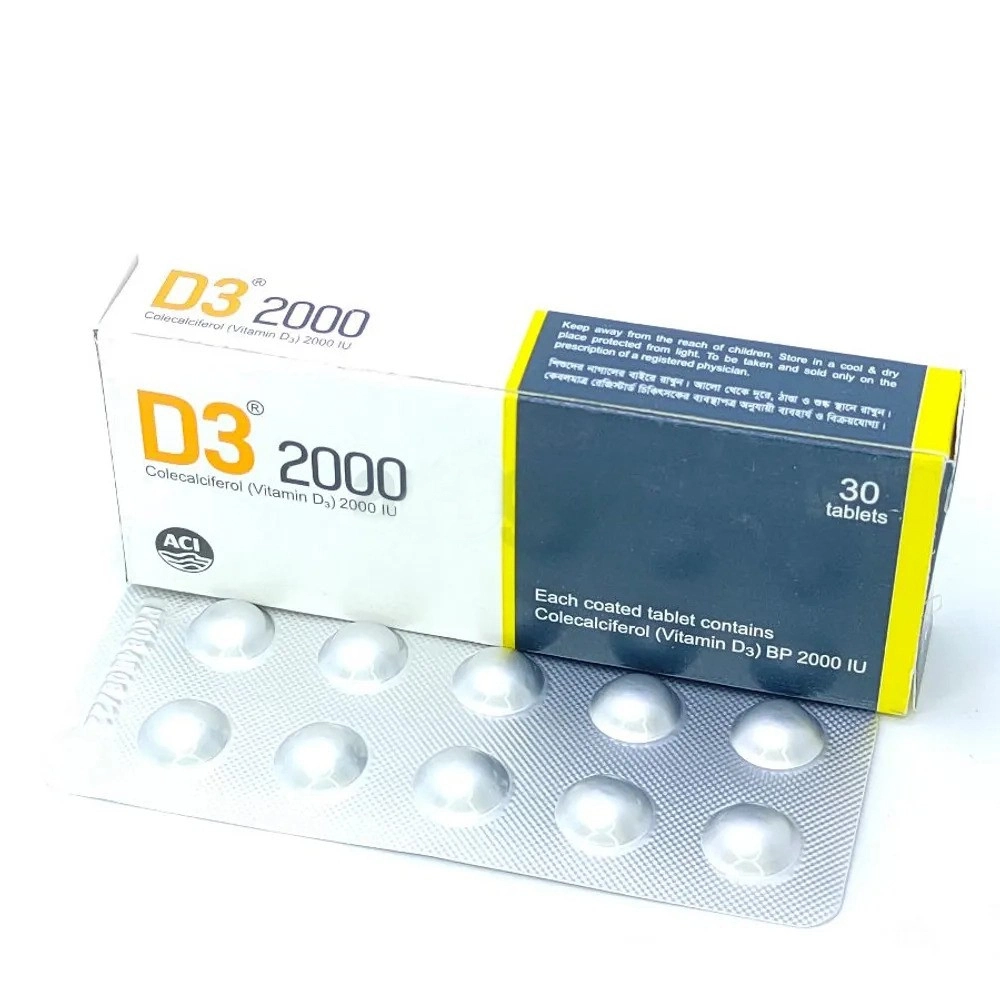
Medicine Overview of Ortho-D3 2000 2000IU Tablet
Oral /IM:
Nutritional deficiency
Colecalciferol (Vitamin D3) is recommended 5-10 mcg
or 1-2ml (200-400 IU)/day
Osteoporosis
Prophylaxis and treatment
>50 years: 800-1000 IU (20-25 mcg) PO once daily with calcium supplements. May also be given via IM inj.
Hypoparathyroidism
50,000-200,000 IU (0.625-5 mg) PO once daily with calcium supplements. May also be given via IM inj.
Nutritional Supplementation
RDA
0-12 months: 400 IU (10 mcg) PO once daily
1-18 years: 600 IU (15 mcg) PO once daily
Vitamin D-Resistant Rickets
12,000-500,000 IU (0.3-12.5 mg) PO once daily
Familial Hypophosphatemia
40,000-80,000 IU (1-2 mg) PO once daily with phosphate supplements; may be reduced after stage of growth is complete
People with the following conditions should exercise caution when considering taking vitamin D supplements:
High blood Calcium or Phosphorus level
Heart problems
Kidney disease
Vitamin D must be taken with adequate amounts of both Calcium and Magnesium supplementation. When Calcium level is low (due to insufficient vitamin D and calcium intake), the body activates the parathyroid gland, which produces PTH (parathyroid hormone). This hormone kick starts vitamin D hormone production and assists removal of Calcium from the bones to be used in more important functions such as neutralizing body acidity.
Lactation: Drug is distributed into breast milk; use with caution
Increased risk of hypercalcaemia if given with thiazide diuretics, calcium or phosphate. Antiepileptics (e.g. carbamazepine, phenobarbitone, phenytoin & primidone) may increase vitamin D requirements. Rifampicin & isoniazid may reduce efficacy of vitamin D. Corticosteroids may counteract the effect of vitamin D. Digoxin or any cardiac glycoside. Reduced absorption when taken with cholestyramine, colestipol, mineral oil, orlistat. Ketoconazole.






Reviews
Clear filtersThere are no reviews yet.