

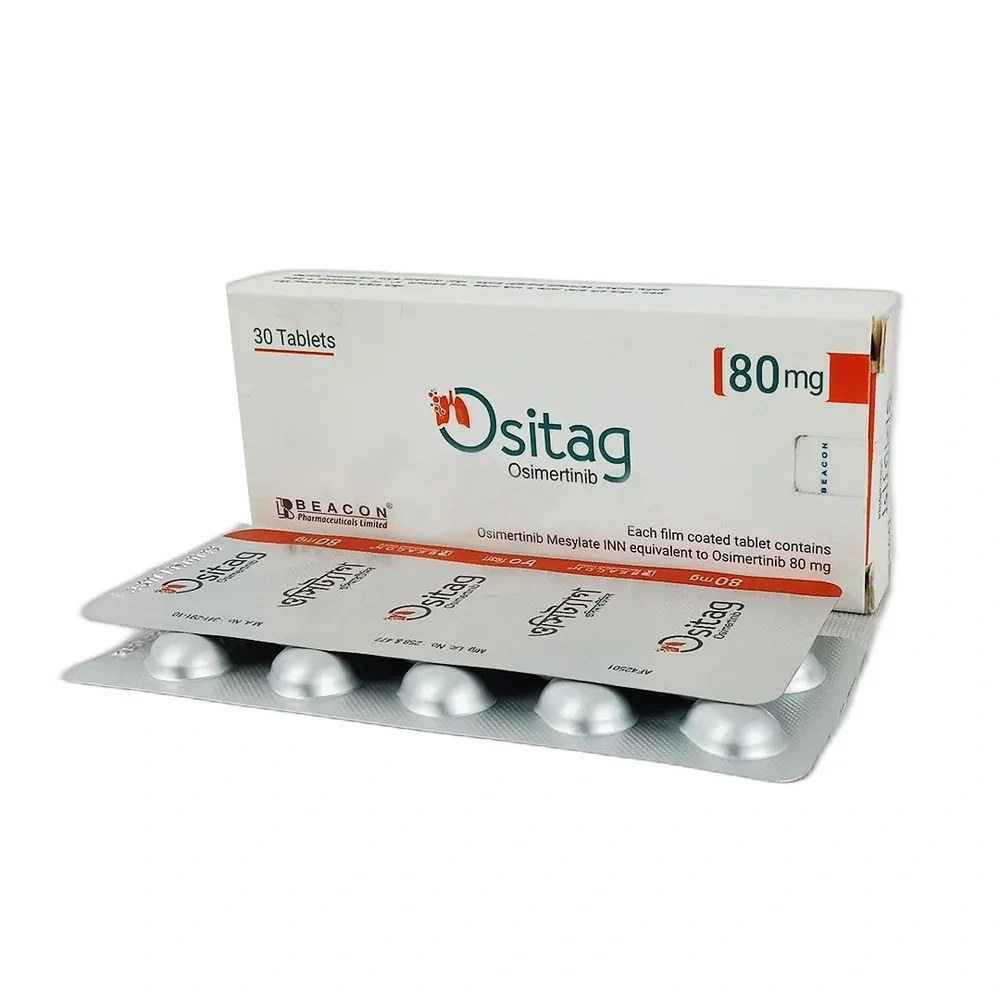

Medicine Overview of Ositag 80mg Tablet
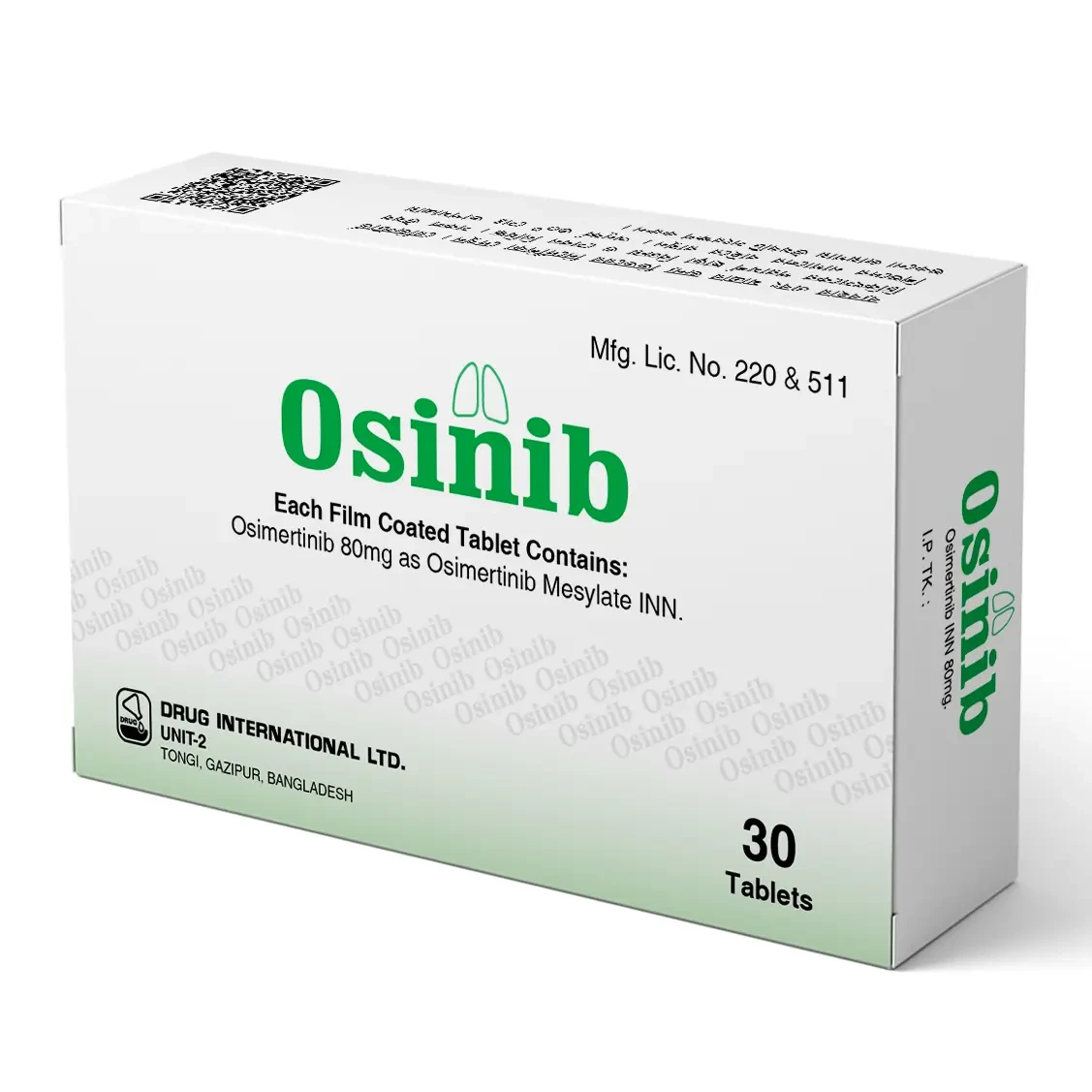
Ositag 80 is a protein kinase inhibitors used in the treatment of non-small cell lung cancer. It is used in the treatment of adult patients who have certain EGFR mutations.
Ositag 80 can be taken with or without food, but try to have it at the same time every day to get the most benefits. Your doctor will decide what dose is necessary and how often you need to take it. This will depend on what you are being treated for and may change from time to time. You should take it exactly as your doctor has advised. Taking it in the wrong way or taking too much can cause very serious side effects. It may take several weeks or months for you to see or feel the benefits but do not stop taking it unless your doctor tells you to.
Diarrhea is very common side effect of this medicine, so drink plenty of fluids. But, you must inform your doctor if it does not stop. You must have to inform your doctor if you experience difficulty in breathing along with fever and cough, or severe peeling of the skin. This medicine may reduce the number of blood cells (decrease white blood cells) in your blood, thereby, increasing the susceptibility to infections. Regular blood tests are required to check your blood cells.
Many other medicines can affect, or be affected by, this medicine so let your healthcare team know all medications you are using. This medicine is not recommended during pregnancy or while breastfeeding. The use of effective contraception by both males and females during treatment is important to avoid pregnancy.
- Non-small cell lung cancer
- Diarrhea
- Loss of appetite
- Rash
- Stomatitis (Inflammation of the mouth)
-
Ositag 80 is used for the treatment of thyroid cancer.
-
Take it with or without food, preferably at the same time each day.
-
Diarrhea may occur as a side effect. Drink plenty of fluids and inform your doctor if it doesn’t stop or if you find blood in your stools.
-
Use a reliable contraceptive method to prevent pregnancy while you are taking this medicine and for a month after you stop taking it.
-
Monitor your blood pressure regularly while taking this medication. Inform your doctor if you notice symptoms of very high blood pressure such as severe headache, confusion, problems with your eyesight, nausea or vomiting.
-
It may cause serious bleeding problem. Inform your doctor if you get headaches, stomach pain or if you notice blood in your urine or stools.
-
Do not take this medicine if you are pregnant, planning to conceive or breastfeeding.
Non-small Cell Lung Cancer,
Indicated for the treatment of patients with metastatic epidermal growth factor receptor (EGFR) T790M mutation-positive non-small cell lung cancer (NSCLC)
May be taken with or without food: Take at the same time each day. Swallow whole, do not crush/split/chew.
For patients w/ swallowing difficulties, tab may be dispersed in 50 mL non-carbonated water & stir w/o crushing until dispersed. Drink immediately. Rinse glass w/ another ½ glass of water & drink. Dispersed liqd may also be administered via nasogastric tube by using 15 mL for initial dispersion & 15 mL for residue rinses. The tube should be flushed w/ water after administration. Soln should be administered w/in 30 min of the addition of tab to water.
Non-small Cell Lung Cancer
80 mg once daily.
Hepatic impairment
Mild (TB
Renal impairment
Mild-to-moderate (CrCl 30-89 mL/min): No dose adjustment required
Severe or ESRD (CrCl <30 mL/min): There is no recommended dose
Determine EGFR T790M mutation status prior to treatment. Interstitial lung disease (eg, pneumonitis). Avoid use in patients w/ congenital long QT syndrome. Severe & end-stage renal impairment. May affect ability to drive or operate machinery.
Women of childbearing potential not using contraception. Use effective contraception for at least 6 wk for females & 4 mth for males. Not recommended during pregnancy. Lactation.
Based on its mechanism of action and animal data, Osimertinib can cause fetal harm when administered to a pregnant woman. There are no available data on Osimertinib use in pregnant women. Pregnant women should be advised of the potential risk to a fetus.
There are no data on the presence of Osimertinib in human milk, the effects of Osimertinib on the breastfed infant or on milk production. Lactating woman should be advised not to breastfeed during treatment.
>10%
Lymphopenia (63%),Thrombocytopenia (54%),Anemia (44%),Diarrhea (42%),Rash (41%),Neutropenia (33%),Dry skin (31%),Hyponatremia (26%),Nail toxicity (25%),ypermagnesemia (20%),Eye disorders (18%),Nausea (17%),Decreased appetite (16%),Constipation (15%),Pruritus (14%),Fatigue (14%),Cough (14%),Back pain (13%),Stomatitis (12%)
1-10%
Headache (10%),Venous thromboembolism (7%),Pneumonia (4%),Interstitial lung disease/pneumonitis (3.3%),QTc increased from baseline >60 msec (2.7%),Cardiomyopathy (1.4%)
<1%
Keratitis
Decreased exposure w/ strong CYP3A4 inducers (eg, phenytoin, rifampicin, carbamazepine, St. John’s wort). May increase AUC & Cmax of rosuvastatin. May increase the exposure of BCRP substrates. Decreased AUC & Cmax of simvastatin.






Reviews
Clear filtersThere are no reviews yet.