



Introduction
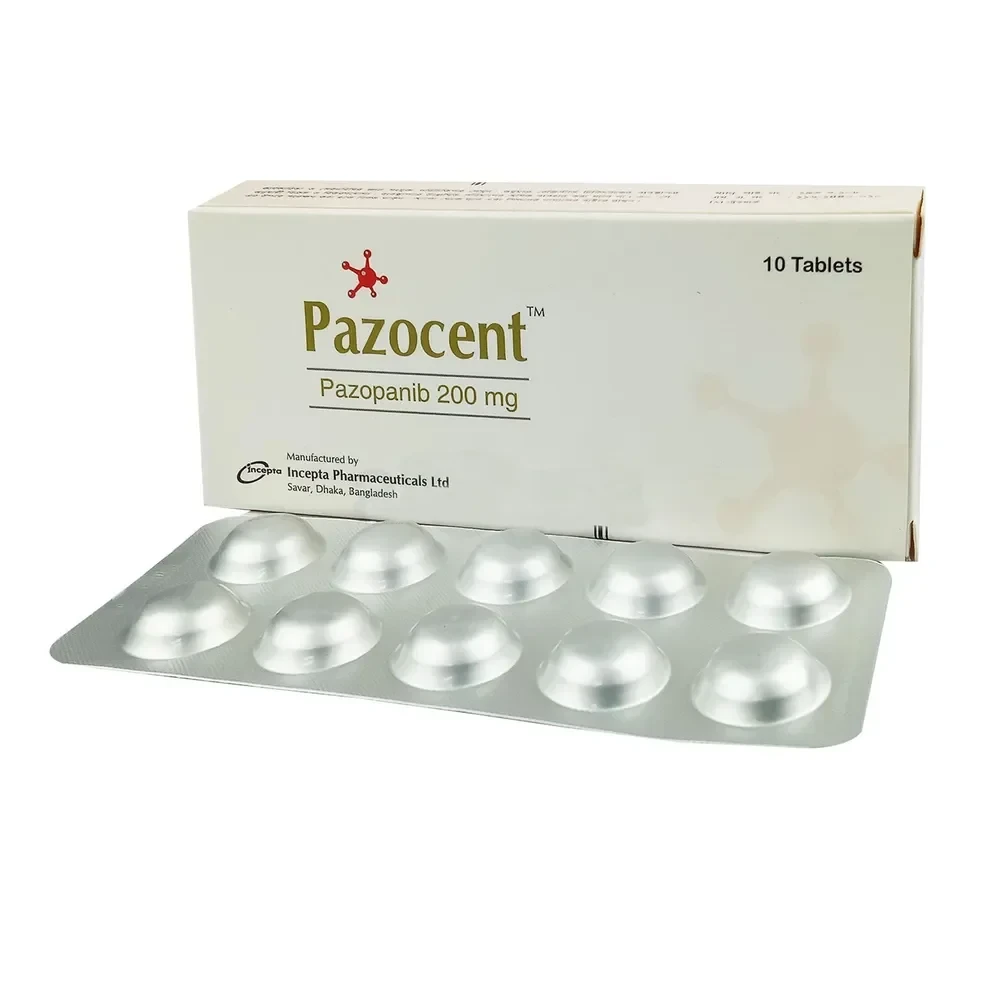
Pazocent 200 is a protein kinase inhibitor used in the treatment of kidney cancer and soft tissue sarcoma. Pazocent 200 should be taken on an empty stomach, but try to have it at the same time every day to get the most benefits. Your doctor will decide what dose is necessary and how often you need to take it. This will depend on what you are being treated for and may change from time to time. You should take it exactly as your doctor has advised. Taking it in the wrong way or taking too much can cause very serious side effects. It may take several weeks or months for you to see or feel the benefits but do not stop taking it unless your doctor tells you to. Diarrhea and high blood pressure are the most common side effects of this medicine. Doctor may advise for regular monitoring of your blood pressure while on treatment. Drink plenty of fluids to overcome diarrhea or consult with your doctor if it bothers you. This medicine may reduce the number of blood cells in your blood, thereby, increasing the susceptibility to infections. Hence, inform your doctor if you experience fever, flu-like symptoms and shortness of breath. Before taking it, tell your doctor if you have heart disease, liver, or kidney problems or are taking any medicines to treat infections. Many other medicines can affect, or be affected by, this medicine so let your healthcare team know all medications you are using. This medicine is not recommended during pregnancy or while breastfeeding. The use of effective contraception by both males and females during treatment is important to avoid pregnancy.
_
Uses of Pazocent 200
Kidney cancer
Soft tissue sarcoma
Side effects of Pazocent 200
Common
Headache
Nausea
Vomiting
Musculoskeletal (bone, muscle or joint) pain
Fatigue
Change in color of hair
Diarrhea
High blood pressure
Decreased appetite
Weight loss
Taste change
Abnormal skin pigmentation
Hair discoloration
Tumor pain
Breathlessness
How to use Pazocent 200
Take this medicine in the dose and duration as advised by your doctor. Swallow it as a whole. Do not chew, crush or break it. Pazocent 200 is to be taken empty stomach.
How Pazocent 200 works
Pazocent 200 is an anti-cancer medication. It works by binding and inhibiting the enzyme receptors (tyrosine kinase) that are responsible for the proliferation of the cancerous cells. It also restricts the growth of new blood vessels within the tumor. This is how it works against cancer.
Quick Tips
Pazocent 200 is used for the treatment of thyroid cancer.
Take it with or without food, preferably at the same time each day.
Diarrhea may occur as a side effect. Drink plenty of fluids and inform your doctor if it doesn’t stop or if you find blood in your stools.
Use a reliable contraceptive method to prevent pregnancy while you are taking this medicine and for a month after you stop taking it.
Do not take it with medication lowering the stomach acid (such as antacids, H2 blockers including ranitidine), as it may affect the working of medicine.
It may affect wound healing time. Be careful while shaving, cutting fingernails or toenails, or using sharp objects.
Monitor your blood pressure regularly while taking this medication. Inform your doctor if you notice symptoms of very high blood pressure such as severe headache, confusion, problems with your eyesight, nausea or vomiting.
Inform your doctor about the consumption of Pazocent 200 before going for surgical procedure.
It may cause serious bleeding problem. Inform your doctor if you get headaches, stomach pain or if you notice blood in your urine or stools.
Do not take this medicine if you are pregnant, planning to conceive or breastfeeding.
Brief Description
Indication
Renal cell carcinoma, soft tissue sarcoma
Administration
Should be taken on an empty stomach: Take at least 1 hr before or 2 hr after meals. Swallow whole, do not break/crush.
Adult Dose
Advanced Renal Cell Carcinoma 800 mg PO qDay on empty stomach Soft Tissue Sarcomas 800 mg PO qDay on empty stomach Hepatic Impairment Billirubin <1.5 x ULN or ALT >ULN: No dosage adjustment required Billirubin >1.5-3 x ULN: Decreased dose to 200 mg PO qDay Billirubin >3 x ULN: Not recommended
_
Child Dose
Safety and efficacy not established; not indicated for use in pediatric patients
Renal Dose
Renal impairment: No dosage adjustment required
Contraindication
Hypersensitivity.
Mode of Action
Multikinase inhibitor (including VEGF & PDGF receptor tyrosine kinases) some of which are implicated in tumor growth, angiogenesis, & metastasis
_
Precaution
Hepatic Toxicity and Hepatic Impairment, QT Prolongation, Cardiac Dysfunction, Hemorrhagic Events, Thromboembolic Events, Gastrointestinal Perforation and Fistula, Hypertension, Hypothyroidism, Pregnancy. Lactation: Unknown whether distributed in breast milk, do not nurse
_
Side Effect
>10% ALT (SGPT) level raised (all grades, 53%; grade 3, 10%; grade 4, 2% ) AST/SGOT level raised (all grades, 53%; grade 3, 7%; grade 4, less than 1% ) Diarrhea (52%),Increased glucose (41%),Hypertension (40%),Hair depigmentation (38%) Leukopenia (all grades, 37%; grade 3, 0%; grade 4, 0% ) Increased bilirubin level (all grades, 36%; grade 3, 3%; grade 4, less than 1% ) Neutropenia (all grades, 34%; grade 3, 1%; grade 4, less than 1% ) Phosphorous decreased (34%) Thrombocytopenia (all grades, 32%; grade 3, less than 1%; grade 4, less than 1% ) Lymphocytopenia (all grades, 31%; grade 3, 4%; grade 4, less than 1% ) Sodium decreased (31%),Magnesemium decreased (26%),Nausea (26%),Weakness (22%),Vomiting (21%),Anorexia (22%),Fatigue (19%),Bradycardia (19%) Hemorrhage (all grades, 13% to 16%; grade 3 to 5, 2%) Myocardial dysfunction (ie, >15% decline in LVEF from baseline or ≥10% with baseline below normal) (11-13%) Abdominal pain (11%) 1-10% (select) Headache (10%),Proteinuria (9%),Weight loss (9%),Alopecia (8%),Dysgeusia (8%),Rash (8%),Hypothyroidism (4% to 7% ),Palmar-plantar erythrodysesthesia (6%),Chest pain (5%),Dyspepsia (5%),Skin depigmentation (3%),Prolonged QT interval (<2%),Hepatotoxicity (1%-2%),Facial edema (1%),Rectal hemorrhage (1%),Transient ischemic attack (1%),Hemorrhagic death (0.9%-1%) <1% Cardiac dysfunction (eg, decreased LVEF, CHF) (0.6%) Congestive heart failure (0.5%),Torsades de pointes,Cerebrovascular accident,Pancreatitis Frequency Not Defined Myocardial infarction,Gastrointestinal fistula,Gastrointestinal perforation
_
Interaction
Co-administration w/ CYP3A4 (eg, itraconazole, clarithromycin, atazanavir, idinavir, nefazodone, nelfinavir, ritonavir, saquinavir, telithromycin, voriconazole, grapefruit juice), P-gp & BCRP inhibitors, high-/low-fat food increases exposure & conc of pazopanib. Co-administration w/ CYP3A4 (eg, rifampicin) inducers may decrease plasma pazopanib conc. P-gp & BCRP inducers may alter exposure & distribution of pazopanib. Pazopanib may alter exposure &/or distribution of CYP3A4 substrates (eg, midazolam), CYP2C8 substrates (eg, paclitaxel) & UGT1A1 substrates (eg, irinotecan & its active metabolite SN-38). Pazopanib may increase the ratio of dextrometrophan to dextrophan conc after administration of dextrometrophan. Proton-pump inhibitors (eg, esomeprazole) & other agents that increase gastric pH may decrease bioavailability of pazopanib. Concomitant use w/ simvastatin & other statins may lead to ALT elevations.
_

Reviews
Clear filtersThere are no reviews yet.