

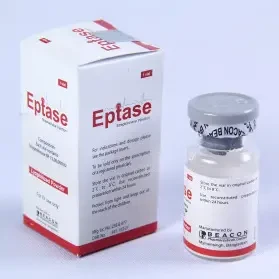

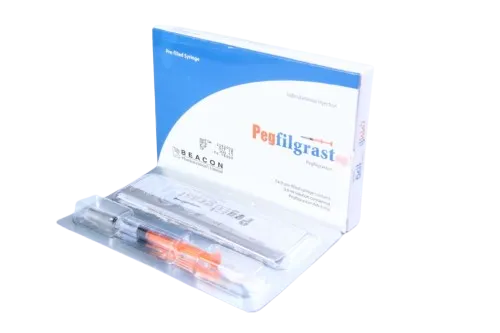

Medicine Overview of Pegfilgrast 6mg/0.6ml Injection
Pegfilgrast is used to prevent infections after chemotherapy. It is a growth factor that stimulates bone marrow to produce white blood cells. These cells protect the body against infections.
Pegfilgrast is given as an injection by a qualified medical professional. You should continue to take as long as your doctor advises for it. The duration of treatment varies according to your need and response to treatment. You might be asked for regular tests done to check the number of blood cells in your blood and your bone density level while you are taking this medicine.
The most common side effects of this medicine include bone pain, joint pain, headache, nausea, and muscle pain. Other than this, pain or redness at the site of injection is common. But, inform your doctor if you notice a lump, swelling, or bruising that does not go away. It might not prevent you from all kinds of infection, hence inform your doctor if you notice fever, chills, shortness of breath, sore throat and swelling around face or neck.
Many other medicines can affect, or be affected by, this medicine so let your healthcare team know all medications you are using. This medicine is not recommended during pregnancy or while breastfeeding. The use of effective contraception by both males and females during treatment is important to avoid pregnancy. You must avoid driving or attention-seeking activity if you experience dizziness after taking this medicine.
- Infections after chemotherapy
- Bone pain
- Joint pain
- Headache
- Nausea
- Low blood platelets
- Muscle pain
- Back pain
- Pain in extremity
- Injection site pain
-
Pegfilgrast reduces the risk of infection in people treated with chemotherapy.
-
It is usually given as a daily injection into the tissue just under the skin or into the vein.
-
You will normally receive your first dose at least 24 hours after your chemotherapy or bone marrow transplant.
-
Store it in the refrigerator, protect it from light, and don’t shake it.
-
For a more comfortable injection, leave the syringe at room temperature for 30 minutes before using it.
-
Pain or redness in the area of injection is common. Let your doctor know if you notice a lump, swelling, or bruising that doesn’t go away.
-
Use caution while driving or doing anything that requires concentration as Pegfilgrast may cause dizziness.
-
Your doctor may get regular tests done to monitor the number of blood cells in your blood, and your bone density level while you are receiving treatment with this medicine.
-
Stop taking Pegfilgrast and inform your doctor if you have a fever, shortness of breath, fast rate of breathing or trouble breathing.
Subcutaneous
Chemotherapy-induced neutropenia, Myelosuppressive Chemotherapy Adjunct
Indicated to decrease incidence of infection in patients with non-myeloid malignancies receiving myelosuppressive chemotherapy assoc with febrile neutropenia
Adult: 6 mg as a single dose for each chemotherapy cycle, given at least 24 hr after cytotoxic chemotherapy.
Subcutaneous
Prevention of Chemotherapy Induced Neutropenia
<45 kg: 100 mcg/kg per chemotherapy cycle; not to exceed 6 mg/dose; do not administer in the period 14 days before and 24-72 hr after administration of cytotoxic chemotherapy
>45kg: 6 mg SC once per chemotherapy cycle; do not administer in the period 14 days before and 24 hr after administration of cytotoxic chemotherapy
Splenic rupture (including fatal cases) or enlarged spleen have been reported following admin of Pegfilgrastim; patients who reported left upper abdominal or shoulder tip pain should be evaluated for development of splenomegaly or splenic rupture. Acute respiratory distress syndrome (ARDS) may occur; monitor patients for pulmonary symptoms e.g. cough, fever, lung infiltrates, or respiratory distress. Discontinue or withhold Pegfilgrastim in patients with confirmed ARDS.
Caution in patients with existing sickle cell disorders; as severe sickle cell crisis may occur. Possibility of Pegfilgrastim acting as a growth factor for any tumor type cannot be excluded. Not approved for myeloid malignancies and myelodysplasia. Monitor platelet count and haematocrit regularly. Do not administer Pegfilgrastim during the 14 days before and 24 hr after chemotherapy admin due to the potential sensitivity of rapidly dividing myeloid cells to cytotoxic chemotherapy. Safety and efficacy in paediatric patients have not been established. Pregnancy and lactation.
>10%
Peripheral edema (12%),Asthenia (13%),Headache (16%),Vomiting (13%),Bone pain (31-57%),Myalgia (21%),Weakness (13%),Alopecia (15-72%),Pyrexia (23%)
Frequency Not Defined
Acute respiratory distress syndrome,Sickle cell crisis,Splenic rupture,Hyperuricemia,Elevated lactate dehydrogenase,Elevated alkaline phosphatase,Allergic reaction
Potentially Fatal: Anaphylaxis.

Reviews
Clear filtersThere are no reviews yet.