

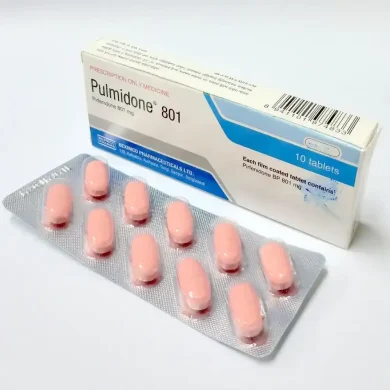



Medicine Overview of Pulmidone 267mg Tablet
Pulmidone 267 is a prescription medicine used in the treatment of idiopathic pulmonary fibrosis. It reduces scarring and swelling in the lungs and helps to breathe better.
It may be taken with food. But, It is better to take it at the same time every day to get the most benefits. The dose and how often you take it depends on what you are taking it for. Your doctor will decide how much you need to improve your symptoms. You should take this medicine for as long as it is prescribed for you.
The most common side effects of this medicine include insomnia, headache, and dizziness. To overcome dizziness, avoid driving or attention-seeking activity. Some people may experience weight loss, hence monitor your weight regularly or ask for doctor consultation. Some side effects, which means you must inform your doctor include abdominal pain, loss of appetite, darkened urine or yellowing of the eyes. Your doctor may perform a liver function test while on treatment.
Before taking this medicine, let your doctor know if you have liver or kidney disease. Your doctor should also know about all other medicines you are taking as many of these may make this medicine less effective or change the way it works. It makes your skin sun-sensitive, wear protective clothing or apply sunscreen while in direct contact with sun. Inform your doctor if you are pregnant or breastfeeding.
- Idiopathic pulmonary fibrosis
- Insomnia (difficulty in sleeping)
- Headache
- Dizziness
- Tiredness
- Sinus inflammation
- Loss of appetite
- Upper respiratory tract infection
- Weight loss
-
Pulmidone 267 reduces scarring and swelling in the lungs, and helps you breathe better.
-
It is best to take this medicine with food and at the same time each day.
-
This medication may make you more sensitive to sun. Use sunscreen and wear protective clothing when outdoors.
-
Stop smoking during treatment with Pulmidone 267 as it can reduce the effect of the treatment.
-
It may cause dizziness or sleepiness. Do not drive or do anything requiring concentration until you know how it affects you.
-
It may cause weight loss. Monitor your weight regularly.
-
Your doctor may check your liver function regularly. Inform your doctor if you develop abdominal pain, loss of appetite, darkened urine or yellowing of the eyes or skin (jaundice).
Should be taken with food: Take w/ food to reduce the possibility of nausea & dizziness. Swallow whole w/ water. Take doses at same time each day.
Idiopathic Pulmonary Fibrosis
Initial dose titration
Days 1-7: 267 mg (1 capsule) PO TID
Days 8-14: 534 mg (2 capsules) PO TID
Day 15 and thereafter: 801 mg (3 capsules) PO TID
Maintenance dose
801 mg (3 capsules) PO TID with food
Not to exceed 2403 mg/day (9 capsules/day)
Hepatic impairment
Mild-to-moderate (Child Pugh A or B): Use caution; monitor and consider dosage modification or discontinuation as needed
Severe (Child Pugh C): Not recommended (not studied)
Renal impairment
Mild, moderate, or severe: Use caution; monitor and consider dosage modification or discontinuation as needed
ESRD requiring dialysis: No recommended (not studied)
Hypersensitivity. History of angioedema. Severe hepatic & renal impairment or end stage liver & renal disease. Concomitant use w/ fluvoxamine.
Precise mechanism by which pirfenidone may work in pulmonary fibrosis has not been established
Inhibits transforming growth factor (TGF)-beta, a chemical mediator that controls many cell functions including proliferation and differentiation
Also inhibits the synthesis of TNF-alpha, a cytokine that is known to have an active role in inflammation
Hepatic function abnormalities, hepatic impairment, photosensitivity reaction or rash, angioedema, dizziness, fatigue & wt loss. May affect ability to drive or operate machinery. Avoid use in pregnancy & lactation.
>10%
Nausea (36%),Rash (30%),Upper respiratory tract infection (27%),Diarrhea (26%),Abdominal pain (24%),Headache (22%),Dyspepsia (19%),Dizziness (18%),Vomiting (13%),GERD (11%),Sinusitis (11%)
1-10%
Insomnia (10%),Weight decreased (10%),Arthralgia (10%),Photosensitivity (9%),Decreased appetite (8%),Pruritus (8%),Asthenia (6%),Dysgeusia (6%),Noncardiac chest pain (5%),AST/ALT ≥3 x ULN (3.7%)
<1%
AST/ALT ≥10 x ULN (0.3%)
Inhibition of CYP1A2 w/ concomitant grapefruit juice. Increased exposure w/ fluvoxamine & other strong & selective CYP1A2 inhibitors, ciprofloxacin, amiodarone, propafenone. Potential to induce hepatic enzyme production by smoking. Lowered plasma levels w/ omeprazole, rifampicin.




Reviews
Clear filtersThere are no reviews yet.