



Introduction
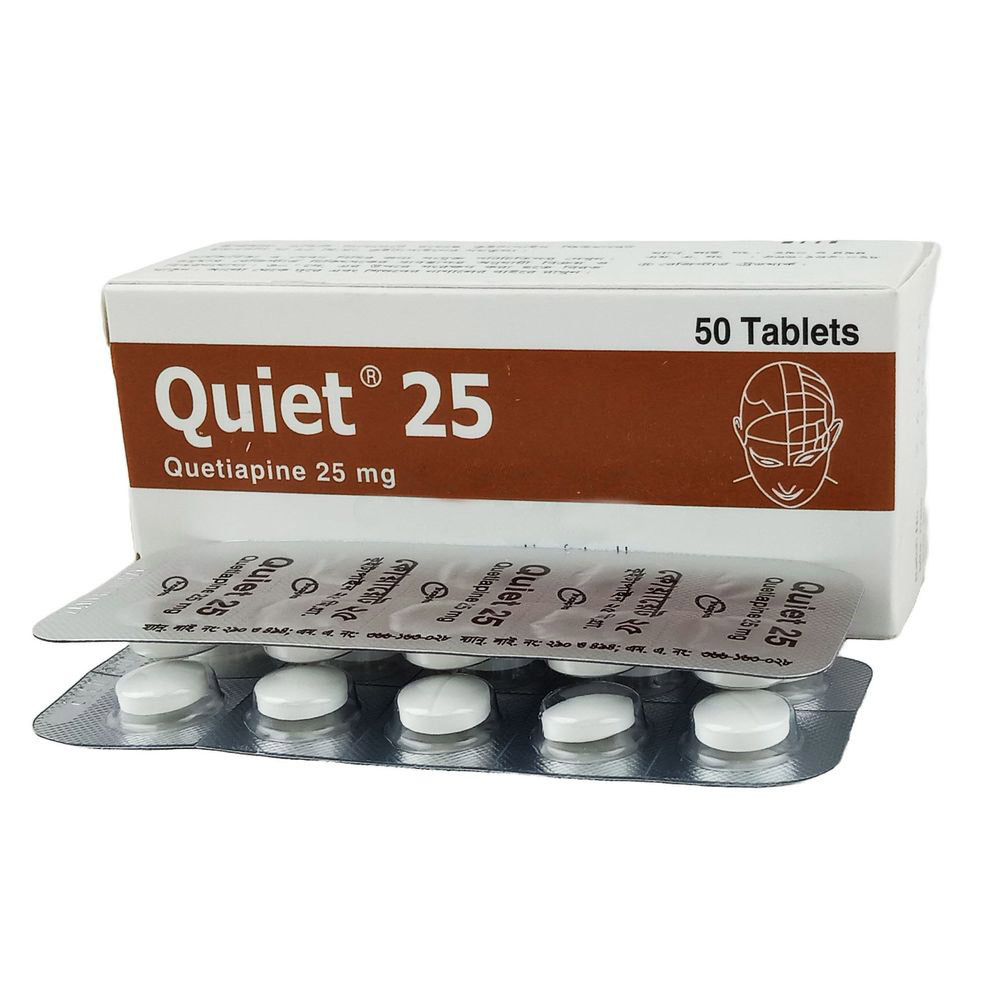
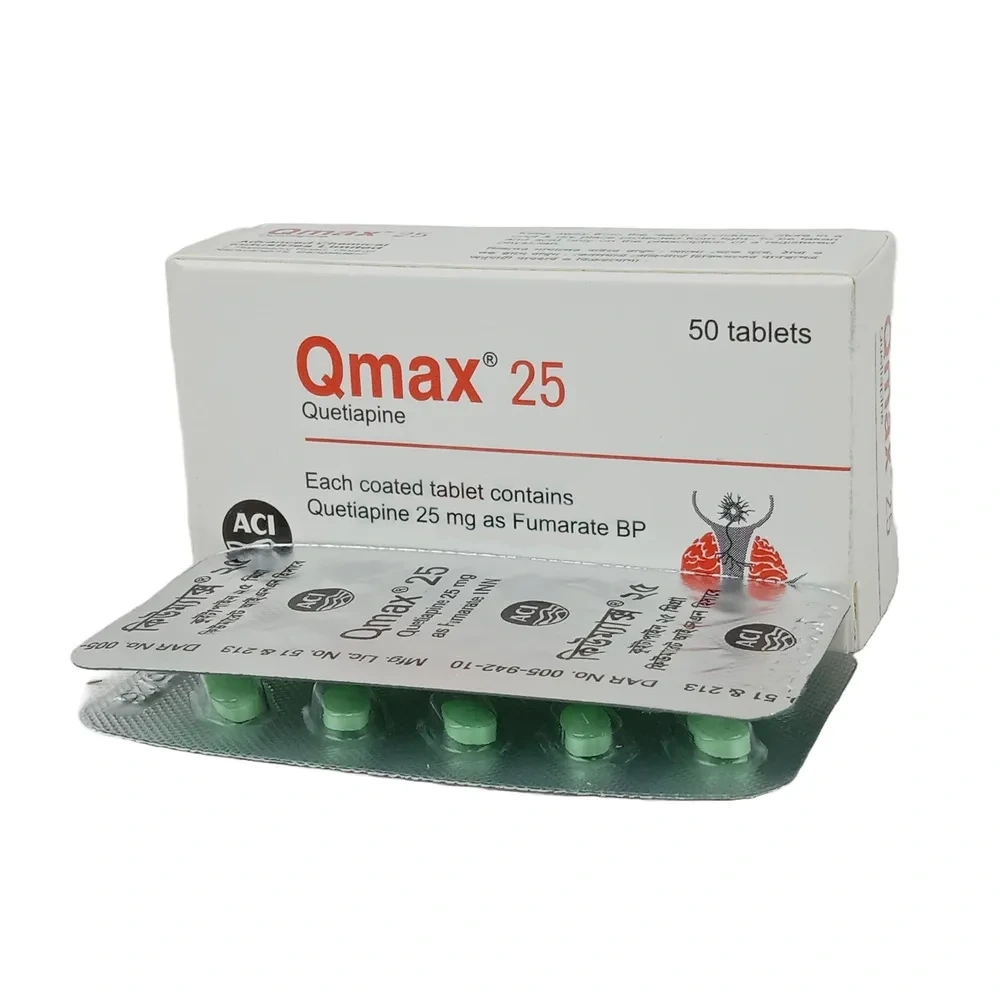
Quiet 25 is a prescription medicine used in the treatment of schizophrenia (a mental disorder that can result in hallucinations or delusions and also adversely affects a person’s ability to think and behave) and mania. It is also used to treat bipolar disorders. Quiet 25 may be taken with or without food. However, it is advised to take it at the same time each day as this helps to maintain a consistent level of medicine in the body. Take this in the dose and duration as advised by your doctor and if you have missed a dose, take it as soon as you remember. It is important that this medication is not stopped suddenly without talking to your doctor as it may worsen your symptoms. However, discontinue this medicine immediately if you experience Neuroleptic malignant syndrome (NMS), characterized by fever, muscle rigidity, and altered consciousness or seizures. Some common side effects of this medicine include headache, dry mouth, and constipation. Initially, this medicine may cause a sudden drop in blood pressure when you change positions, so it is better to rise slowly if you have been sitting or lying down. It also causes dizziness and sleepiness, so do not drive or do anything that requires mental focus until you know how this medicine affects you. This medicine may increase your weight but, modifying your lifestyle by having a healthy diet and exercising regularly can reduce this side effect. You should be cautious while using this medicine as it may increase the risk of developing diabetes, so it is better to monitor glucose regularly. Inform your doctor if you develop any unusual changes in mood or behavior, new or worsening depression, or suicidal thoughts while taking this medicine.
_
Uses of Quiet 25
Schizophrenia
Mania
Side effects of Quiet 25
Common
Akathisia (inability to stay still)
Decreased haemoglobin level in blood
Dizziness
Dystonia (involuntary muscle contractions)
Headache
Increased triglyceride level in blood
Parkinsonism
Sleepiness
Weight gain
How to use Quiet 25
Take this medicine in the dose and duration as advised by your doctor. Swallow it as a whole. Do not chew, crush or break it. Quiet 25 may be taken with or without food, but it is better to take it at a fixed time.
How Quiet 25 works
Quiet 25 is an atypical antipsychotic. It works by modulating the action of certain chemical messengers in the brain that affect thoughts.
Quick Tips
You have been prescribed Quiet 25 for the treatment of schizophrenia and mania.
It is less likely to cause heart problems and movement disorders than other antipsychotics.
It may take 4 to 6 weeks to see treatment effects. Keep taking it as prescribed.
Use caution while driving or doing anything that requires concentration as Quiet 25 can cause dizziness and sleepiness.
To lower the chance of feeling dizzy or passing out, rise slowly if you have been sitting or lying down.
It may increase your weight, blood sugar and cholesterol. Eat healthy, exercise regularly and monitor your blood levels regularly.
Inform your doctor if you develop any unusual changes in mood or behavior, new or worsening depression, or suicidal thoughts or behavior.
Do not stop taking it without talking to your doctor first as it may cause worsening of symptoms.
Brief Description
Indication
Schizophrenia, Bipolar disorder, Major depressive disorder
Administration
Extended-release: Should be taken on an empty stomach. Take w/o food or w/ a light meal. Swallow whole, do not chew/crush. May be taken with or without food.
_
Adult Dose
Oral Schizophrenia Immediate release Day 1: 50 mg/day PO divided q12hr Days 2-3: Dose increased daily in increments of 25-50 mg q8-12hr to 300-400 mg by day 4; further adjustments can be made in increments of 25-50 mg q12hr at intervals >2 days Dosage range: 150-750 mg/day Extended release Day 1: 300 mg/day PO; subsequently, may be increased by up to 300 mg/day at intervals >1 day Maintenance (monotherapy): 400-800 mg/day Patients who have discontinued therapy for >1 week should have their dose retitrated following initiation of therapy; patients may reinitiate at their previous maintenance dose if discontinued therapy <1 week Bipolar I Disorder, Mania Administered as monotherapy or as adjunct to lithium or divalproex Immediate release Day 1: 100 mg/day PO divided q12hr Day 2: 200 mg/day PO divided q12hr Day 3: 300 mg/day PO divided q12hr Day 4: 400 mg/day PO divided q12hr Further dosage adjustments, up to 800 mg/day by day 6, should be in increments <200 mg/day Dosage range: 400-800 mg/day; not to exceed 800 mg/day Extended release Day 1: 300 mg PO once daily Day 2: 600 mg PO once daily Maintenance (day 3 onward): 400-800 mg/day PO Bipolar Disorder, Depressive Episodes Either immediate-release or extended-release tablets may be given; dosage titrated upward over 4 days Day 1: 50 mg PO at bedtime Day 2: 100 mg PO at bedtime Day 3: 200 mg PO at bedtime Maintenance (day 4 onward): 300 mg PO at bedtime Bipolar I Disorder, Maintenance Administered as adjunct to lithium or divalproex Immediate release: 400-800 mg/day PO divided q12hr Extended release: 400-800 mg/day PO in single dose Generally, in maintenance phase, patients continue to receive same dosage on which they were stabilized Major Depressive Disorder Extended-release formulation administered as adjunct to antidepressants Days 1 and 2: 50 mg PO in evening Day 3: May be increased to 150 mg PO in evening Dosage range: 150-300 mg/day Elderly: Slower rate of dose titration and lower daily therapeutic dose. Hepatic impairment: Initially, 25 mg daily. May increase in increments of 25-50 mg daily until effective dose, according to response and tolerability is achieved.
_
Child Dose
Schizophrenia Immediate release Day 1: 50 mg/day PO divided q12hr Days 2-3: Dose increased daily in increments of 25-50 mg q8-12hr to 300-400 mg by day 4; further adjustments can be made in increments of 25-50 mg q12hr at intervals >2 days Dosage range: 150-750 mg/day Extended release Day 1: 300 mg/day PO; subsequently, may be increased by up to 300 mg/day at intervals >1 day Maintenance (monotherapy): 400-800 mg/day Patients who have discontinued therapy for >1 week should have their dose retitrated following initiation of therapy; patients may reinitiate at their previous maintenance dose if discontinued therapy <1 week Bipolar I Disorder, Mania Administered as monotherapy or as adjunct to lithium or divalproex Immediate release Day 1: 100 mg/day PO divided q12hr Day 2: 200 mg/day PO divided q12hr Day 3: 300 mg/day PO divided q12hr Day 4: 400 mg/day PO divided q12hr Further dosage adjustments, up to 800 mg/day by day 6, should be in increments <200 mg/day Dosage range: 400-800 mg/day; not to exceed 800 mg/day Extended release Day 1: 300 mg PO once daily Day 2: 600 mg PO once daily Maintenance (day 3 onward): 400-800 mg/day PO Bipolar Disorder, Depressive Episodes Either immediate-release or extended-release tablets may be given; dosage titrated upward over 4 days Day 1: 50 mg PO at bedtime Day 2: 100 mg PO at bedtime Day 3: 200 mg PO at bedtime Maintenance (day 4 onward): 300 mg PO at bedtime Bipolar I Disorder, Maintenance Administered as adjunct to lithium or divalproex Immediate release: 400-800 mg/day PO divided q12hr Extended release: 400-800 mg/day PO in single dose Generally, in maintenance phase, patients continue to receive same dosage on which they were stabilized Major Depressive Disorder Extended-release formulation administered as adjunct to antidepressants Days 1 and 2: 50 mg PO in evening Day 3: May be increased to 150 mg PO in evening Dosage range: 150-300 mg/day
_
Contraindication
Quetiapine is contraindicated in individuals with a known hypersensitivity to this medication or any of its ingredients. Severe CNS depression, bone marrow suppression, coma.
Mode of Action
Quetiapine is an antagonist at multiple neurotransmitter receptors in the brain: Serotonin 5-HT1A and 5-HT2, dopamine D1 and D2, histamine H1 and adrenergic a1 and a2 receptors. It is used in the treatment of schizophrenia and bipolar disorder.
Precaution
Patient w/ CV and cerebrovascular disease, conditions predisposing to hypotension, history of seizures or conditions that lower the seizure threshold, conditions that may increase risk of QT prolongation. Avoid abrupt withdrawal. Elderly w/ dementia-related psychosis. Hepatic or renal impairment. Pregnancy and lactation. Patient Counselling This drug may cause somnolence and impair judgement, thinking or motor skills, if affected, avoid driving, operating machinery or performing hazardous tasks. Monitoring Parameters Closely monitor for worsening of glucose control in patients w/ pre-existing DM. Monitor for possible worsening of depression, suicidal thoughts or unusual changes in behaviour. Measure BP at the beginning of, and periodically during treatment. It is recommended that patients should have an eye examination to detect cataract formation when starting therapy and 6 mthly during treatment. Lactation: Drug excreted in breast milk; breastfeeding not recommended
_
Side Effect
>10% Dizziness (1-18%),Fatigue (3-14%),Extrapyramidal symptoms (1-13%),Increased diastolic blood pressure (41%),Increased triglycerides (8-22%),Increased total cholesterol (7-18%),Increased appetite (2-12%),Constipation (6-11%),Dry mouth (9-44%),Headache (7-21),Somnolence (18-57%) 1-10% Abdominal pain (4-7%; dose related),Dyspepsia (2-7%; dose related,Tremor (2-8%),Back pain (3-5%),Postural hypotension (2-7%),Tachycardia (1-6%),Pharyngitis (4-6%),Rhinitis (3-4%),Rash (4%),Blurred vision (1-4%),Arthralgia (1-4%),Myalgia (2%),Neck pain (2%),Dyskinesia (4%),Neutropenia (2%),Hemorrhage (1%) < 1% Priapism,Cardiomyopathy, myocarditis,QTc prolongation,Night mares,Pancreatitis,Rhabdomyolysis,Palpitation,Leukocytosis,Epistaxis,Exfoliative dermatitis
_
Interaction
Increased risk of drowsiness and postural hypotension when used with alcohol. CYP3A4 inducers eg. phenytoin and carbamazepine may decrease plasma levels of quetiapine while CYP3A4 inhibitors eg. ketoconazole and erythromycin may increase its plasma levels.




Reviews
Clear filtersThere are no reviews yet.